· Case Studies · 8 min read
Restaurant COVID Pivots: Innovation Born From Crisis
The restaurants that survived COVID didn't just adapt — they redesigned their entire business model in days, and the most useful lessons are about speed, direct relationships, and the hidden costs of delivery platforms.
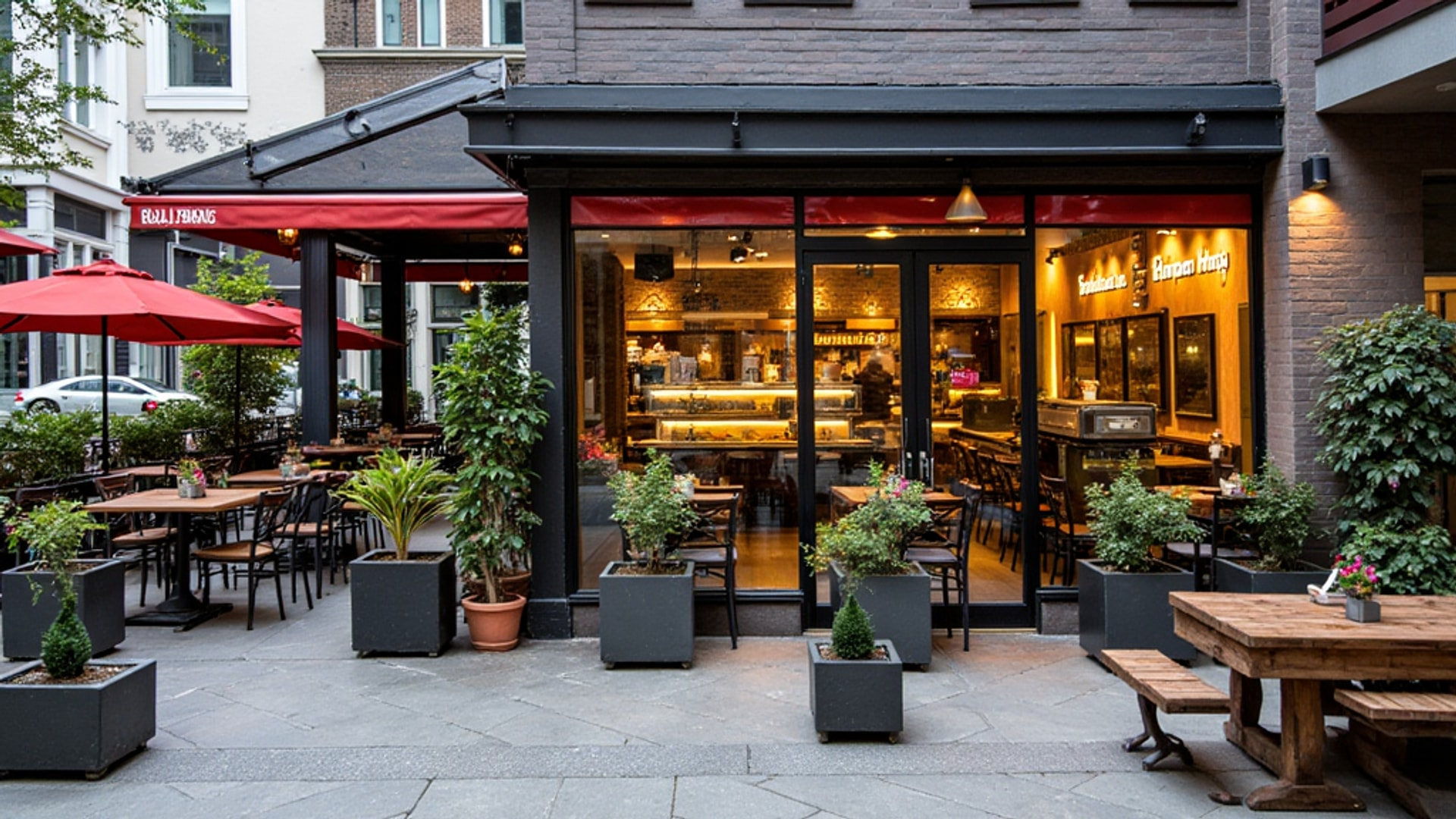
In the spring of 2020, the restaurant industry was handed an ultimatum it had never faced before: reinvent your business model in days or close. There was no time for market research, no opportunity for gradual testing, no comfortable runway for iteration. Dining rooms went dark, and operators who had built their entire revenue model around in-person service had to find another way, immediately.
The crisis produced the fastest period of business model innovation in the industry’s history. Some operators failed. Many pivoted inadequately — launching delivery through third-party apps and watching their already-thin margins evaporate. But a subset of restaurants made decisions under pressure that permanently improved their businesses. Understanding what those operators did, and why it worked, is the most useful thing to take from the COVID era.
What the Research Found
An academic analysis of 200 industry articles published during the pandemic, cited by Restaurant Business Online, identified three major themes in successful adaptation: expansion of takeout and delivery capabilities, genuinely innovative operational practices, and community outreach combined with corporate support. The restaurants that thrived were not necessarily those with the most resources — they were those that moved fastest and most creatively.
The speed factor is important. Restaurants that spent weeks deliberating over which delivery model to adopt lost weeks of revenue they could not afford to lose. The operators who made fast decisions, tested them immediately, and adjusted based on real customer behavior outperformed those who waited for certainty that never came. The COVID pivot environment was the restaurant industry’s first mass experiment in lean startup methodology, and the results matched what that methodology predicts: move fast, learn from real data, iterate.
Wingstop: Digital Momentum and Free Delivery
Wingstop entered the pandemic in a structurally advantaged position — its menu was already optimized for delivery, and the brand had invested in digital ordering infrastructure before the crisis hit. When dining rooms closed across the country, Wingstop accelerated what was already working.
The chain launched a free delivery promotion that drove immediate volume, and the results were dramatic. According to Restaurant Business Online’s reporting, Wingstop saw same-store sales increase 30%, while digital orders jumped from 40% to 65% of total sales in a short period. The digital mix shift was not just a COVID-era anomaly — it reset consumer behavior and expectations that persisted long after dining rooms reopened.
The lesson from Wingstop is not that free delivery is a sustainable strategy — it is not, and the promotion was time-limited. The lesson is that an existing digital infrastructure, combined with aggressive promotion at the moment of maximum customer need, can create a step-change in customer behavior that is difficult to reverse.
Birdcall: The Direct Platform Decision
Birdcall’s COVID pivot is the most instructive case for any operator who has thought about the math of third-party delivery platforms. The fast-casual chicken concept made a decision that most restaurants did not: build our own ordering platform rather than rely entirely on DoorDash, Grubhub, and Uber Eats.
The financial logic is straightforward. Third-party delivery platforms charge commission rates that typically range from 15% to 30% of the order value. For a restaurant operating on 5-10% net margins in good conditions, giving away 20% commission on every delivery order does not produce a profitable transaction. It produces a transaction that looks like revenue and operates like a loss.
Birdcall built its own ordering system. According to Restaurant Business Online, within a single week of launch, direct platform sales surpassed all third-party platform sales combined. Then came the key operational insight: by using DoorDash’s driver network to fulfill deliveries (paying only for the driver cost) without using DoorDash’s ordering and commission system, Birdcall retained approximately 15% additional revenue on each delivery order.
That 15% retention is the difference between a delivery channel that slowly bleeds the business and one that actually contributes to profitability. It required upfront investment in a proprietary platform and the willingness to push customers toward a direct channel. But the financial math made that investment necessary.
Founding Farmers: Becoming a Grocery Store
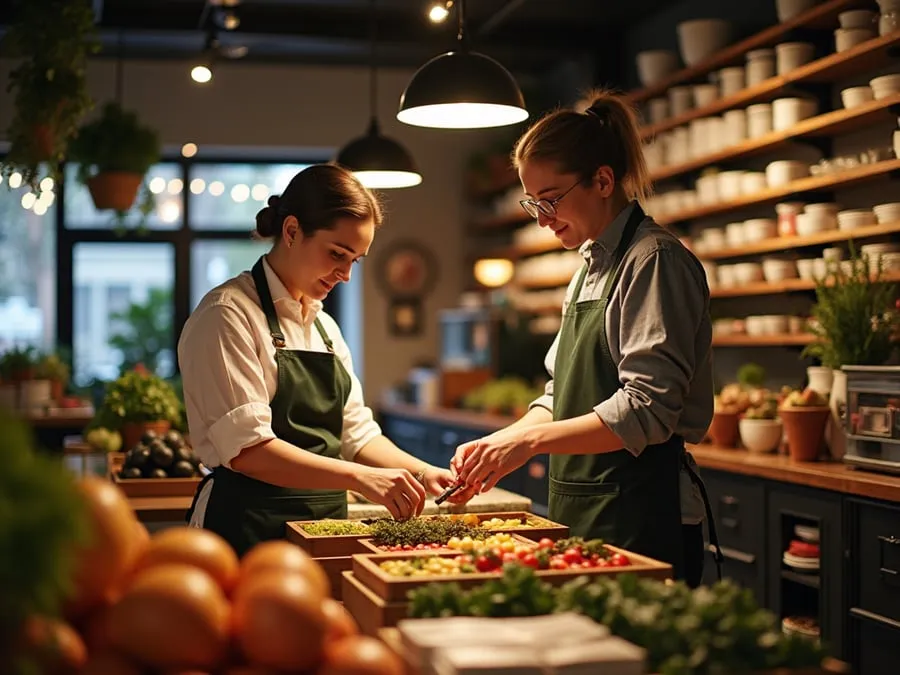
Founding Farmers made the most dramatic business model pivot of any major restaurant during the crisis — it stopped being primarily a restaurant and became a neighborhood provisioning hub. The operation reoriented to offer groceries, baked goods, adult beverages, deli items, and household goods alongside its prepared food menu.
The results were extraordinary. Restaurant Business Online reported that for every dollar of prepared food Founding Farmers sold, the establishment sold five dollars of grocery items. The prepared food business — the actual restaurant — became the lesser part of the revenue by a ratio of five to one.
This ratio reveals something important about what customers actually needed during the crisis. They were not primarily looking for restaurant meals to replace the restaurant experience. They were looking for provisioning — for reliable access to quality ingredients and products during a period when grocery supply chains were uncertain. Founding Farmers met that need because it had the supply chain relationships, the kitchen infrastructure, and the customer trust to do so credibly.
The grocery pivot was not replicable by every restaurant. It required an existing relationship with customers who trusted the brand’s food quality, supplier relationships that could be adapted to retail distribution, and physical space for product display. But the underlying principle — identify what your customer actually needs right now, not what they needed before the crisis — applies universally.
Geography Shaped the Strategy
One finding from Restaurant Business Online’s analysis deserves more attention than it typically receives: geography fundamentally shaped which delivery models were most effective.
In urban areas, deliveries represented approximately two-thirds of business volume during peak pandemic restrictions. In suburban locations, curbside pickup dominated. The practical implication is that a suburban restaurant that invested heavily in delivery infrastructure in the first weeks of the crisis was misallocating resources relative to one that streamlined its curbside process and focused on that channel.
Successful operators matched their model to local customer behavior patterns rather than adopting the strategy that was working for operators in different markets. This contextual adaptation — doing the right thing for your specific customer in your specific location rather than copying what worked somewhere else — is a principle that extends well beyond the pandemic.
Uncaged Chefs: Community as Model
D.C.-based Uncaged Chefs made a decision during the pandemic that combined community responsibility with operational necessity: the company hired its own delivery drivers rather than using third-party services, providing employment for displaced restaurant workers at a moment when the industry was shedding jobs rapidly.
This decision served multiple purposes simultaneously. It reduced delivery commission costs. It gave the restaurant control over the delivery experience, including driver training and customer interaction. And it embedded the business in its community in a way that the community noticed and responded to with loyalty.
Community investment during the pandemic was not universally a viable strategy — many operators were fighting for their own survival and lacked the resources for charitable action. But Uncaged Chefs’ model illustrates that community-oriented decisions can be structured as genuine business decisions, not just philanthropy, when the operational math is worked through carefully.
Noodles & Co and Mexicue: Cutting the Platform Fee
Noodles & Company and Mexicue both launched direct delivery operations during the pandemic to avoid the margin destruction of third-party commission fees, according to Restaurant Business Online. The challenge with this approach is customer acquisition — building awareness of a direct ordering channel when customers are already habituated to the third-party platforms they use for every delivery order.
The operators who succeeded at this maintained a presence on third-party platforms (because disappearing from them means losing discovery) while actively steering repeat customers toward direct channels through loyalty programs, pricing incentives, and direct-to-customer marketing. The goal is to acquire customers through the platforms, then convert them to direct orderers for subsequent transactions.
Menu Design for a Delivery World
The pandemic demonstrated at scale that menu design for delivery requires fundamentally different thinking than dine-in menu development. Items that look beautiful on a plate but arrive soggy, cold, or structurally compromised after 20 minutes in a delivery bag are not effective delivery products, regardless of their in-restaurant quality.
Restaurant Business Online’s analysis notes that operators whose COVID pivots succeeded systematically identified which items in their existing menu traveled well and built delivery menus around those items.
→ Read more: Ghost Kitchen Operations This was not a compromise — it was a form of curation that often resulted in delivery menus that were more focused and operationally efficient than the full dine-in menu.
This insight has persisted beyond the pandemic. Many restaurants now maintain separate delivery menus — smaller, focused on items that maintain quality in transit — rather than offering the full menu on delivery platforms. The delivery menu is not a reduced version of the restaurant. It is a different product optimized for a different consumption context.
The Lasting Changes
The restaurant industry that emerged from COVID is structurally different from the one that entered it. Digital ordering has become a baseline expectation, not an upgrade. Third-party delivery platforms are understood as a customer acquisition channel with unsustainable economics as a primary revenue channel. Direct ordering infrastructure is recognized as a strategic asset worth building and maintaining.
The operators who made these discoveries under crisis conditions in 2020 have a lasting advantage over those who are still working through the same lessons in calmer circumstances. The speed and clarity of learning that came from operating in a zero-margin environment produced insight that years of gradual market evolution might not have.
Crisis was not a teacher anyone chose. But the operators who used it as one built restaurants better equipped for what came after.