Opening a restaurant means navigating a dense web of legal requirements. Before you serve your first plate, you need the right business structure, the correct licenses, proper insurance, and a clear understanding of the regulations that govern every aspect of food service. Getting this wrong can mean fines, forced closures, or lawsuits that end your venture before it gains traction.
This guide walks through the core legal categories every restaurant owner must address. Think of it as your compliance roadmap from entity formation through daily operations.
Choosing Your Business Structure
Your legal entity determines how you pay taxes, how liability is distributed, and how you raise capital. The most common structures for restaurants are:
- Sole proprietorship — Simple to set up but offers no personal liability protection. Your personal assets are exposed if the business is sued.
- Limited liability company (LLC) — The most popular choice for independent restaurants. It separates personal and business liability while offering flexible tax treatment.
- S-Corporation or C-Corporation — Better suited for multi-unit operators or those seeking outside investment. Corporations involve more administrative overhead but provide clear ownership structures.
- Partnership — Common when two or more people co-found a restaurant. A well-drafted partnership agreement is essential to define profit sharing, decision-making authority, and exit terms.
Consult an attorney and accountant before filing. Your choice affects everything from your ability to secure a small business loan to how you structure compensation for your management team. For a deeper comparison of LLCs, corporations, and partnerships, see our dedicated guide on business structure and formation.
→ Read more: Restaurant Business Structure and Formation: LLC, Corporation, or Partnership?
PlayFood Service Licenses and Permits
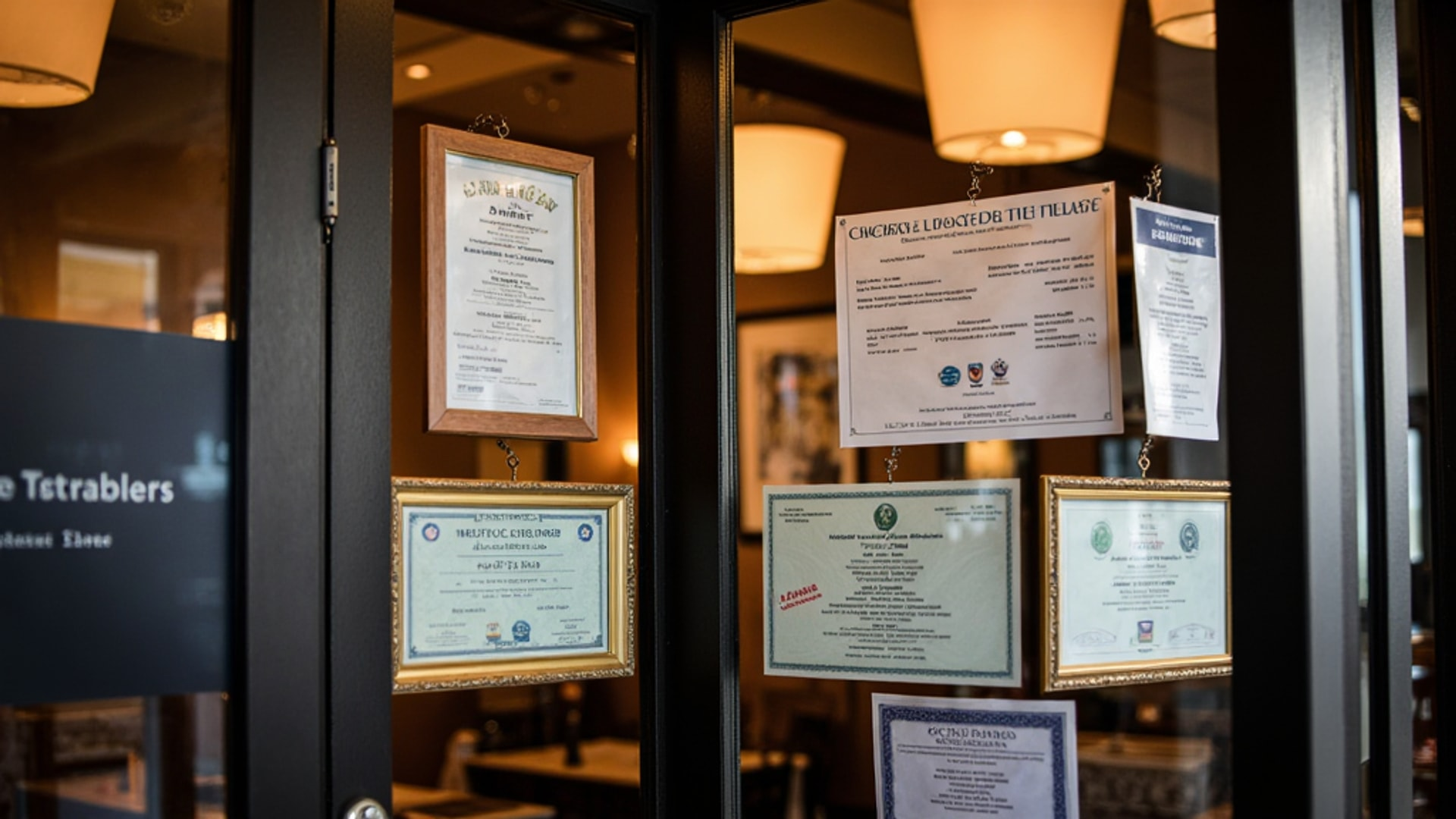
Every jurisdiction requires specific licenses before you can legally prepare and sell food. While exact requirements vary by state and municipality, you will generally need:
Business License
A general business license or business tax certificate is the baseline requirement in virtually every city and county. This registers your operation with local government and authorizes you to conduct commerce.
Food Service Establishment Permit
Issued by your local or state health department, this permit confirms that your facility meets food safety standards. You cannot open without it. The application process typically involves submitting your floor plans, equipment specifications, and menu for review, followed by a pre-opening health inspection.
Food Handler Permits
Most jurisdictions require that your staff hold individual food handler cards or certifications. Managers often need a higher-level food safety certification such as ServSafe Food Protection Manager. Build these training costs and timelines into your staffing plan.
→ Read more: Restaurant Licenses and Permits: Every Permit You Need and How to Get Them
Seller’s Permit or Sales Tax License
If your state collects sales tax on food service (most do), you need a seller’s permit to collect and remit that tax. Failing to register and remit sales tax is a serious compliance violation.
Liquor Licenses
If you plan to serve alcohol, the liquor license is often the most expensive, time-consuming, and competitive permit you will pursue. Key considerations include:
- License types — Most states distinguish between beer and wine licenses, full liquor licenses, and on-premises versus off-premises consumption. A full liquor license for on-premises consumption is what most sit-down restaurants need.
- Quota systems — Many jurisdictions limit the number of liquor licenses available. In these areas, you may need to purchase an existing license on the secondary market, sometimes for tens of thousands of dollars.
- Application timeline — Expect the process to take three to six months or longer. Some states require public notice periods, background checks, and hearings.
- Compliance obligations — Once licensed, you face ongoing requirements: responsible service training for staff, age verification protocols, posted signage, and restrictions on hours of service.
Budget for this early in your financial planning process, and factor the timeline into your construction and opening schedule. The liquor license process varies dramatically by state, especially in quota markets where license costs can reach six figures.
→ Read more: Liquor License Guide: Types, Application Process, and Costs by State
Health Department Permits and Inspections
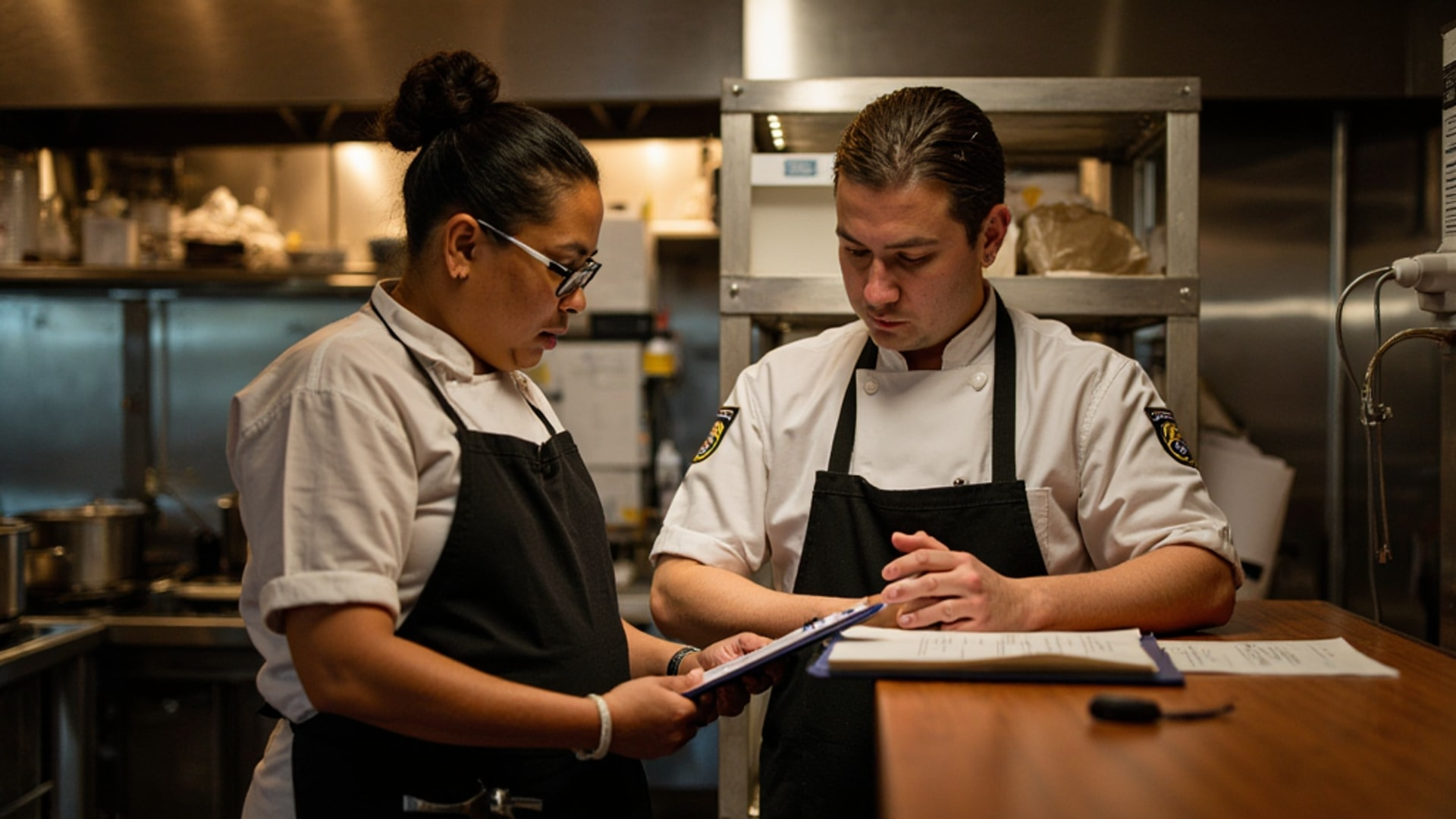
Health permits are non-negotiable. Your local health department will inspect your facility before opening and conduct routine inspections thereafter, typically one to three times per year.
Inspections evaluate:
- Food storage temperatures and cold-holding equipment
- Handwashing stations and sanitation protocols
- Pest control measures
- Employee hygiene practices
- Proper labeling and dating of stored food
- Condition of equipment, floors, walls, and ceilings
Violations are categorized by severity. Critical violations (those posing an immediate health risk) can result in temporary closure. For a deeper dive into maintaining compliance between inspections, see our guide on food safety compliance.
→ Read more: Understanding Health Department Scoring: Inspection Systems and How They Work
Zoning and Building Permits
Before signing a lease, confirm that the property is zoned for restaurant use. Zoning laws govern what types of businesses can operate in specific locations. Factors that affect zoning approval include:
- Use classification — A space previously used as retail may not be automatically approved for food service.
- Parking requirements — Many municipalities require a minimum number of parking spaces based on your seating capacity.
- Signage regulations — Size, illumination, and placement of exterior signs are often regulated.
- Noise and odor — Ventilation exhaust, outdoor dining, and music can trigger additional review.
Building permits are required for any construction or renovation work. Your plans will need to comply with local building codes, fire codes, and the Americans with Disabilities Act. Plan for the permitting process to add weeks or months to your build-out timeline.
→ Read more: Restaurant Lease Negotiation: The Terms That Make or Break Your Business
Insurance Requirements
Restaurant insurance is not a single policy but a bundle of coverages tailored to the risks of food service:
- General liability — Covers claims from customer injuries (slips, falls, allergic reactions) and property damage.
- Liquor liability — Required if you serve alcohol. Covers claims arising from intoxicated patrons.
- Workers’ compensation — Mandatory in nearly every state. Covers employee injuries on the job, which are common in kitchens.
- Property insurance — Protects your physical space, equipment, and inventory against fire, theft, and natural disasters.
- Business interruption insurance — Replaces lost income if you are forced to close temporarily due to a covered event.
- Employment practices liability (EPLI) — Covers claims related to wrongful termination, discrimination, or harassment.
Work with a broker experienced in hospitality to build a policy that matches your risk profile. Understanding the full spectrum of coverage options is essential for protecting your investment.
→ Read more: Restaurant Insurance and Risk Management: Every Coverage You Need and Why
Employment Law Compliance
Restaurants are labor-intensive businesses, and employment law is one of the most common areas where operators face legal trouble. Key areas include:
- Wage and hour laws — Minimum wage, overtime, tip credits and tip pooling rules vary significantly by state. Misclassifying employees as independent contractors is a frequent and costly mistake.
- Anti-discrimination — Federal and state laws prohibit discrimination in hiring, scheduling, promotion, and termination based on protected characteristics.
- Workplace safety (OSHA) — You are required to maintain a safe working environment and report certain injuries. Kitchen-specific hazards like burns, cuts, and repetitive strain require documented safety protocols.
- Immigration compliance (I-9) — You must verify the work eligibility of every employee using Form I-9. Penalties for non-compliance are steep.
- Harassment prevention — Many states require documented anti-harassment policies and regular training for all employees.
Develop your employee handbook and HR processes with legal counsel. This upfront investment prevents far more expensive problems later. For more on building a compliant team, visit our staff management guides.
ADA Compliance
The Americans with Disabilities Act requires that your restaurant be accessible to guests and employees with disabilities. This includes:
- Physical accessibility — Entrances, dining areas, restrooms, and service counters must meet ADA specifications for width, height, and navigation.
- Reasonable accommodations — You must provide reasonable modifications for guests with disabilities, such as Braille menus or assistance with seating.
- Employee accommodations — Qualified employees with disabilities are entitled to reasonable workplace accommodations.
- Website accessibility — Increasingly, courts are ruling that restaurant websites (especially those with online ordering) must meet accessibility standards.
ADA lawsuits are common in the restaurant industry. An accessibility audit during your build-out phase is far cheaper than litigation after opening.
Staying Compliant After Opening
Legal compliance is not a one-time checklist. Licenses expire and must be renewed. Laws change. Staff turn over and new hires need training. Build compliance into your operational routines:
- Maintain a calendar of all license and permit renewal dates
- Schedule regular self-inspections using your health department’s scoring criteria
- Document all employee training, especially food safety and harassment prevention
- Keep employment records organized and accessible
- Review insurance coverage annually as your business evolves
The legal foundation of your restaurant is not glamorous work, but it is the work that lets you keep your doors open. Invest in it early, maintain it consistently, and get professional help when the stakes are high.