· Culture & Sustainability · 8 min read
Restaurant Accessibility and Inclusion: The Business Case for Welcoming Every Guest
UK restaurants that are not accessible miss an estimated £163 million per month in potential revenue — and accessibility goes far beyond wheelchair ramps.
Most restaurant operators think about accessibility in terms of regulatory compliance. You need a wheelchair ramp. You need accessible restrooms. You check the ADA boxes and move on.
That framing misses the business reality almost entirely. Accessibility is a market access strategy, not a compliance cost. The estimated one billion people globally who live with some form of disability represent a dining market that inaccessible restaurants are choosing to ignore. In the UK alone, research cited by the ADA National Network estimates that restaurants which are not accessible miss approximately £163 million per month in potential revenue from disabled diners and their companions.
Building a truly inclusive restaurant is harder than installing a ramp. It is also more profitable than most operators realize.
What Accessibility Actually Means
The ADA’s physical requirements for restaurants are well-documented. At least 5 percent of dining area seating must be accessible. Entrance pathways must accommodate wheelchairs. Restrooms must meet dimensional standards. These are non-negotiable baseline requirements, and violations expose operators to legal liability.
But the ADA National Network’s research makes clear that physical compliance represents only one dimension of inclusive dining. True accessibility encompasses the full dining experience from discovery to departure:
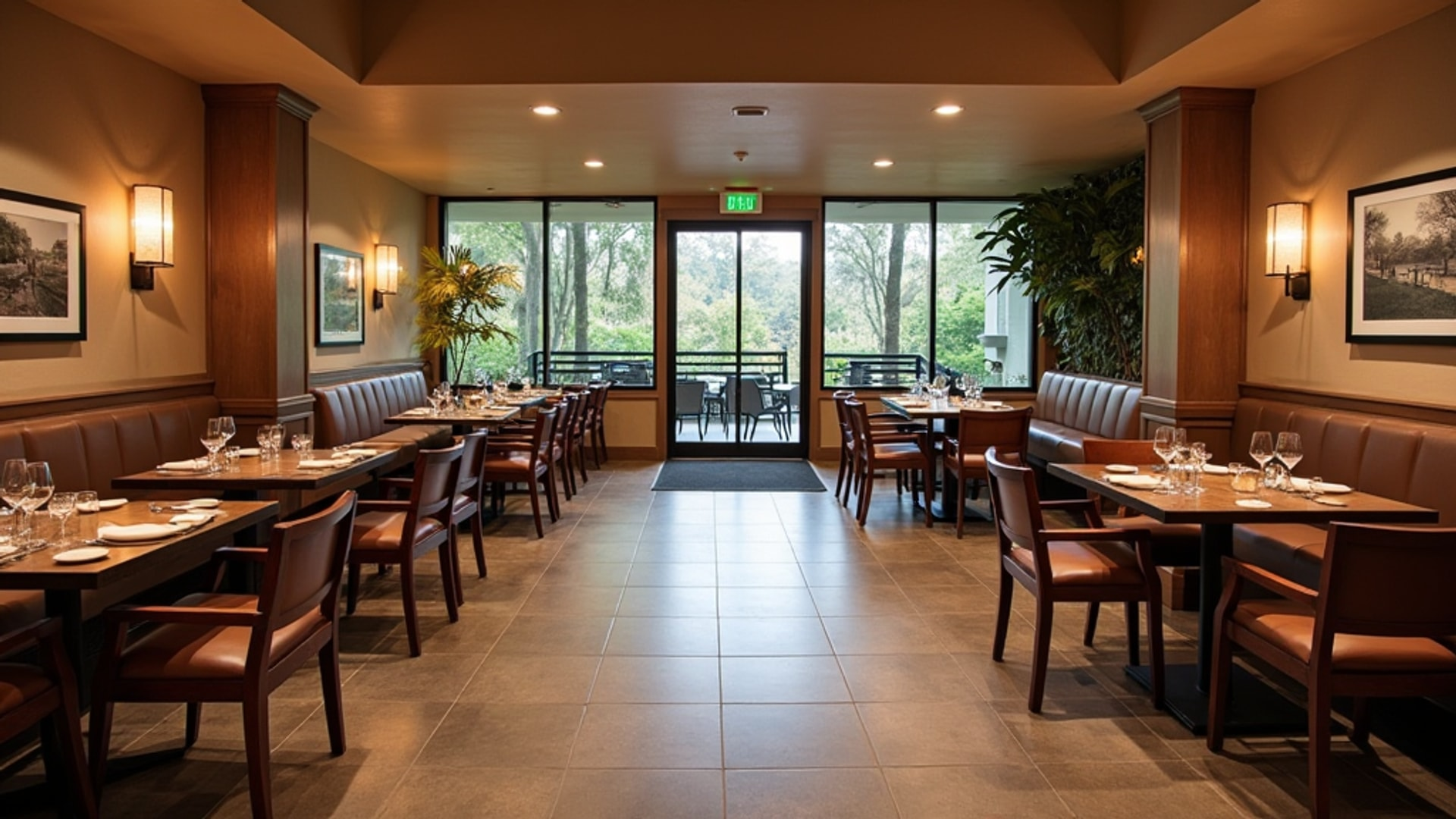
Physical space goes beyond the entrance. Table spacing must allow wheelchair navigation through the dining room, not just access to one designated table by the door. Bar seating at accessible heights, varied seating options including chairs with arms for those with mobility limitations, and clear pathways to all areas of the restaurant are part of complete physical accessibility.
Menu accessibility addresses the needs of guests with visual impairments, cognitive disabilities, or literacy challenges. Menus should be available in large print. Digital menus accessible through smartphones and screen-reader compatible websites serve guests who rely on assistive technology. Braille menus, though rarely requested, signal a level of commitment that resonates with the broader disability community.
Sensory accessibility affects a large and often overlooked population. Restaurant acoustics that create deafening noise levels exclude guests with hearing impairments who rely on lip reading or hearing aids. Lighting levels that are atmospherically dim may be inaccessible for guests with visual impairments. Quieter atmospheres and better lighting control serve an aging population and guests with conditions including autism, PTSD, and chronic pain.
Communication accessibility covers the interaction between staff and guests. This includes the ability to communicate effectively with guests who are deaf or hard of hearing, written menu descriptions available for guests who cannot hear or speak easily, and staff trained to interact professionally and respectfully with guests who communicate differently.
The Staff Training Gap
The ADA National Network’s research identifies staff training as perhaps the most impactful and lowest-cost accessibility investment a restaurant can make. Physical modifications to a building can cost tens of thousands of dollars. Training costs a fraction of that and affects every interaction a disabled guest has with your establishment.
Key principles that disability awareness training should cover:
Ask before assisting. Many restaurant staff reflexively try to help disabled guests: grabbing handles of a wheelchair, directing a guest with visual impairment by the arm, speaking loudly to a guest with hearing aids. The fundamental principle is to ask whether assistance is wanted and wait for direction from the individual. Many guests with disabilities are fully capable and do not want unsolicited help.
Address guests directly. When a guest with a disability is accompanied by someone without a disability, staff sometimes redirect questions and conversation to the companion. Always address the guest, not their companion, unless the guest directs otherwise.
Know your accessible options. Staff should know which tables are most accessible, which restrooms have the most clearance, and whether large-print menus are available. Having to say “I don’t know, let me find out” and then failing to return is not a good experience for any guest.
Understand common accommodation needs. A guest who uses a power wheelchair needs a table that the chair can fit under or approach from the side. A guest with an assistance animal needs a space where the animal can rest safely. A guest with severe food allergies (which can constitute a disability) needs the allergen communication protocols described in other guidance.
The CDC’s research notes that one in three people with food allergies report having a reaction in a restaurant, partly due to gaps in staff knowledge and practice. Allergen management overlaps significantly with broader accessibility training; both require the same attention to guest communication, preparation protocols, and staff competency.
Technology as an Accessibility Enabler
Digital ordering technology, often discussed purely in terms of efficiency, has significant accessibility implications.
Online ordering platforms that follow web accessibility standards (WCAG guidelines) allow guests with visual impairments using screen readers to browse menus and place orders independently. This is meaningful accessibility that most restaurants are providing incidentally, or failing to provide, without considering its impact.
Tableside ordering devices must be accessible. Screen brightness, font size, and interaction design affect usability for guests with visual, motor, and cognitive differences. When deploying tabletop technology, ensure the vendor provides accessibility specifications.
QR code menus, which became nearly universal during the pandemic, created accessibility barriers for some guests. Guests who are not smartphone users, have motor impairments affecting phone handling, or have visual impairments that are not served by screen readers may find QR menus exclusionary. A QR menu should always be available alongside a physical alternative.
Platforms specifically designed to help disabled diners find accessible restaurants, such as DineAbiliti, are growing in prominence. Being listed and accurately described on these platforms is both a discovery opportunity and a signal to the disability community that your restaurant has made intentional accessibility investments.

Designing for Inclusion from the Start
Accessibility retrofits are expensive and often architecturally imperfect. A step that requires a ramp addition, a doorway that barely clears ADA minimums, a restroom that meets dimensional requirements but feels awkward to use. These are the products of accessibility as compliance afterthought.
The alternative is inclusive design from the beginning. When planning a new space or a significant renovation, working with an architect or designer with disability experience produces dramatically better outcomes at comparable cost. Universal design principles benefit everyone, not just guests with disabilities.
Counter seating that works at multiple heights is comfortable for guests of different statures and wheelchair users alike. Wide aisles that accommodate power wheelchairs also improve traffic flow during busy periods. Good lighting that serves guests with visual impairments also reduces errors and complaints from other guests who cannot read the menu. Acoustic design that reduces noise levels serves hearing-impaired guests while also reducing the number of tables that experience the “I can’t hear anything you’re saying” complaint that plagues many modern restaurant designs.
The Revenue and Reputation Case
Beyond the direct revenue from disabled diners, accessibility has compounding effects on restaurant reputation and community standing.
Disabled guests rarely dine alone. A family outing that includes a grandparent using a walker, or a group dinner that includes a friend using a wheelchair, will route to restaurants that can accommodate everyone in the group. Excluding one potential guest often means excluding the entire party.
Disability community networks are highly active in sharing information about which restaurants welcome disabled guests and which do not. Word travels in both directions, positive and negative, faster and further than in the general dining population. The loyalty of customers who find a restaurant that genuinely accommodates their needs is exceptional.
The broader aging population trend ensures that accessibility becomes more commercially important every year. The baby boomer generation, the most affluent dining demographic, is now entering ages where mobility limitations, hearing loss, and visual changes are increasingly common. Restaurants designed for younger, fully able-bodied guests will progressively lose relevance to this spending-capable cohort.
Immediate Actions for Operators
Conduct an access audit. Walk through your restaurant as a guest using a wheelchair (borrow one, or hire a disability consultant to do it with you). Note every point where the experience breaks down: entrance, aisle navigation, table approach, restroom access, payment. Fix the most impactful issues first.
Survey your staff knowledge. Ask your team how they would respond to a guest who uses a wheelchair, a guest with a visual impairment, a guest with a severe food allergy, and a guest who is deaf. The answers reveal training gaps more honestly than any curriculum review.
Audit your digital presence. Check whether your website and online ordering platform meet basic web accessibility standards. Test with a screen reader if you have the capability, or hire an accessibility tester to evaluate it.
Create accessible menu alternatives. Large-print menus cost almost nothing to produce. Digital menus with accessible formatting cost nothing beyond the design update. These investments take hours, not weeks, and they signal genuine commitment.
Communicate your accessibility features. Your website, Google Business Profile, and any platform listings should clearly state accessibility features: parking, entrance access, accessible restrooms, menu formats available. Guests with disabilities plan ahead. They will not discover your accessibility features by accident; you have to tell them.
Inclusive dining is the standard of hospitality that every guest deserves. It is also a significant commercial opportunity that most restaurants are only beginning to act on.
-> Read more: Restaurant Accessibility and Inclusive Design: Beyond Minimum Compliance
-> Read more: Food Allergen Kitchen Protocols: Managing the Nine Major Allergens