· Marketing · 8 min read
Restaurant Google Ads: Case Studies, ROI Data, and What Actually Works
Real data from restaurant Google Ads campaigns — what the ROI looks like, how Performance Max changes the equation, and the strategy behind the numbers.
Every restaurant owner who has spent money on Google Ads wants to know the same thing: does it actually pay off? The answer, based on documented case study data from the 39 Celsius marketing agency, is yes — but only when the strategy is built correctly. The gap between a campaign that generates $19,000 in new sales in a month and one that produces nothing is usually not budget. It is structure, targeting, and understanding which campaign types serve which purpose.
→ Read more: Digital Advertising and PPC for Restaurants: A Practical Guide to Paid Search
The Case Studies: What Real Results Look Like
Case Study 1: The Struggling Reno Pub
A pub in Reno, Nevada, facing declining sales implemented a combined Google Search Ads and Performance Max strategy. According to 39 Celsius, the campaign generated 952 requests for driving directions and $19,100 in new attributed sales within the first 30 days. That initial burst was not the full story — in subsequent months, the pub experienced year-over-year sales growth reaching 35%.
The year-over-year acceleration is important. It suggests that paid traffic created a flywheel: new customers who found the pub through Google Ads became regulars, generated word-of-mouth, and left reviews, which improved organic search rankings and amplified the paid investment. This compounding effect is why the 30-day ROI number, while meaningful, understates the full value of a well-structured campaign.
Case Study 2: The Small Coffee Cart
A coffee cart with a limited marketing budget achieved a 12.5x return on ad spend. This case is notable because it challenges the assumption that meaningful Google Ads results require a significant budget. The outsized return was attributed to superior strategy and execution rather than spending power — specifically, precise geographic targeting and tightly focused ad copy that matched the cart’s positioning.
For independent operators with modest budgets, this case illustrates that disciplined campaign structure can outperform larger budgets managed carelessly.
Case Study 3: The London Restaurant Chain
A London chain generated £18,450 in revenue from 246 tracked customers against £2,675 in ad spend, producing a calculated 589% ROI. The 246 tracked customers represent only the explicitly attributed conversions — customers whose visits were directly traced to the ads through tracking pixels and booking system integration. The actual revenue influence was almost certainly higher.
Case Study 4: The Local Pizza Restaurant
A single-location pizza restaurant achieved a $1.98 cost per conversion with $4.84K in total ad spend. At under $2 to acquire a new customer or confirmed order through paid search, the unit economics were highly favorable given typical pizza order values.
The Full-Funnel Framework: How Search Ads and Performance Max Work Together
39 Celsius is explicit about the strategic architecture behind these results: effective restaurant Google advertising uses a full-funnel approach combining two distinct campaign types that serve different purposes.
Search Ads capture bottom-of-funnel demand. When someone searches “best Italian restaurant near me” or “sushi restaurant open now,” they are actively making a dining decision. Search Ads position your restaurant at the top of these results, ahead of organic listings, at the exact moment of maximum purchase intent. This is the most direct conversion pathway in digital advertising.
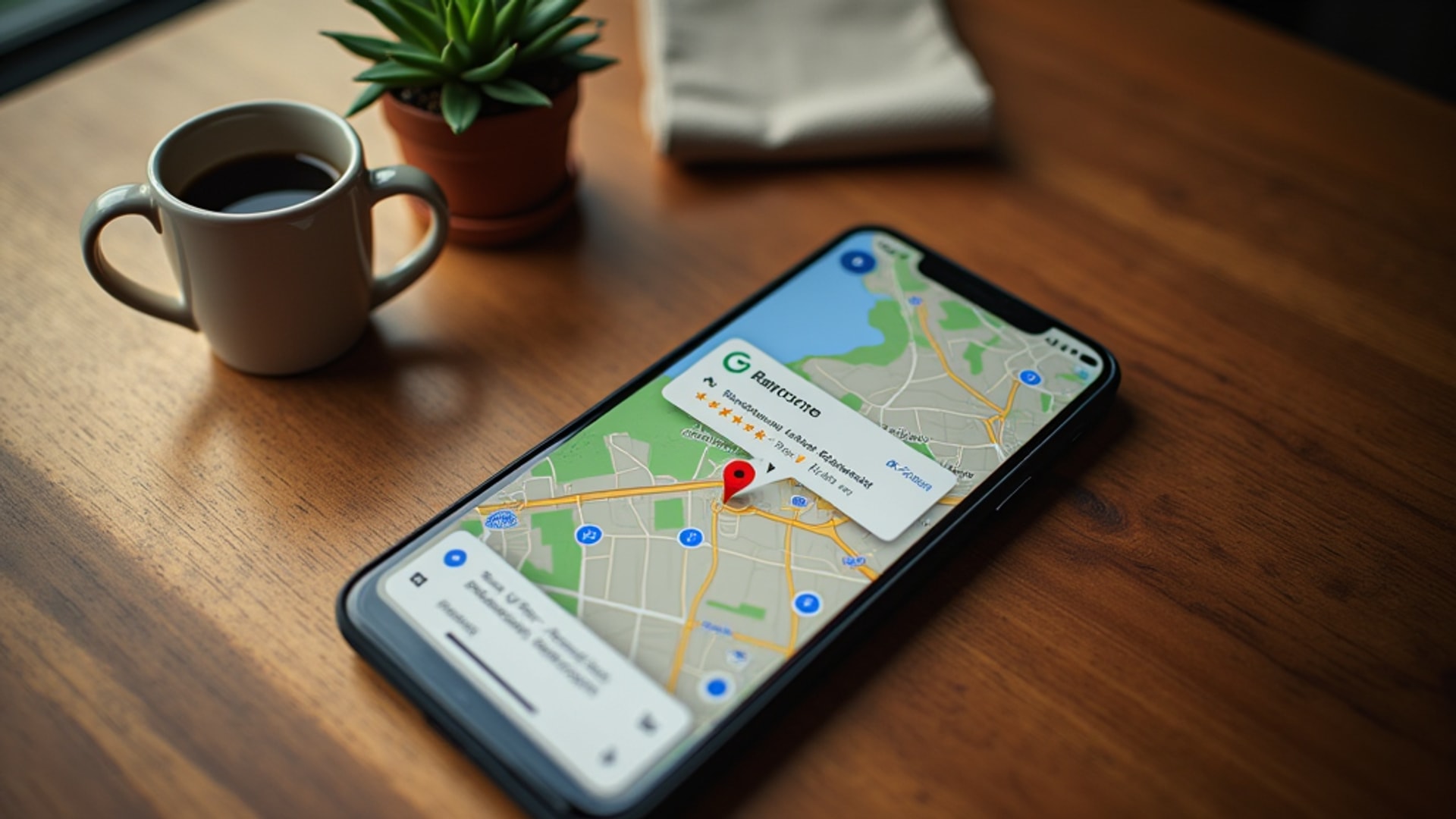
Performance Max (PMax) operates at the top and middle of the funnel. PMax uses Google’s AI to reach potential customers across all Google properties — Search, Maps, Waze, YouTube, Gmail, and the Display Network — who are not yet actively searching for a restaurant but match behavioral profiles indicating dining interest. It creates demand rather than capturing it.
The combination is more powerful than either approach alone. Search Ads convert the people who are already ready to choose. PMax builds awareness and familiarity with the people who will be ready in the next days or weeks, so that when they do search, your restaurant is already familiar.
Understanding Performance Max for Restaurants
Performance Max is an AI-driven campaign type that automates the process of determining which ad format, placement, and audience combination drives the best results across all Google channels simultaneously. Many restaurant operators have not yet incorporated it, which is a missed opportunity.
For restaurants, the practical implications are significant. Instead of managing separate campaigns for Search, Display, YouTube, and Google Maps, PMax handles optimization across all of them automatically. You provide the creative inputs — images, videos, headlines, descriptions, and business information — and Google’s algorithm tests and adjusts placement and bidding continuously.
PMax is particularly valuable for restaurants because it reaches potential customers in relevant contexts that Search Ads cannot. A YouTube pre-roll ad showing your signature dish that appears before food content, a display ad on a restaurant review website, a promoted listing on Waze for drivers heading toward your area — all of these touchpoints happen automatically through a single PMax campaign.
Location Targeting: The Most Critical Variable
For restaurant Google Ads, location targeting is where most campaigns succeed or fail. 39 Celsius recommends a tiered radius approach rather than a single uniform zone.
The strategy works like this: set multiple concentric targeting radii — for example, 3 miles, 5 miles, and 7 miles from the restaurant — with bid adjustments that concentrate spending on users closest to the restaurant. A user within one mile who searches for restaurants is far more likely to visit than one four miles away. The tiered approach applies the budget where it has the highest probability of converting.
The specific radius sizes should reflect your restaurant’s draw area, which varies significantly based on concept and market. A destination fine-dining restaurant might draw from 20-30 miles. A neighborhood pizza delivery operation might focus most of its budget within 3-4 miles. Adjust the radii to match the geographic reality of where your customers actually come from.
Setting Up Campaign Measurement That Reveals True ROI
The ROI figures cited in the case studies are only achievable with proper conversion tracking in place. Without tracking, you can see how many people clicked your ads, but you cannot connect those clicks to actual revenue. With tracking, you can calculate the exact cost to acquire a new customer, a reservation, or an online order.
39 Celsius identifies the key conversion events for restaurant campaigns:
- Direction requests (tracked through Google Maps integration).
- Phone calls (tracked through Google call forwarding numbers).
- Website visits to key pages (menu page, reservation page, order page).
- Online order completions (tracked through your ordering platform).
- Reservation completions (tracked through your booking system).
Each of these events can be assigned a dollar value based on your average check size and visit frequency data. Once values are assigned, Google’s AI can optimize your campaigns toward the highest-value conversions rather than just clicks. Google Analytics provides the measurement infrastructure to track these conversion events and attribute them to specific campaigns.
Budget Allocation: How Much to Start With
The local pizza restaurant case with a $4.84K total spend provides a useful reference point for what a small, well-structured campaign looks like. This is not the minimum — meaningful test data can be generated with $500-1,000 per month — but it represents the kind of investment that produces clear attribution data and allows for optimization.
According to ChowNow’s budget research, restaurants in competitive markets or growth phases typically invest 3-6% of annual revenue in total marketing. Within that marketing budget, digital advertising including Google Ads should receive allocation proportional to its documented ROI relative to other channels.
The most important principle is this: underfunding a well-structured campaign produces weak data and weak results. If the budget is too thin to generate enough conversions for Google’s algorithm to optimize against, you are essentially running a brand awareness buy at search advertising prices. Commit enough budget to generate meaningful conversion volume before evaluating whether the channel works for your restaurant.
Common Mistakes to Avoid
Running Search Ads without Performance Max. Using only Search Ads limits you to demand capture. Without PMax building awareness, you are entirely dependent on organic demand that already exists.
Targeting too broadly. Serving ads to people 30 miles from your restaurant for a neighborhood casual dining concept wastes budget on people who will not drive that far for dinner.
No conversion tracking. Operating without tracking means optimization is guesswork and ROI calculation is impossible.
Treating Google Ads as a set-and-forget channel. Campaigns require ongoing monitoring, bid adjustments, negative keyword maintenance, and creative refreshes. A campaign launched and left unmanaged for three months will underperform significantly.
The case study data tells a consistent story: Google Ads works for restaurants that get the fundamentals right. Structure your campaigns correctly, track conversions, and give the algorithm enough data to optimize against. Skip any of those steps and you are wasting money.
→ Read more: Restaurant Geofencing: Location-Based Advertising That Reaches Diners in the Moment → Read more: Local SEO and Google Business Profile: Getting Found Before Your Competitors