· Operations · 6 min read
Loss Prevention Strategies: Protecting Your Restaurant's Revenue From Every Direction
A practical guide to restaurant loss prevention — covering internal theft, inventory shrinkage, POS controls, and the culture that makes all the procedural controls work.

Loss prevention does not make for exciting management conversations, which is exactly why it gets neglected until the problem becomes obvious. By then, the damage is done — in most cases, for months.
The National Restaurant Association reports that employee theft is responsible for 75% of inventory shortages and approximately 4% of restaurant sales industry-wide. For a restaurant doing $1.5 million in annual revenue, that is $60,000 walking out the door. Not in one dramatic incident — in small, daily acts that no single person notices until the pattern is analyzed.
Understanding the Loss Triangle
According to ThinkLP, employee theft requires three conditions: motivation, opportunity, and rationalization.
- Motivation: Financial pressure, perceived unfair treatment, low wages, resentment
- Opportunity: Weak controls, unsupervised access to cash or inventory, no accountability systems
- Rationalization: “The restaurant makes plenty of money,” “I’m underpaid anyway,” “Everyone does it”
Effective loss prevention addresses all three factors. Controls alone suppress the behavior; they do not eliminate the underlying conditions. A combination of competitive compensation, robust procedural controls, and a workplace culture that reinforces ethical behavior is the complete solution.
POS Controls: Your First Line of Defense
The point-of-sale system is the most important loss prevention tool in a full-service restaurant. According to ThinkLP, technology-based controls provide continuous monitoring without relying on management observation.
Individual login accountability: Every transaction must be traceable to a specific employee login. Shared logins eliminate accountability — if anyone can access any register with any credentials, the audit trail is useless. Individual POS logins track all transactions, voids, and discounts to specific employees.
Exception-based reporting: Configure your POS to flag:
- Void frequency above threshold (e.g., more than 3 voids per shift per employee)
- Discount rates above policy limits
- Refund activity without manager approval
- Split-check patterns that could indicate order manipulation
- Items ordered that never appear on a bill (comp fraud or “winging it” without ringing in)
Dual approval for sensitive transactions: According to ThinkLP, dual approval requirements for voids and discounts reduce fraudulent transaction opportunities. A manager must authorize every void above a dollar threshold. This single control catches the most common form of POS fraud: the employee who rings a transaction, pockets the cash, and voids the sale after the guest leaves.
Smart tills: According to ThinkLP, smart tills weigh cash after each sale and reconcile with POS in real time. Cash discrepancies are flagged immediately rather than discovered at end-of-day reconciliation. This compression of the feedback loop significantly reduces the opportunity for cash skimming.
Blind drops: Require cashiers to close out registers without seeing the expected totals. They count what’s there and report it. The POS expected total is verified afterward. This simple practice prevents employees from manipulating their cash count to match the register total.
Inventory Controls
Cash theft gets the headlines, but product theft and unreported waste are often the larger cumulative loss. According to ThinkLP, regular physical counts compared against theoretical usage based on sales data reveal unexplained variances that may indicate theft, unauthorized consumption, or unreported waste.
The theoretical vs. actual comparison: Your POS knows how much of each menu item was sold. Your recipes know how much of each ingredient those items require. The product of those two calculations is your theoretical usage — what you should have used. Compare that to actual inventory change. The gap is your variance.
A variance that appears consistently in the same ingredient category is a signal. Investigate before assuming.
High-value ingredient controls:
- Proteins (steak, lobster, premium seafood): count daily, lock the walk-in after hours, require manager authorization for any additional pulls
- Alcohol: mark bottles for variance tracking, count bottle-by-bottle daily, lock the bar during non-service hours
- Small, portable items (spice packs, individually packaged items): secure storage, access control
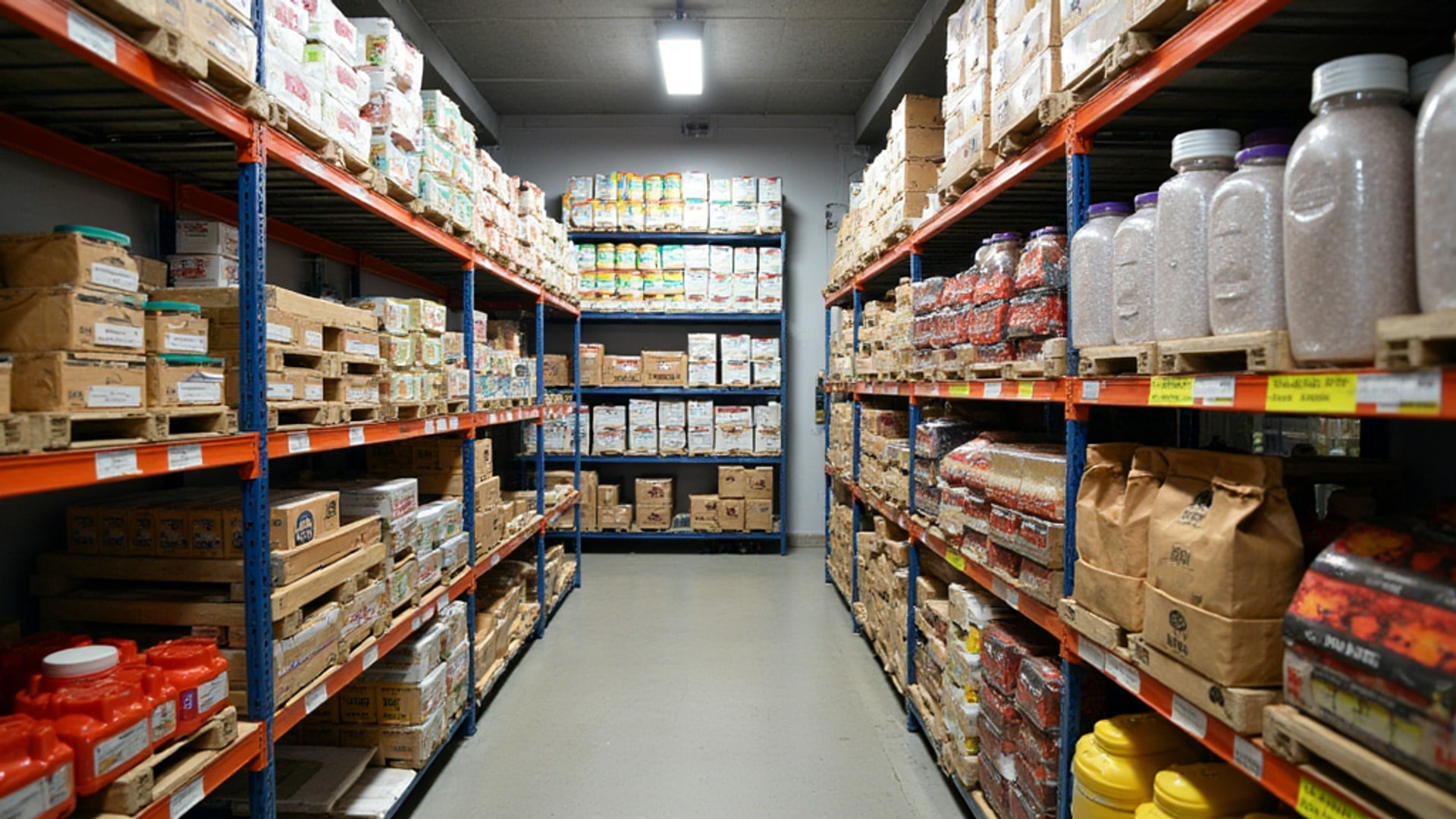
Storage access control: According to ThinkLP, limiting storage access to authorized personnel prevents unauthorized inventory movements. Walk-in coolers, liquor storage, and dry goods should have controlled access — not locked in ways that impede service, but monitored in ways that create accountability.
Dine-and-Dash Prevention
Walk-offs cost U.S. restaurants tens of millions of dollars annually. Prevention measures:
- Table visibility: Design floor layouts and server sections so every table has line-of-sight from at least one station
- Pre-authorization: For large parties, require a credit card to hold the reservation
- Check delivery timing: Present the check promptly without rushing — guests who’ve been waiting 10 minutes for a bill are more likely to leave than those who receive it naturally
- Parking lot awareness: If you can see the parking lot from the host stand, runners who disappear to cars after ordering is a red flag
For repeat offenders in your area, share information with neighboring restaurants. This is more common in some markets than others.
Counterfeit Currency and Payment Fraud
- Keep a counterfeit detection pen at every register
- Train staff on current counterfeit detection methods annually — counterfeiting techniques evolve
- For checks above a threshold ($50 or $100), verify all large bills
- For credit cards: verify signature matches and physical card present; flag transactions that trigger declines and require retries across multiple cards
The Cultural Layer
According to ThinkLP, the cultural dimension of loss prevention is often underestimated. Operations that combine fair compensation, transparent management, consistent policy enforcement, and genuine recognition for integrity create an environment where the social cost of theft is high and the motivation to steal is low.
This cultural investment amplifies the effectiveness of every procedural and technological control. A team that believes they are treated fairly, compensated equitably, and recognized for honest behavior has less motivation to steal and is more likely to report others who do.
Conversely, a workplace with inconsistent rule enforcement, management double standards, and visible favoritism provides constant rationalization for dishonest behavior. No system of controls fully compensates for a toxic culture.
Building the Loss Prevention Audit
Conduct a quarterly loss prevention audit covering:
| Area | What to Review |
|---|---|
| POS controls | Exception reports: void rates, discount rates, refund patterns by employee |
| Inventory | Theoretical vs. actual variance by category for the quarter |
| Cash | End-of-day variance log — frequency and magnitude of discrepancies |
| Bar | Bottle usage vs. theoretical consumption per pour cost |
| Staff turnover | Exit interviews — did anyone cite unfair treatment or compensation? |
According to Restaurant365, daily metric monitoring allows course corrections before small problems become costly. Apply the same principle to loss prevention: review exception reports weekly, not quarterly. A pattern that develops over two weeks is far easier to address than one that has run for six months.
The Return on Investment
The investment in loss prevention — POS controls, dual authorization, regular inventory counts, exception reporting — is modest. The return is the elimination of the 4% sales bleed that the National Restaurant Association identifies as the industry average. For a $1.5 million restaurant, eliminating even half of that loss adds $30,000 per year to the bottom line.
Most restaurants operate on 5 to 10% net margins. A 2% loss prevention improvement can equal a 20 to 40% increase in net profit. Few other operational investments deliver that return.
→ Read more: Cash Handling and Financial Controls in Restaurants → Read more: POS Systems for Restaurants: How to Choose the Right Platform in 2026 → Read more: Restaurant Operations KPI Dashboard: The Metrics That Actually Drive Decisions