· Case Studies · 12 min read
Fine Dining Business Models: How the World's Best Restaurants Actually Make Money
Fine dining runs on 2-6% net margins with the highest labor and ingredient costs in the industry. Here is how the restaurants that survive — and thrive — structure their economics, diversify revenue, and build businesses that last.
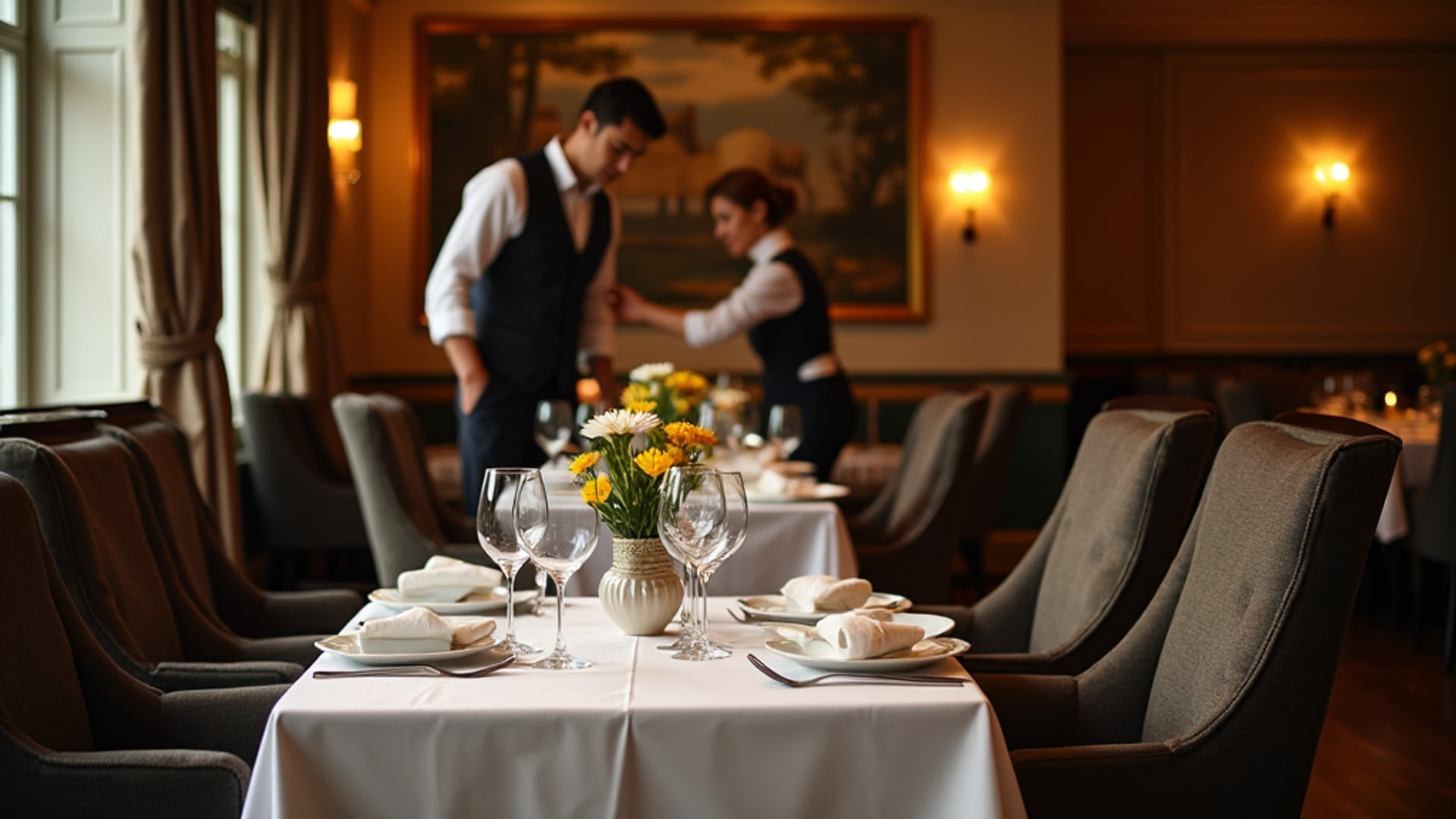
Fine dining is the restaurant industry’s most punishing business model. You spend more on ingredients, employ more staff per cover, require more skilled labor, occupy more expensive real estate, and spend longer serving each table — all while operating on the same razor-thin margins as restaurants that serve food in paper bags.
According to Financial Models Lab’s analysis of fine dining economics, full-service restaurants achieve net profit margins of just 2-6%, at the lower end of the industry spectrum. Quick-service operations hit 6-9%. Food trucks achieve 6-9%. Even catering businesses average 7-8%. Fine dining, with its premium cost structure, often lands at the very bottom of the full-service range.
And yet, the segment is not dead. According to ResearchGate’s study on Michelin star profitability, and the National Restaurant Association’s 2026 State of the Industry report, full-service restaurants led transaction growth in 2025, showing unexpected strength after years of post-pandemic underperformance. The NRA projects total industry sales of $1.55 trillion in 2026, with full-service showing renewed momentum.
So how do the restaurants that thrive in this segment actually make it work? The answer involves a fundamentally different approach to economics, staffing, revenue, and what the business even is.
This article is part of the Restaurant Case Studies collection on NineGuides.
The Financial Reality of Fine Dining
Before examining specific models, you need to understand why fine dining economics are so challenging. The standard industry benchmark divides revenue roughly into thirds: one-third to food costs, one-third to labor, and the remaining third for overhead, occupancy, and profit. According to Lightspeed, approximately 50% of U.S. restaurants close within five years, largely due to insufficient margins and poor cost control.
Fine dining breaks this formula in every category:
| Cost Category | Industry Average | Fine Dining Reality |
|---|---|---|
| Food cost | 28-35% | 30-40% (premium proteins, specialty ingredients) |
| Labor cost | ~30% | 35-45% (more staff per cover, higher skill levels) |
| Occupancy | ~10% | 12-18% (prime locations, larger footprint per seat) |
| Net margin | 2-6% | Often 2-4% |
When your food costs are 30-40% of revenue due to premium proteins and specialty ingredients — compared to 18-22% for quick-service — you are starting from a fundamentally different position. Add higher labor costs for skilled cooks, sommelier-level service staff, and longer service times, and the margin for error approaches zero.
The question is not how to cut costs — it is how to build a business model that justifies them.
Jean-Georges: Scaling Excellence Across 40 Restaurants
Jean-Georges Vongerichten’s operation, documented by Eater, demonstrates how fine dining can scale while maintaining the quality that commands premium pricing. The flagship New York restaurant anchors a global network of 40 locations, all serving dishes developed and standardized at the flagship.
The Standardization Engine
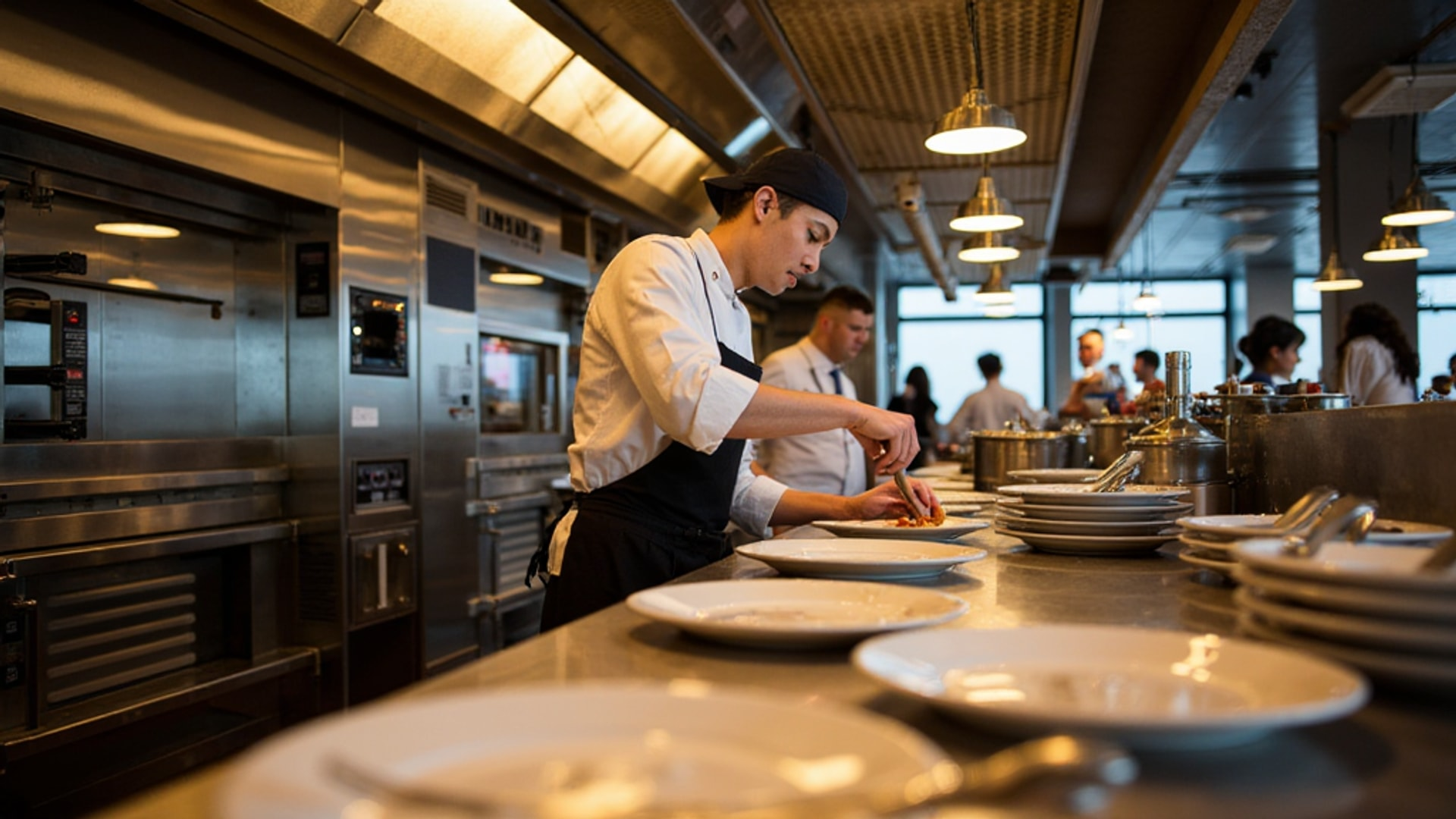
Every recipe is measured to a tenth of a gram, the ultimate expression of recipe standardization. Custom tools, including rulers with precise measurements for specific dishes, ensure visual consistency. The egg toast — topped with caviar — is assembled identically whether served in New York, Tokyo, or Brazil. According to Eater’s documentation, one cook has produced close to a million of these over his tenure, cutting every bread and cooking every egg personally.
This precision is what enables scaling. Most fine dining operators assume that excellence cannot be replicated across multiple locations. Jean-Georges proves it can — but only with systems so rigorous that they control every variable.
Sourcing as Competitive Moat
According to Eater’s reporting, product sourcing is the defining competitive advantage of the Jean-Georges operation. Published cookbooks have not allowed replication because ingredient quality cannot be matched at home or by competitors. Supplier relationships are cultivated so that premium items — truffles, caviar — are delivered to priority restaurants first upon clearing customs. Every tin of caviar is opened and tasted before acceptance, evaluated for bead size, color, flavor cleanliness, and finish.
Executive Chef Mark Lapico, who has been with the restaurant for 17 years, begins every day by receiving and quality-checking deliveries. Hawaiian tuna arrives fresh daily and is evaluated for color, leanness, and suitability for specific preparations.
The Business Model Lesson
Jean-Georges operates on a multi-unit model rarely seen in fine dining. Instead of pouring all resources into a single temple of gastronomy, the operation distributes its creative and sourcing advantages across a global portfolio. Each location generates revenue on the Jean-Georges brand and system, spreading the overhead costs of recipe development, supplier relationships, and executive talent across 40 units rather than one.
This is a fundamentally different approach to fine dining economics. The flagship is not just a restaurant — it is an R&D center for a global food business.
Eleven Madison Park: The Cost of Three Stars
If Jean-Georges represents scalable fine dining, Eleven Madison Park (EMP) represents the other extreme — maximum investment in a single location. According to Bon Appetit’s documentation, 200 employees serve approximately 120 guests nightly while maintaining three Michelin stars for over a decade.
That is a staff-to-guest ratio that would be unthinkable in any other segment. One hundred kitchen team members — including 15 sous chefs, 50 savory cooks, and 20 pastry staff — work in a restaurant that runs nearly 24 hours a day. The first team arrives at 5:00 AM for bread production; the last porter leaves at 3:00 AM. Only two hours per day is the kitchen empty.
What Three Stars Actually Costs
The operational intensity at EMP illustrates why Michelin-star economics are so different from regular fine dining:
- Dedicated roles for single items. One full-time person works five days a week solely on butter production — plant-based sunflower butter made through a process involving liquid nitrogen cooling, emulsification with seasonal allium jam, and silicone molding. Each butter pad is checked with a cake tester for air bubbles.
- Multi-day production cycles. The makai skewer, a signature dish, requires a three-day production process. Every piece is trimmed to a perfect rectangle so it cooks evenly and looks identical on every plate.
- Three daily family meals. At 10:30 AM, 4:00 PM, and 1:00 AM for porters, reflecting the near-continuous operation.
- Four criteria for every dish. The EMP standard requires dishes to be creative, beautiful, delicious, and intentional — all four criteria must be met for a dish to reach the menu.
The Michelin Economic Dynamic
Michelin recognition creates a powerful feedback loop. A star (or three) drives both volume and pricing power, allowing the restaurant to command premium prices and fill reservations months in advance. The tasting menu at a three-star restaurant can command $300-$500 per person before wine.
But the pursuit and maintenance of stars requires sustained investment that may not pay for itself through the dining room alone. The costs of maintaining Michelin-level execution include premium ingredients, higher chef salaries, more labor-intensive service, and continuous investment in the dining environment.
This is the central paradox of Michelin fine dining: the stars generate the pricing power you need, but the cost of maintaining them can consume the premium they command. The restaurants that solve this paradox typically do so through revenue diversification, not by trying to make the dining room alone profitable enough.
The Tasting Menu Model
The tasting menu has become the dominant format in contemporary fine dining, and it serves both creative and financial purposes.
Financial Advantages
From a business model perspective, tasting menus offer several structural benefits:
- Predictable food costs. Fixed portions and pre-planned procurement eliminate the volatility of a la carte ordering. You know exactly how much of each ingredient you need on any given night.
- Reduced food waste. Exact-quantity preparation means minimal overproduction. When every table gets the same courses, waste drops dramatically.
- Premium pricing. The price reflects the experience — the duration, the creativity, the artistry — rather than ingredient cost alone. This decouples pricing from the traditional food-cost percentage calculation.
- Efficient procurement. Buying specific quantities of fewer ingredients improves purchasing power and reduces storage requirements.
The Trade-Off
The trade-off is reduced table turns. A tasting menu typically requires 2-3 hours of dining time, compared to the standard 60-90 minutes for a full-service a la carte meal. You need to price tasting menus to account for the full dining duration, which means calculating revenue per seat-hour rather than just per cover.
| Model | Average Duration | Turns per Evening | Revenue per Turn | Revenue per Seat |
|---|---|---|---|---|
| A la carte fine dining | 90 minutes | 1.5-2 | $80-$150 | $120-$300 |
| Tasting menu (no wine) | 2-3 hours | 1 | $200-$500 | $200-$500 |
| Tasting menu + wine pairing | 2-3 hours | 1 | $350-$800 | $350-$800 |
Wine pairing add-ons are one of the highest-margin components of the fine dining business model. A beverage program that converts 50-70% of tasting menu guests to wine pairings can dramatically shift the economics of each evening’s service.
→ Read more: Tasting Menu Strategy
Revenue Diversification: Beyond the Dining Room
The most resilient fine dining operations have recognized that the dining room alone cannot sustain the business. Multiple revenue channels reduce dependence on nightly covers and provide financial cushioning during slow periods.
Meal Kits and At-Home Experiences
The Maison de Saveur case study, documented by Best of Exports, illustrates this evolution. This high-end French restaurant adapted to pandemic restrictions by creating “Finish-at-Home” meal kits with pre-portioned ingredients and video tutorials, paired with virtual wine pairing sessions led by the sommelier. When restrictions eased, the restaurant maintained both dine-in and the meal kit operation, creating a hybrid model.
The meal kit revenue stream is particularly valuable for fine dining because it leverages existing advantages — culinary expertise, supplier relationships, brand prestige — without requiring additional dining room capacity.
Membership and Subscription Programs
According to the National Restaurant Association’s 2024 research, 81% of Gen Z adults and 79% of millennials say they would participate in a meal subscription program if offered. While subscription models have been more visible in fast-casual (Panera’s Sip Club attracted over 600,000 members, according to Subport), fine dining can adapt the concept.
Fine dining memberships might include:
- Priority reservations for high-demand dates
- Exclusive tasting events and chef’s table experiences
- Quarterly wine shipments curated by the sommelier
- Early access to new menu launches
- Private dining credits for entertaining
According to Subport and Square data, merchants offering subscriptions grew 54% year over year, with 57% of subscribers remaining active after six months. The recurring revenue and customer data these programs generate are especially valuable in a segment where individual covers are high but frequency is low.
Additional Revenue Channels
Beyond meal kits and memberships, fine dining restaurants are generating revenue through:
- Private dining and events. Large-format bookings with guaranteed minimums and beverage packages often yield margins well above standard service.
- Branded products and retail. Signature sauces, spice blends, cookbooks, and kitchenware extend the brand beyond the dining room.
- Culinary education. Cooking classes and workshops fill daytime capacity and serve as marketing for the main dining experience.
- Consulting and brand licensing. Established chefs and restaurant groups can license their name, recipes, and systems to hotel restaurants, airport concepts, and international operators — as Jean-Georges has demonstrated at scale.

The Portfolio Approach to Fine Dining
The most financially sustainable fine dining operations treat the business as a portfolio rather than a single venue.
Chef-Driven Restaurant Groups
Many successful fine dining chefs operate multiple concepts at different price points:
- Flagship fine dining — the creative center and brand anchor, often operating at breakeven or modest profit
- Upscale casual concepts — leveraging the chef’s name and culinary expertise at a lower price point with higher volume
- Fast-casual or counter-service — further extending the brand to high-frequency, lower-check dining
- Catering and events — high-margin work that leverages existing kitchen capacity
In this model, the flagship fine dining restaurant serves as the brand engine that makes all the other ventures viable. The Michelin stars or critical acclaim attached to the flagship create pricing power and consumer trust across the entire portfolio.
The Revenue Mix
A financially healthy fine dining operation might target a revenue mix like this:
| Channel | Revenue Share | Margin Profile |
|---|---|---|
| Dine-in service | 50-60% | Low (2-5%) |
| Private events | 15-20% | Medium (8-15%) |
| Beverage program (beyond food pairings) | 10-15% | High (15-25%) |
| Retail/products/meal kits | 5-10% | Medium-High (10-20%) |
| Memberships/subscriptions | 3-5% | High (20-30%) |
The dining room may generate the majority of revenue, but the higher-margin ancillary channels can make the difference between a restaurant that merely survives and one that prospers.
Making Fine Dining Viable: A Financial Checklist
If you are operating or considering a fine dining concept, these are the financial levers that matter most:
Pricing discipline.
- Calculate revenue per seat-hour, not just per cover
- Wine pairing conversion rate should target 50%+ of tasting menu guests
- Private dining minimums should exceed per-cover revenue of standard service
Cost management without quality erosion.
- Negotiate supplier relationships based on consistency and priority, not just price
- Use tasting menu formats to control food costs through precise procurement
- Cross-utilize premium ingredients across courses to maximize yield
Labor efficiency within quality constraints.
- Track revenue per labor hour across all dayparts
- Invest in training and retention — the NRA reports 80% annual turnover industry-wide, but fine dining depends on experienced, skilled staff
- Use family meals and culture as retention tools, not just operating costs
Revenue diversification.
- Develop at least two non-dining-room revenue channels within the first two years
- Test subscription or membership models with existing loyal customers
- Monetize daytime and off-peak capacity through events, classes, or retail
Financial reserves.
- Maintain larger operating reserves than other segments (3-6 months versus 2-3 months)
- Account for the longer ramp-up period fine dining concepts require to reach profitability
- Budget for ongoing investment in the dining environment — deferred maintenance is more visible and more damaging in fine dining

The Bottom Line
Fine dining is not a good business if you measure it by net margin alone. At 2-4% net profit on a high-cost operation, the room for error is almost nonexistent. One bad month, one key departure, one shift in the market can erase a year of careful management.
But the operators who succeed in fine dining understand something that the spreadsheet misses: the dining room is not the whole business. It is the engine that powers a portfolio of higher-margin activities — events, products, memberships, consulting, licensing, and multi-unit expansion.
→ Read more: Noma’s Closing: Why Fine Dining Is Unsustainable
Jean-Georges proved you can scale fine dining precision across 40 restaurants worldwide. Eleven Madison Park proved you can sustain three Michelin stars for a decade with 200 employees serving 120 guests. Maison de Saveur proved you can turn a crisis into a permanently diversified business model.
The common thread is that none of them tried to make the traditional fine dining model work by traditional means alone. They each redefined what a fine dining business actually is. That is the real lesson: fine dining is viable, but only if you think of it as a platform for multiple revenue streams rather than a single restaurant hoping to squeak by on 3% margins.