· Case Studies · 11 min read
Franchise vs. Independent Restaurant: The Real Numbers Behind Each Path
The OSU/Parsa study found nearly identical three-year failure rates — 57% franchise vs. 61% independent. The real differences are in cost structure, autonomy, and how you build wealth. Here is the honest comparison.

One of the first decisions you will face as an aspiring restaurateur is whether to buy into a franchise system or build your own concept from scratch. The conventional wisdom says franchises are dramatically safer. The data says something different.
According to the landmark Ohio State University study by researcher H.G. Parsa, published in the Cornell Hospitality Quarterly, franchised restaurants showed a three-year failure rate of 57%, compared to 61% for independents. That is a gap of just four percentage points — far smaller than the franchise industry’s marketing would suggest.
This article breaks down the actual financial differences, operational trade-offs, and alternative paths between the two models so you can make this decision based on numbers rather than assumptions.
This article is part of the Restaurant Case Studies collection on NineGuides.
The Failure Rate Myth
Before diving into the comparison, let’s dismantle the myth that dominates this conversation. The claim that 90% of restaurants fail in their first year is wrong. Parsa’s study, which used health department data from 2,439 restaurants in Columbus, Ohio, found the actual numbers:
| Year | Failure Rate |
|---|---|
| Year 1 | ~26% |
| Year 2 | ~19% |
| Year 3 | ~14% |
| Cumulative 3-year | 57-61% |
More recent data from Datassential (2025) shows first-year failure rates as low as 0.9%, though methodological differences make direct comparison difficult. CNBC’s investigation into the ghost kitchen model notes that even well-capitalized alternative formats face significant failure pressures when unit economics do not support the overhead, reinforcing that concept viability matters more than business structure. What the Parsa study also revealed is that many closures were not financially driven — owners cited personal factors such as divorce, poor health, or retirement. The actual rate of economic failure (bankruptcy, insolvency) is lower than the overall closure rate.
The practical takeaway: restaurants are not the death traps their reputation suggests. And the franchise model’s survival advantage over independents is marginal at best.
Franchise Cost Structure: What You Actually Pay
According to University of Michigan Ross’s research on how independent businesses measure against franchises, the advantages of each model depend heavily on the operator’s skills and goals. And according to CloudKitchens’ detailed cost analysis, the financial commitment of a franchise has multiple layers that prospective operators often underestimate.
Initial Investment
The upfront franchise fee — the cost of the right to operate under the brand — ranges from $10,000 to $100,000. But the total initial investment is far larger:
| Brand | Franchise Fee | Total Investment |
|---|---|---|
| Chick-fil-A | $10,000 | Lower upfront, but 15% of sales + 50% of pretax profit ongoing |
| Subway | Included in total | $100,000-$340,000 |
| Pizza Hut | Included in total | $300,000-$2.1 million |
| McDonald’s | Included in total | $1 million-$2.2 million |
| Denny’s | Included in total | $1.4 million-$2.3 million |
Beyond the franchise fee, you face:
- Real estate and buildout: $150,000 to $1 million+ depending on market and condition
- Kitchen equipment: $10,000 to $100,000+
- Initial inventory: $5,000 to $100,000
- Professional services: Legal counsel, accounting, licensing, permits, insurance
The Perpetual Cost of Franchise Ownership
This is where the franchise model’s true cost reveals itself. According to CloudKitchens, ongoing costs include:
- Monthly royalties: Typically 4-8% of gross revenue (not net — gross)
- Marketing fund contributions: 2-5% of gross revenue
- Variable operating expenses: Utilities, ingredients, labor, maintenance
The royalty and marketing costs are perpetual. They never go away. On a restaurant generating $1.5 million in annual revenue, a 6% royalty plus 3% marketing contribution equals $135,000 per year flowing to the franchisor — money that an independent operator keeps entirely.
Consider the Chick-fil-A model specifically. The $10,000 franchise fee looks like a bargain until you realize you are paying 15% of sales plus 50% of pretax profit. On a high-volume Chick-fil-A unit, that structure means the franchisor captures the vast majority of the economic value your operation creates.
What Franchises Give You
The franchise model is not all cost. According to industry analysis, the structural advantages are real:
Brand recognition. Customers already know the name, the menu, and what to expect. This dramatically reduces customer acquisition costs and shortens the ramp-up period. An independent restaurant may take 12-18 months to build a customer base. A known franchise brand walks in with one.
Proven operational systems. Training programs, supply chain management, recipe standardization, and POS integration are developed and refined across hundreds or thousands of units. You are not building these from scratch.
Purchasing power. Centralized procurement across a franchise network generates volume discounts on ingredients, equipment, and supplies that no single-unit operator can match.
Support infrastructure. When you hit a problem — a food safety issue, a staffing crisis, a marketing challenge — you have a corporate team and a network of other franchisees to draw on.
Financing access. Banks are generally more comfortable lending to franchise concepts with documented track records than to unproven independent concepts.
What Franchises Cost You (Beyond Money)
The financial costs are obvious. The operational costs are less discussed but equally significant.
Menu control. You cannot add, remove, or modify menu items without franchisor approval. If your local market wants something different, you are stuck with the corporate menu. If the franchisor makes a bad menu decision, you bear the consequences.
Pricing limitations. Promotional pricing, discounts, and value meals are often dictated by the franchisor, even when they compress your margins.
Brand risk exposure. If another franchisee in your market — or anywhere in the country — generates negative press, your location absorbs the damage. Chipotle’s food safety crisis affected every location, not just the ones with outbreaks. Limited exit options. Franchise agreements typically give the franchisor right of first refusal on any sale, approval rights over buyers, and the ability to terminate the agreement under certain conditions. Your “business” may be less yours than you think.
Innovation constraints. The systems that make franchises consistent also make them slow to adapt. If you see a local market opportunity, your ability to capitalize on it is limited by the franchise agreement.
According to restaurant coach David Scott Peters, franchise operators like Todd — who opened a third franchise location with a seasoned partner but lacked robust management systems — can still fail despite the franchise infrastructure. The franchise provides a framework, but execution still depends on the operator.
The Independent Advantage
Independent restaurants trade the franchise’s built-in systems for something equally valuable: complete control.
Full profit retention. Every dollar above your costs stays with you. No royalties, no marketing fund contributions, no franchisor taking a cut. On that same $1.5 million revenue restaurant, the $135,000 that would flow to a franchisor stays in your pocket.
Creative freedom. Your menu, your concept, your brand, your pricing — all under your control. If your market shifts, you shift with it. If a dish is not working, you pull it tonight.
Local brand equity. The brand you build is genuinely yours. You can sell it, expand it, license it, or pivot it without asking anyone’s permission.
Speed of adaptation. Independent operators can respond to market changes in days. Franchise operators wait for corporate approval, field testing, and system-wide rollouts.
According to David Scott Peters’ documented case studies, systems-driven independents can achieve both profitability and growth. Jonathan built management systems that enabled a successful second location. Ryan and Neely manage multiple seasonal restaurants in Ocean City, Maryland through standardized processes that handle extreme seasonal fluctuations. The common thread: systems-based operations, not individual hustle, enable sustainable growth for independents.
The Real Decision Framework
The franchise-vs-independent choice is not about which model is objectively better. It is about which model fits your specific situation.
Choose a Franchise If:
- You have significant capital but limited restaurant experience
- You value predictability over creative control
- You want a proven system and are willing to follow it exactly
- You are comfortable with perpetual royalty payments as the cost of reduced risk
- You plan to be a multi-unit operator within a single system
Choose Independent If:
- You have strong restaurant operations experience (or a partner who does)
- You have a distinctive concept that does not exist as a franchise
- You want to retain full profit upside and brand ownership
- You are comfortable building systems from scratch
- You value the ability to pivot quickly based on local market conditions
Key Questions to Answer:
| Factor | Franchise | Independent |
|---|---|---|
| Total startup capital required | Higher ($300K-$2M+) | Variable ($50K-$1M+) |
| Ongoing fees | 6-13% of gross revenue | None |
| Time to customer base | Faster (existing brand) | Slower (12-18 months) |
| Menu/concept control | Limited | Complete |
| Financing access | Easier | Harder |
| Exit flexibility | Restricted | Open |
| 3-year failure rate (Parsa) | 57% | 61% |
Alternative Entry Models
The franchise-vs-independent binary is not your only choice. Several alternative paths reduce risk without requiring a franchise fee.
Cloud/Ghost Kitchens
According to CloudKitchens, delivery-only operations offer a dramatically lower entry point:
- Startup costs: $10,000-$100,000
- Space required: 200-800 square feet
- Staff needed: 2-5 employees
- Target ROI: 15-25% annually, reached faster than brick-and-mortar
The trade-off is limited brand-building opportunity. Without a physical presence, you are competing primarily on delivery platform visibility and review scores. But as a testing ground for a concept before committing to a full restaurant, the model is hard to beat.
Food Truck to Brick-and-Mortar
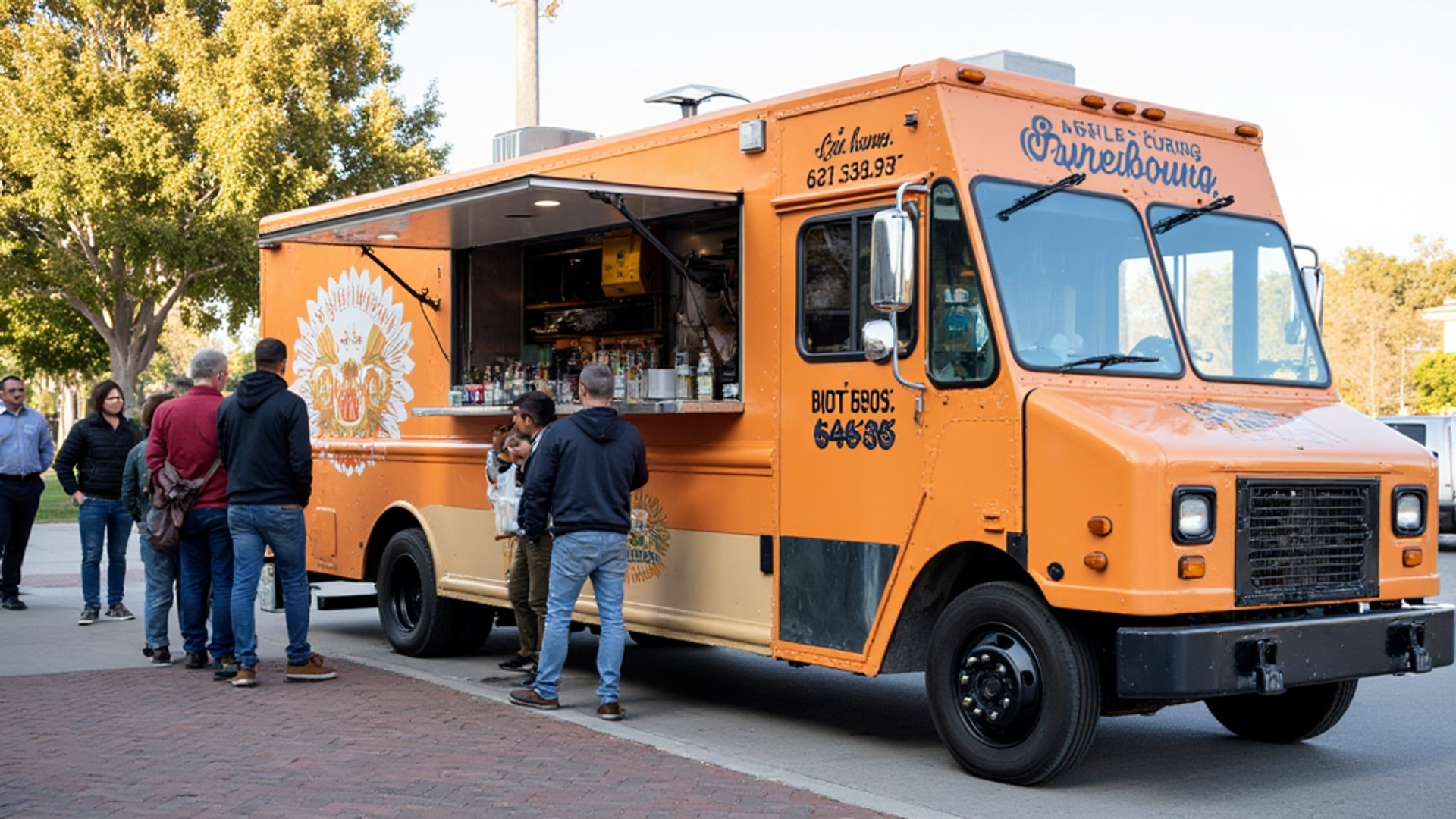
According to the National Restaurant Association, food trucks that transition to brick-and-mortar locations demonstrate notably higher survival rates, with very few closing within the first year. The truck format functions as a low-risk proving ground where you can:
- Test your concept across diverse locations and demographics
- Build a customer base before committing to a lease
- Master operations at small scale — food trucks force you to handle every function personally
- Gather real customer data through the direct feedback that happens at a service window
Regency Centers documented several successful transitions, including The Silver Seed food truck that evolved into The Gold Leaf Collective, a 40-seat vegan restaurant, and The Waffle Link that transitioned from truck to a permanent location. Some operators maintain both formats — the truck as a mobile marketing vehicle reaching new neighborhoods while the permanent location provides consistency.
Buying an Existing Restaurant
According to Stimmel Law, purchasing an existing restaurant offers an established customer base, trained staff, and existing infrastructure. But the risks are substantial if due diligence is incomplete.
The non-negotiable due diligence checklist:
→ Read more: Buying an Existing Restaurant
- Three years of tax returns and financial statements, independently verified by a CPA
- Lease transferability, remaining term, and renewal options
- All permits and licenses current, including liquor license conditions
- Health department inspection history over the past three years
- Equipment condition assessed by a general contractor or building inspector
- Employee roster with assessment of key personnel retention likelihood
- Litigation history, EEOC complaints, and agency complaints
The most critical question, according to Stimmel Law: why is the seller selling? Every restaurant on the market has a reason behind the sale, and understanding that reason is the single most important piece of due diligence.
The Systems Question
Whether you choose franchise or independent, one factor predicts success more reliably than any other: systems.
According to David Scott Peters, whose coaching practice has worked with hundreds of operators, the pattern is consistent. Todd opened a third franchise location with a seasoned partner but lacked robust day-to-day management systems. The partner managed everything directly and burned out from constant hands-on involvement. The franchise brand’s systems were not enough — the operator-level systems were missing.
Meanwhile, independent operators Jonathan, Ryan, and Neely built systems that enabled multi-unit growth precisely because they had no franchise infrastructure to lean on. They had to build everything themselves, and those custom-built systems fit their specific operations better than any franchise template could.
The lesson: franchises do not fail because they lack systems. They fail because operators treat the franchise system as a substitute for their own operational discipline. Independents do not fail because they lack brand recognition. They fail because they never build the systems that would allow them to deliver a consistent experience.
The Bottom Line
The franchise-vs-independent decision is not really about failure rates — those are nearly identical. It is about how you want to build wealth and what kind of operator you want to be.
Franchises offer a pre-built system and brand recognition in exchange for perpetual royalties and limited autonomy. For operators with capital but limited experience, this trade-off can make sense. But do the math on those ongoing fees: 6-13% of gross revenue, every month, forever, is a significant drag on wealth creation.
Independents offer full profit retention and creative control in exchange for the burden of building everything yourself. For operators with experience and a strong concept, the economic upside is substantially higher — but so is the execution burden.
And if neither model fits, alternatives like cloud kitchens, food trucks, and restaurant acquisitions offer different risk-reward profiles that may suit your situation better than either traditional path.
Whatever you choose, build systems first. The Parsa study makes clear that management quality and financial discipline — not business structure — are what separate the 40% that survive from the 60% that do not.
→ Read more: Franchise Disclosure Requirements
→ Read more: Restaurant Business Structure and Formation
→ Read more: How to Write a Restaurant Business Plan