· Case Studies · 7 min read
Food Truck to Empire: Real Stories of Mobile Dining Success
From a $18,000 used truck to multi-location chains, real food truck operators reveal exactly how the mobile format becomes a launchpad for lasting restaurant empires.
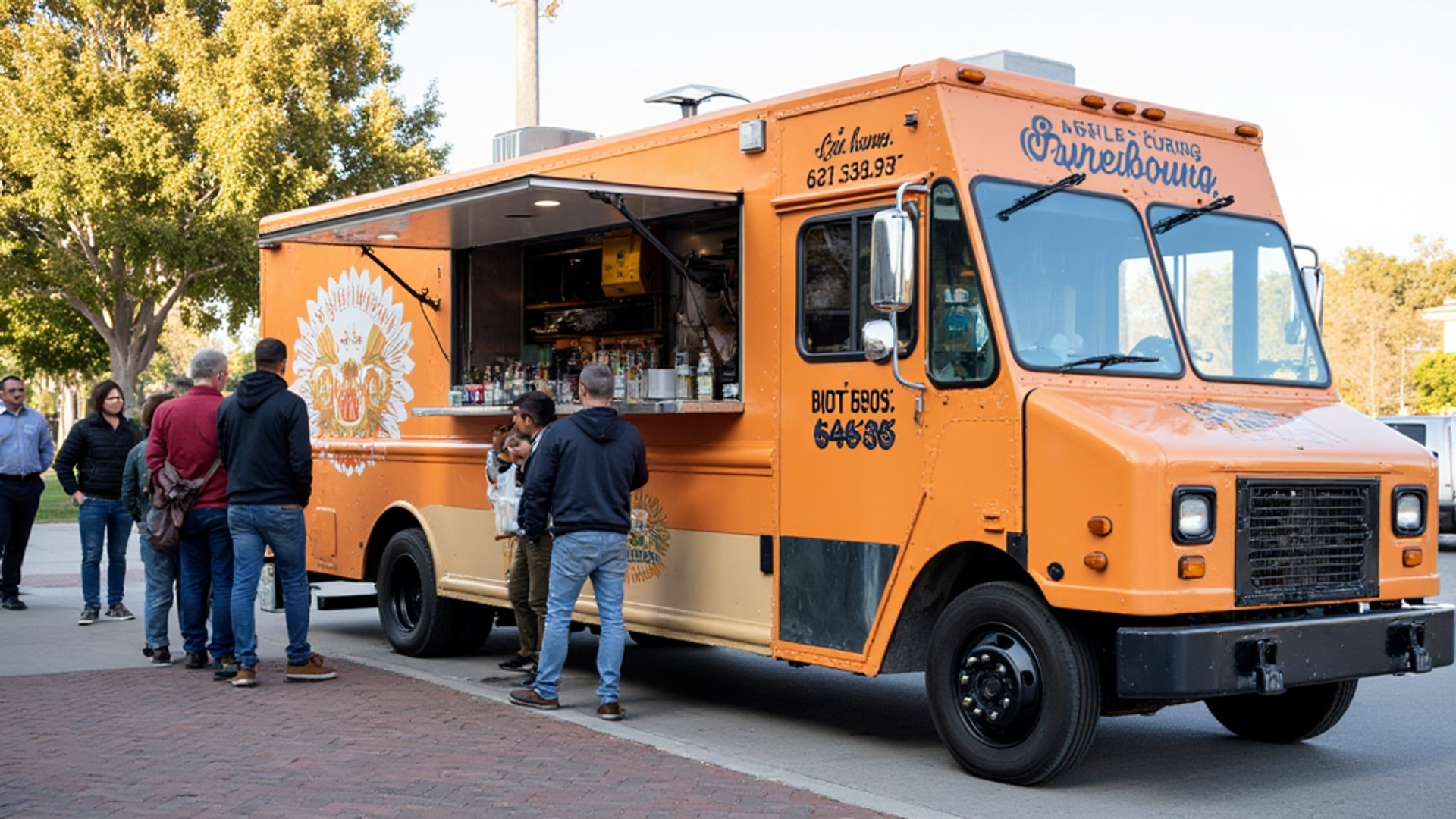
The food truck is one of the few legitimate shortcuts in the restaurant business. While a traditional restaurant opening regularly demands six-figure investment before the first plate is served, operators on wheels have built successful businesses for as little as $41,000 — then used that mobile foundation to scale into something much larger. This is not a guarantee; most food trucks never outgrow their parking spot. But the ones that do follow patterns worth studying closely.
Kogi BBQ: The Blueprint
Before Kogi BBQ, food trucks were where you got a decent burrito near a construction site. When Roy Choi launched his Korean-Mexican fusion truck in Los Angeles in 2008, he turned that perception upside down. According to Starter Story’s analysis of food truck success cases, Kogi generated over $2 million in revenue in its first year of operation — an extraordinary number for a mobile operation.
What made it work was the combination of two things no single competitor offered: a genuinely distinctive menu fusing Korean BBQ with Mexican taco formats, and a social media strategy that converted the truck’s mobility from a liability into an asset. Choi’s team used Twitter to announce that day’s location in real time, creating a sense of scarcity and urgency that drove lines around the block. Customers who wanted Kogi had to follow the account and show up fast.
The lesson is not that you need fusion cuisine or social media to succeed. The lesson is that Kogi identified a gap — Korean flavors in a familiar Mexican format, sold with street-food directness — and then built a marketing system around the truck’s inherent unpredictability. The mobility became the brand.
Seoul Taco: The $18,000 Investment
David Choi’s story is more instructive for most operators because the numbers are more realistic. According to Food Truck Operator, Choi graduated from Central Bible College in Springfield, Missouri in 2007 without a clear career path and spent years working multiple minimum-wage jobs simultaneously. His goal was simple: not to work for someone else.
By age 26, he had saved $18,000. He used it to buy a used 14-foot food truck from Philadelphia and launch Seoul Taco — Korean-Mexican fusion — in St. Louis. His market research was this: St. Louis lacked Korean food options. His solution was to make Korean flavors accessible through a familiar format. He sourced Korean ingredients from local Asian markets and everything else from warehouse clubs.
On his first day serving at a park event in 2011, Choi served approximately 200 customers in four hours and sold out completely. He immediately pivoted to targeting office parks during lunch hours, taking the food directly to concentrations of potential buyers.
From that start, Seoul Taco grew to five restaurant locations and multiple food trucks, employing roughly 50 full-time equivalent staff members. The critical move: Choi opened his first permanent restaurant within one year of launching the truck, not as a replacement for the truck but as a commissary kitchen that also served dine-in customers. The brick-and-mortar served double duty from day one, justifying its overhead before the restaurant side was fully established.
The Transition: What Food Trucks That Succeed Teach
According to research from Regency Centers on food truck-to-brick-and-mortar transitions, food trucks that make this move demonstrate notably higher first-year survival rates than traditional restaurant startups. This makes sense — they arrive with a proven menu, an existing customer base, and operational experience. The most expensive lessons have already been paid for.
Three factors separate trucks that successfully transition from those that don’t:
Brand building during the mobile phase. Operators who treat the truck as a testing lab rather than just a revenue source — constantly refining the menu, experimenting with different neighborhoods, and paying attention to customer patterns — arrive at their permanent location with a clear understanding of who their customer is and what that person actually orders. This knowledge is impossible to buy.
Operational mastery before expansion. A food truck forces the owner to personally handle finance, marketing, supply chain, and service simultaneously. There is no department to delegate to. Operators who survive this pressure-cooker education develop a comprehensive business understanding that sustains the more complex operation of a permanent restaurant.
Capital accumulation and patience. The financial gap between a food truck and a restaurant is significant. A permanent location adds rent, utilities, expanded equipment, larger payroll, and interior costs — routinely reaching six figures before opening day.
→ Read more: From Food Truck to Brick-and-Mortar Trucks that wait until they have genuine capital and a confirmed customer base make this transition from a position of strength rather than desperation.
Beyond the Single Truck
Modern food truck operators are finding revenue diversification strategies that break the ceiling on mobile income. Starter Story’s analysis identifies several effective models. Subscription boxes and exclusive menu drops create predictable income streams that don’t depend on location rotation. Corporate catering contracts, like those developed by the GrillGo operation, convert the traditional weakness of low weekday traffic into a strength by targeting office parks and corporate campuses directly. Sustainability-focused branding — compostable packaging, zero-waste menus, food donation programs — builds goodwill that commands premium pricing in markets where those values resonate.
The Halal Guys demonstrate the long-term ceiling of what a humble cart can become. Founded in 1990 by three Egyptian immigrants as a hot dog cart in New York City, The Halal Guys now generate over $100 million annually across franchise locations and food truck operations worldwide. The cart format served as a proving ground for a concept with genuinely broad appeal.
Location Is Still Everything
Social media can announce where you are; it cannot make a bad location profitable. The food truck’s fundamental advantage — the ability to move to where demand exists — is also its fundamental management challenge. Identifying where your specific customer concentrates at what times of day, and building a rotation that maximizes revenue per parking hour, is the operational core of a successful truck.
High-foot-traffic lunch spots near office concentrations tend to produce the highest-volume single-location days. Event catering offers higher per-order revenue but requires capital tied up in advance preparation. Dinner service near residential areas or nightlife districts often has lower volume but higher average ticket sizes. The operators who understand their own numbers across all these formats — not just which are busiest, but which are actually most profitable per hour — are the ones who build routes worth maintaining.
The Real Value of the Truck
The food truck’s most significant value to a restaurant operator is not the revenue it generates. It is the low-stakes environment in which to make expensive mistakes before those mistakes cost you a lease, a build-out, and everything you have invested.
Kogi’s social media marketing approach, Seoul Taco’s fusion formula, The Halal Guys’ cart-to-franchise trajectory — none of these succeeded because the operators had perfect answers before they started. They succeeded because the mobile format allowed them to iterate quickly, fail cheaply, and apply what they learned to the next version of the business. That staged approach to restaurant entrepreneurship is the real product the food truck is selling.
The operators who treat the truck as a permanent destination often stay there permanently. The ones who treat it as a launchpad build restaurants.
→ Read more: Food Truck Marketing
→ Read more: Food Truck Permits and Legal Requirements