· Culture & Sustainability · 8 min read
The Solo Dining Trend: Why Eating Alone Is the Restaurant Industry's Next Big Opportunity
Solo diners now account for 47% of QSR traffic and spend 48% more per person than group diners — here is how to design your restaurant for this growing, high-value segment.
For decades, restaurant culture treated dining alone as a problem to be managed — the awkward single diner who tied up a table designed for two. That thinking is obsolete.
Solo dining has emerged as one of the most significant behavioral shifts in restaurant consumer patterns, and the economics are compelling: solo diners spend more per person, decline discounts at high rates, and are increasingly motivated by self-care rather than necessity.
This is not a niche trend. It is a structural shift in how a substantial portion of the dining public wants to eat.
The Numbers Define the Opportunity
According to Restaurant Dive’s analysis of TouchBistro’s solo dining research, the data is striking:
| Metric | Figure |
|---|---|
| Americans who typically dine alone | 21% |
| Solo QSR visits increase (4 years) | +52% |
| Solo share of QSR traffic | 47% (up from 31%) |
| Full-service solo reservation growth (YoY, Q3 2025) | +22% |
| Millennials preferring to dine alone at least weekly | 49% |
| Gen Z preferring to dine alone at least weekly | 46% |
| Solo diner average spend vs. group diners | 48% more per person ($84 average) |
| Solo diners who decline discounts | nearly 70% |
Nearly half of all quick-service restaurant traffic is now solo. Full-service solo reservations are growing at 22% year-over-year. And the economic profile of the solo diner — higher per-person spend, price-insensitive, experience-focused — makes this segment strategically important for operators across every price point.
Why People Are Choosing to Eat Alone
Understanding the motivation behind solo dining is essential for designing the right response. This is not a story about loneliness or social failure. According to Restaurant Dive, solo dining is primarily driven by positive motivations:
- Self-care and personal time: A solo meal is uninterrupted time to decompress, enjoy food on your own terms, and be present with your own thoughts
- Independence: Younger consumers increasingly value the ability to make decisions without negotiating preferences with a group
- Work and focus: A solo lunch at a restaurant provides a productive environment away from home or office
- Spontaneity: Solo dining removes the scheduling friction of coordinating with others
Nearly half of millennials and Gen Z prefer to eat alone at least weekly. These are not people who cannot find dining companions — they are people who have decided that solo dining is a preferable experience for certain occasions.
The cultural shift is reflected in the planning data: according to Restaurant Dive, 65% of Gen Z and 63% of millennials planned to dine solo in 2025. This is deliberate consumer behavior, not a fallback option.
The Revenue Math Favors Solo Diners
The economic implications challenge conventional restaurant assumptions about party size and revenue.
Traditional restaurant thinking: larger tables generate more revenue, so two-tops and four-tops are less desirable than larger party seats.
The solo dining data upends this. Solo diners average $84 per visit — 48% more per person than group diners. Nearly 70% decline discounts, meaning they are paying full price with minimal resistance. The guest who sits alone at your two-top may generate more revenue than a couple sharing dishes and splitting a bottle of house wine.
Consider the per-seat economics:
| Scenario | Revenue per seat |
|---|---|
| 4-top party of 4 sharing $120 check | $30/seat |
| 2-top couple with $90 check | $45/seat |
| 2-top solo diner spending $84 | $84/seat |
The solo diner at a two-top generates nearly three times the per-seat revenue of a group table. The restaurant that designs its space, service, and menu to serve solo diners well is not sacrificing revenue — it is optimizing for it.
Where the Growth Is Most Concentrated
The solo dining trend is not evenly distributed across concepts:
Quick-service restaurants have seen the most dramatic shift. Solo visits now account for 47% of QSR traffic, up from 31% in four years. This is a massive behavioral change in a segment that represents the highest-volume portion of the restaurant industry.
Full-service restaurants are seeing the fastest growth. A 22% year-over-year increase in full-service solo reservations is exceptional by any metric. Solo diners are increasingly comfortable booking restaurant-quality experiences for themselves.
Counter and bar seating has driven much of this growth. Solo diners gravitate toward seating that feels natural for one — a bar stool, a counter seat, a well-positioned window seat. The traditional two-top in the middle of the dining room creates performance anxiety that many solo diners avoid.
Designing for Solo Diners
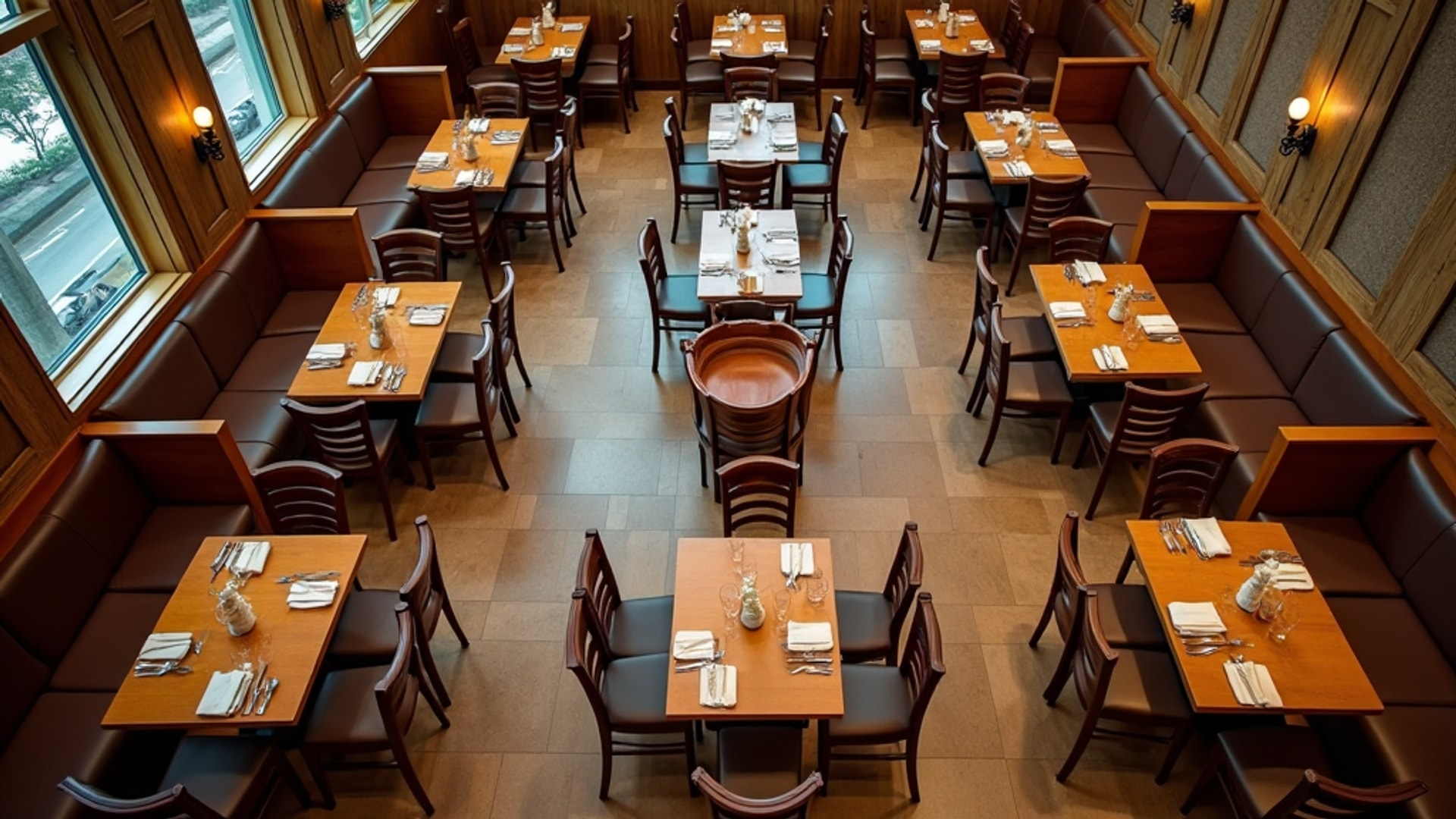
If your restaurant was designed a decade ago with group dining assumptions, it may inadvertently signal that solo guests are not welcome. Intentional design changes communicate the opposite.
Seating Configuration
Counter seating is the most effective solo-friendly investment. A 10-seat counter provides dining for 10 solo guests without any of the spatial waste of two-tops. Counter seats are psychologically comfortable for solo diners because they face outward — watching the kitchen, the street, or other guests — rather than across an empty table.
Bar seating that accepts food orders (not just drinks) serves solo diners who want activity and ambient social energy without table pressure. This is particularly effective for lunch and happy hour traffic.
Communal tables offer a middle option: solo diners can sit with others without being expected to interact. The ambiance provides company without the social obligation of conversation.
Window seats and single-position tables positioned against walls or windows give solo diners a natural direction to look, reducing the self-consciousness of facing an empty chair.
Service Adjustments
Training your team to serve solo guests without awkwardness is as important as physical design. Specific practices:
- Do not offer a second menu when a single guest is seated. The gesture emphasizes their alone status.
- Do not ask “will anyone be joining you?” in a way that implies the guest is deficient for dining alone.
- Check in at appropriate intervals — solo diners often enjoy more attention than group tables, since they do not have a dining companion for conversation
- Do not rush the table. A solo diner enjoying their meal is a high-value guest; clearing plates aggressively to turn the table destroys the experience they came for.
Menu Adaptations
Traditional menu design assumes sharing. Solo-friendly menus think about individual portion coherence:
- Individual-portion options for traditionally shared items: Pizza sold by the slice or as 6-inch pies. Wings in portions of 6 rather than 12. Appetizers designed for one.
- Complete solo meal pathways: Soup + salad combinations, single-serve charcuterie, composed plates that work as full meals without add-ons.
- Beverage programs that cater to solo timing: Individual wine pours by the glass with a broad selection, cocktails designed as standalone experiences, non-alcoholic options that reward taking time.
Foods traditionally shared (pizza, wings) are being redesigned for individual diners across the industry. This is not a gimmick — it is following the consumer.
Technology as a Solo Dining Enhancer
Technology plays a specific role in solo dining because solo diners often use devices during their meal.
Ordering through apps or QR codes removes the social discomfort of flagging down a server repeatedly. A solo diner who can order at their own pace, add items when ready, and pay when finished has a lower-friction experience.
Entertainment integration at the counter: Some operators are installing screens at counter positions tuned to relevant content. This is controversial — some solo diners want the retreat from screens — but for the right concept (sports bar, news-focused café), it enhances the experience.
Table management systems that track solo diner preferences allow servers to know return guests who prefer specific seats. The solo diner who always wants the window counter seat and orders the same lunch is a high-value regular — remembering them costs nothing and builds loyalty.
Marketing to the Solo Diner
Solo diners are underserved in restaurant marketing. Most advertising, social media content, and promotional materials feature groups celebrating together — imagery that actively excludes solo diners from the implied narrative.
Simple adjustments:
- Include solo diner imagery in your social media content
- Promote counter and bar seating explicitly as welcoming to individual guests
- Consider a “table for one” or “solo dining” section in promotional copy
- Design your happy hour and lunch promotions around individual portion sizes, not group appetizers
The solo diner who sees themselves reflected in your marketing is more likely to choose your restaurant when the impulse to go out alone strikes.
The Broader Cultural Context
The rise of solo dining is embedded in broader demographic and cultural shifts. Restaurant Dive’s data shows the trend is most pronounced among younger demographics who have grown up with more fluid social norms around eating. Social media has normalized photographing individual meals rather than group settings. Wellness culture frames solo time as valuable, not shameful.
These cultural forces are not reversing. The cohort of consumers who prefer solo dining at least occasionally represents 21% of all Americans today — and the data suggests that percentage will grow as younger consumers who came of age with solo dining norms become the dominant restaurant guest demographic.
The restaurant that waits to adapt is ceding a high-value, growing market segment to competitors who recognize the opportunity first.
Action Checklist
- Evaluate your current seating configuration for solo-friendly positions
- Add or expand counter or bar seating if your concept supports it
- Train front-of-house staff on solo diner service etiquette
- Review your menu for individual-portion options for traditionally shared dishes
- Include solo dining imagery in your marketing content
- Analyze your POS data for solo diner visit patterns — time of day, average spend, frequency
- Consider a direct ordering option (QR code or app) that reduces friction for solo guests
The solo dining trend is not coming. It is here, accelerating, and economically advantaged for operators who embrace it.
-> Read more: Consumer Behavior Trends: How Gen Z, Delivery Culture, and Experience-Seeking Are Reshaping Restaurants
-> Read more: Restaurant Seating Layout and Floor Plan: Maximize Capacity Without Sacrificing Comfort