· Finance · 8 min read
Restaurant Energy and Utility Costs: Benchmarks, Budgets, and Savings Strategies
Restaurants use 5-7 times more energy per square foot than other commercial buildings — here is how to understand, benchmark, and systematically reduce this significant cost line.
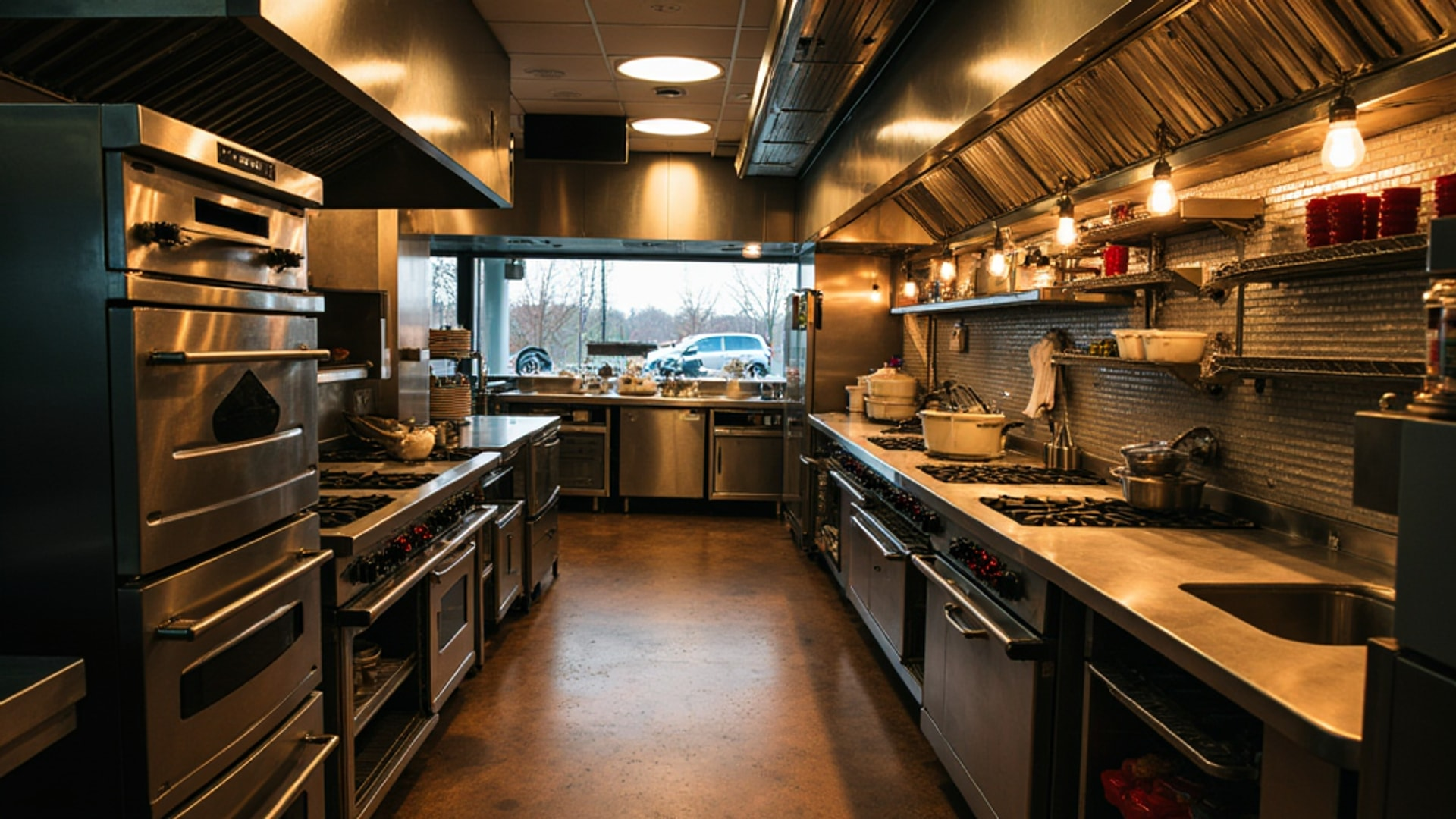
Utility costs are one of those expense lines that rarely get the attention they deserve. They sit quietly in the operating expenses, relatively stable month to month, not dramatic enough to prompt urgent action the way a food cost spike does. This is a mistake: according to ENERGY STAR, a government-backed energy efficiency program, utilities represent 3-5% of total restaurant operating costs, and a 20% reduction in energy costs translates to approximately 1% more profit.
For a restaurant doing $1.5 million in annual revenue, a 20% utility reduction adds $9,000-$15,000 directly to the bottom line — with no associated cost of goods sold, no sales tax, and no labor cost increase. A dollar saved on utilities is a full dollar of additional profit, which is why this cost line deserves more systematic attention than most operators give it.
The Benchmark: How Much Should You Be Spending?
Both ENERGY STAR and Envigilance’s energy management analysis report consistent benchmarks for restaurant utility costs: US restaurants average $2.90 per square foot annually for electricity and $0.85 per square foot annually for natural gas.
For a 2,000 square foot restaurant, that translates to roughly $5,800 in electricity and $1,700 in natural gas annually — approximately $7,500 total, or $625 per month before any reduction strategies. Larger operations scale proportionally, though kitchen-to-dining-room ratios affect energy intensity significantly. A restaurant where the kitchen represents 40% of total square footage will use more energy per square foot than one where the kitchen is 25% of total space.
As a percentage of operating costs, the 3-5% benchmark provides the most useful context. An operation running utilities at 6-7% of revenue has an above-average energy problem worth investigating. An operation running below 2.5% likely operates in a low-energy-cost market or has already invested in efficiency measures.
Why Restaurants Use So Much Energy
Restaurants are among the most energy-intensive commercial operations, consuming five to seven times more energy per square foot than typical commercial buildings. This intensity is structural, not accidental. Restaurants simultaneously operate:
- Commercial cooking equipment that generates intense heat and requires constant ventilation
- Commercial refrigeration running continuously, 24 hours a day
- Exhaust and HVAC systems handling both cooking heat and customer comfort simultaneously
- High-volume commercial dishwashing with continuous hot water demands
- Lighting maintained at levels appropriate for both operations and ambiance
Understanding where energy actually goes helps prioritize reduction efforts. Envigilance’s breakdown of restaurant energy consumption by system:
- Food storage and preparation: 41%. The largest category by far, encompassing all cooking equipment and refrigeration.
- HVAC: 28%. Ventilation, heating, and cooling for kitchen and dining areas.
- Sanitation: 18%. Dishwashing, hot water heating, and cleaning equipment.
- Lighting: 13%. Dining room, kitchen, exterior, and ancillary spaces.
This distribution has a direct implication: kitchen equipment improvements have the largest potential impact. Lighting improvements have the fastest payback. HVAC optimization requires the most technical expertise but represents significant savings potential.
Reducing Energy Costs: A Tiered Approach
Effective energy cost reduction works in layers, starting with behavioral changes that cost nothing, moving to low-cost operational adjustments, and building up to capital investments in efficient equipment.
Layer 1: Behavioral Changes (Zero Capital Required)
Staff behavior can reduce consumption by 5-10% without any investment, according to Envigilance. The key practices:
Equipment off during idle periods: Commercial kitchen equipment generates enormous heat when running at full capacity. Fryers, ovens, and grills that reach full temperature two hours before service begins and remain on two hours after service ends are burning energy (and labor cooling the kitchen) for nothing. Tighten pre-heating and shutdown schedules to minimize idle run time.
Refrigerator and freezer discipline: Every minute a walk-in cooler door stands open allows cold air to escape and warm air to enter, forcing the compressor to run harder. Door discipline among kitchen staff is free and immediately effective.
Equipment settings management: Water heaters set unnecessarily high waste energy continuously. Envigilance notes that each 10°F reduction in water heater temperature saves 3-5% in water heating costs. Most commercial dishwashers specify the minimum water temperature needed for sanitation, and there is no benefit to heating above that specification.
Training and culture: Envigilance emphasizes that staff training on conservation practices compounds into significant savings over time. When energy conservation becomes part of opening and closing procedures rather than something mentioned occasionally in staff meetings, the behavioral savings sustain themselves.
Layer 2: Low-Cost Operational Adjustments
Programmable thermostats: HVAC systems that continue operating at full capacity after close are wasting energy on an empty building. Programmable thermostats adjust heating and cooling automatically based on occupancy and operating hours. The cost is minimal (often under $500 installed) and the savings are immediate.
Occupancy sensors: Motion-sensor lighting in storage areas, offices, walk-in areas, and restrooms ensures lights are not running in unoccupied spaces. In areas that staff enter briefly and frequently (dry storage, walk-in cooler entry, utility rooms), occupancy sensors eliminate the inevitable “someone left the light on all night” waste.
Regular maintenance scheduling: Dirty condenser coils on refrigeration units force compressors to work harder. Clogged fryer filters reduce efficiency and increase cook times. HVAC filters that are not changed on schedule reduce airflow efficiency. Maintaining a regular maintenance schedule for all major equipment prevents gradual efficiency degradation.
Equipment load scheduling: When possible, run high-draw equipment (commercial dishwashers, ovens) sequentially rather than simultaneously to avoid peak demand charges. Many commercial utilities bill peak demand separately from consumption, meaning that the maximum power draw during any 15-minute window in a billing period affects the entire month’s bill.
Layer 3: Equipment Upgrades (Capital Investment with Payback)
Equipment replacement delivers the largest absolute savings but requires upfront investment. Evaluate any equipment upgrade on its payback period: the time required for energy savings to equal the investment. A cost segregation study can accelerate the depreciation benefits of these capital expenditures.
LED lighting: ENERGY STAR reports that LED lighting saves up to 90% on total lighting energy costs compared to incandescent and significant amounts compared to fluorescent. Envigilance notes that LED bulbs last up to 10 times longer than incandescent, reducing both energy costs and maintenance labor for replacements. Payback periods for LED retrofits are often under one year, making this the most financially obvious equipment upgrade in most restaurants.
ENERGY STAR-certified cooking and refrigeration equipment: ENERGY STAR-certified commercial appliances can save nearly $5,300 per year, according to Envigilance’s analysis. Commercial dishwashers certified by ENERGY STAR save an average of $1,500 annually versus standard models. Efficient cooking equipment (particularly fryers, combination ovens, and steamers) reduces energy use 10-30% compared to standard alternatives.
Energy management systems: Real-time monitoring systems reveal exactly where energy consumption occurs, identify anomalies that indicate equipment malfunction, and enable targeted interventions. As Envigilance notes, these systems monitor consumption spikes and alert managers in real time. For multi-location operators, remote monitoring from a central system provides portfolio-wide visibility.
The Financial Case for Energy Investment
ENERGY STAR’s framework for evaluating energy efficiency investments is useful: a 20% reduction in energy costs translates to approximately 1% additional profit margin. For a restaurant doing $1 million in annual sales with current utility costs at 4% of revenue ($40,000), a 20% reduction saves $8,000, or 0.8% of revenue going straight to the bottom line.
At a restaurant doing $2 million in revenue with $80,000 in utility costs, the same 20% reduction saves $16,000 annually. A $10,000 LED lighting retrofit at that restaurant pays for itself in under 8 months in lighting savings alone, after which the savings are pure profit improvement.
When evaluating equipment purchases, factor energy cost savings into the total cost of ownership analysis. An ENERGY STAR-certified refrigeration unit that costs $2,000 more than a standard model but saves $800 per year in electricity has a 2.5-year payback period and then saves money for the remaining life of the equipment. Standard equipment purchasing analyses that look only at acquisition cost systematically underestimate the value of efficient alternatives.
→ Read more: Restaurant Tax Planning: Deductions, Credits, and Year-Round Discipline
Monitoring and Tracking
You cannot manage what you do not measure. At minimum, track monthly utility costs as a percentage of revenue on your P&L and compare them against the 3-5% benchmark. When the percentage rises, investigate before it becomes embedded in the baseline.
For more sophisticated tracking, log electricity and gas consumption (not just dollar cost) separately for each billing period. Consumption tracking reveals whether cost increases are driven by rate changes (outside your control) or consumption increases (within your control). An energy cost spike caused by a rate increase requires a different response than one caused by a new piece of equipment with a refrigerant leak.
Energy management will never excite anyone at a staff meeting. But a dollar saved on utilities drops straight to profit with no COGS attached, which makes it one of the most reliable margin improvements available. Start with LED lighting (the payback is absurdly fast) and work up from there.
→ Read more: Break-Even Analysis and Restaurant Profitability
→ Read more: Financial Benchmarks by Restaurant Concept: How QSR, Fast-Casual, Full-Service, and Fine Dining Compare