· Kitchen · 7 min read
Batch Cooking and Prep Efficiency: How to Build a Kitchen That Produces More with Less Labor
Practical strategies for batch cooking, prep sheet design, and task grouping that measurably reduce labor hours while improving consistency.
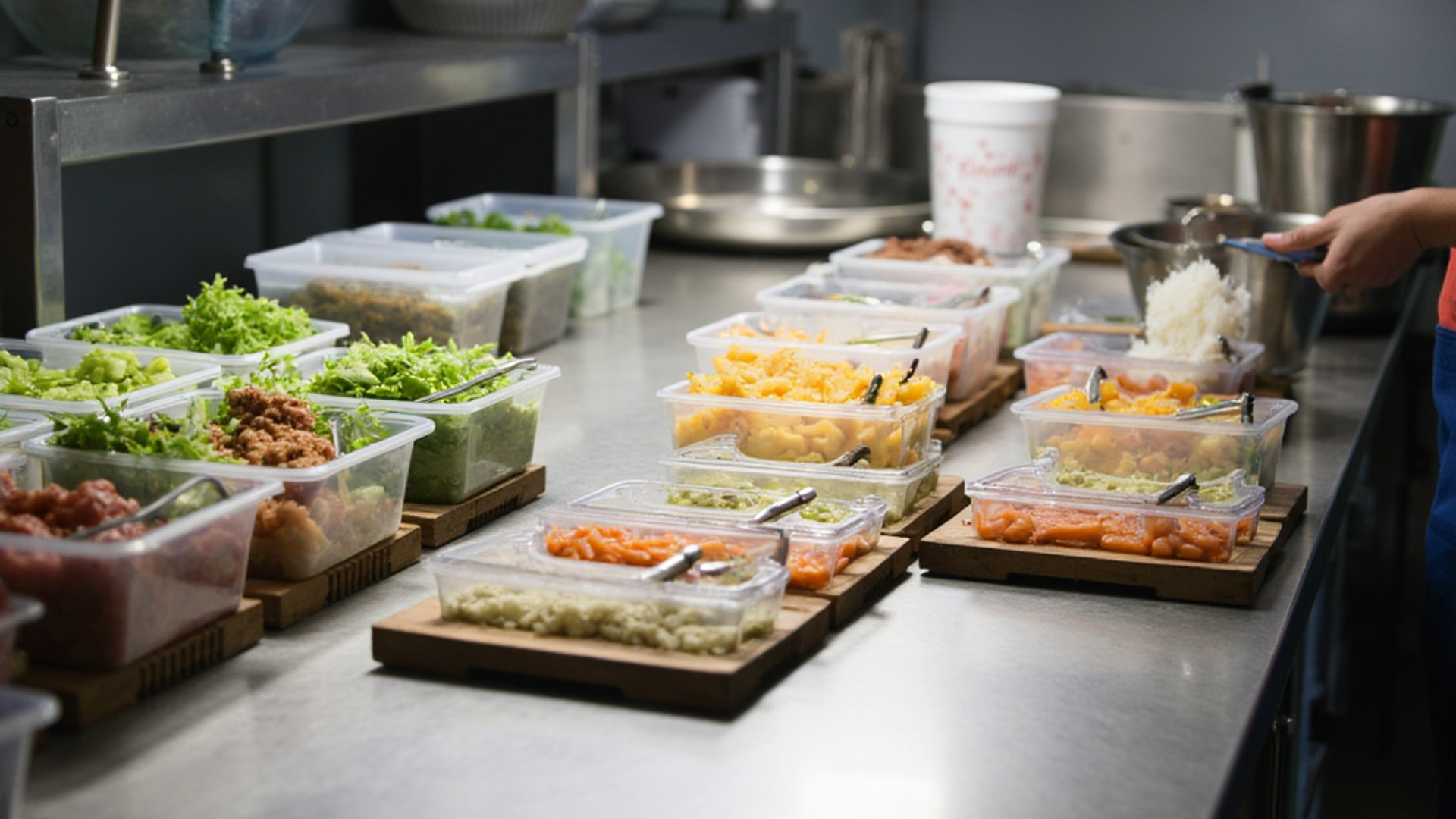
Prep is where kitchens either make money or lose it. A kitchen that preps reactively — responding to service needs as they arise, pulling staff to prep mid-service, improvising quantities each shift — is burning labor dollars and producing inconsistent food. A kitchen that preps systematically, driven by data and structured workflows, can serve the same volume with fewer labor hours and higher quality.
The tools for that transformation are not complicated: prep sheets, batch cooking strategies, and deliberate task grouping. Getting them right takes discipline, not money.
Why Prep Sheets Are the Foundation
According to CHEF’STORE, kitchen prep sheets serve as roadmaps for back-of-house employees, eliminating guesswork and reducing training time. These documents specify quantities, preparation methods, storage requirements, and timing for every menu component. Standardized recipes, portioning guidelines, and prep lists ensure every team member performs tasks the same way, allowing staff to work faster with fewer errors.
A good prep sheet is not just a to-do list. It communicates what your mise en place system needs:
| Element | What It Tells the Cook |
|---|---|
| Item and quantity | What to make and how much |
| Par level and on-hand count | How much still needs to be made |
| Prep method | Exactly how to prepare it (references the standardized recipe) |
| Storage location and container | Where it goes after prep |
| Label date and use-by | When it expires |
| Time-sensitivity flag | Which items must be done first |
According to the Paris Gourmet food prep guide, prep lists should break menu items into specific tasks, group tasks by station to prevent overlap, flag time-sensitive items that need early attention, and set clear quantity targets based on sales history. They should be reviewed and adjusted daily based on actual usage.
The daily adjustment matters. A prep sheet built from Monday’s usage data and applied unchanged on Saturday will produce wrong quantities. Build in a review step each morning.
Five Batch Cooking Strategies
According to CHEF’STORE, these five approaches transform prep from reactive to systematic:
1. Capitalize on Slow Periods
Deploy staff during quiet periods — late morning, mid-afternoon — for prep projects rather than sending them home early. A cook working two hours of focused prep before a dinner service produces far more value than a cook standing at a half-staffed station during the pre-service lull. Map your weekly sales patterns against your staffing schedule and identify where prep hours can be inserted.
2. Focus on Top Sellers
Use your POS data to identify high-volume dishes, particularly those that hold or freeze well: soups, stews, braises, sauces, marinades. According to CHEF’STORE, focusing batch efforts on top sellers ensures effort goes where it has the most impact. Spending batch prep time on items you sell 200 servings of weekly is worth more than spending it on items you sell 20.
3. Create Flavor Bases in Bulk
Spice blends, compound butters, marinades, stock reductions, and sauce bases are candidates for large-batch production. According to CHEF’STORE, these items store for months and save significant time when made in bulk. Producing 10 quarts of a house vinaigrette once per week is far more efficient than making 1.5 quarts per day. The product is more consistent, and the labor cost per quart drops substantially.
4. Establish Portioning Standards
Consistent portioning is both a food cost control and a batch prep strategy. According to CHEF’STORE, establishing portioning standards — with consistent sizes, vacuum-sealing, and freezing — creates service-ready meals and pre-portioned proteins. When portioning is handled during batch prep rather than during service, line cooks execute faster and portion accuracy improves.
Pre-portioned proteins ready to be pulled from a reach-in and placed on the grill is fundamentally different from line cooks portion-cutting to order. The former produces consistent 8-ounce portions. The latter produces inconsistent 7-to-10-ounce portions that blow your food cost.
5. Buy and Prep in Bulk Together
According to CHEF’STORE, buying ingredients in bulk from wholesale suppliers reduces cost while allowing batch prep to process the volume efficiently. Ordering a 25-pound bag of onions and dicing all of them in a single session is faster per pound and cheaper per pound than buying and dicing daily. This approach only works when storage capacity and shelf life support it.
Grouping Similar Tasks
According to CHEF’STORE, grouping similar prep tasks minimizes equipment changes and reduces downtime. Practical task grouping:
All knife work in one block: Process every item that requires dicing, slicing, or julienning before breaking down the cutting boards and knife kit. Moving from onions to peppers to herbs to proteins without stopping to set up a different station saves setup time and yields better throughput.
All protein portioning together: Run all proteins through the slicer or portion scale in sequence. Calibrate once, produce everything, then sanitize and put away.
All oven work in planned batches: Sheet pans of roasted vegetables, par-cooked proteins, and caramelized items can share oven time. Staggering them intelligently fills the oven at capacity rather than making multiple small runs throughout the day.
All sauce and liquid production consecutively: Use the stockpot or bain-marie for one sauce, then the next, rather than heating, using, cleaning, and reheating for each.
Equipment That Makes Batch Prep Work
According to CHEF’STORE, modern food service equipment allows kitchens to handle large volumes quickly without sacrificing consistency. The batch prep toolkit:
Food processors and commercial blenders: High-speed processing of sauces, purees, and spice blends at scale. A batch of romesco that takes a single cook 45 minutes to make by hand takes 8 minutes in a 7-quart commercial processor.
Commercial slicers: Consistent thickness for every run of deli meat, charcuterie, or vegetables. The consistency achieved by a slicer is unattainable by hand for high-volume cutting.
Blast chillers: According to CHEF’STORE, commercial-grade blast chillers enable rapid cooling for safe storage, helping kitchens meet FDA Food Code cooling requirements, making batch production viable across a wider range of menu items. Without a blast chiller, large-batch cooling must be managed through ice baths and careful monitoring to avoid the temperature danger zone. With one, a 20-quart batch of hot soup can be reduced from 165°F to 38°F in under 90 minutes.
Vacuum sealers: According to CHEF’STORE, vacuum sealers extend shelf life significantly. A pre-portioned protein vacuum-sealed and refrigerated remains fresh for 5 to 7 days versus 2 to 3 days in an unwrapped container. This extends the window during which batch prep translates to ready-to-use product.
Prep Sheet Execution: Making It Stick
A well-designed prep sheet only creates value if it is actually used. Common failure modes:
- Sheets that are never updated: A prep sheet based on last quarter’s sales mix does not reflect today’s menu or current pars.
- Sheets that are not consulted: Staff who have memorized a routine skip the sheet, including the daily quantity adjustments.
- Sheets with no accountability: No one checks whether prep tasks were completed accurately or on time.
The correction: make the prep sheet the start-of-shift ritual. The opening cook reviews the sheet, counts on-hand quantities, updates what needs to be made, and prioritizes based on service timing. The closing cook verifies completion and notes any overages or shortages for the next day’s adjustment.
According to the Paris Gourmet food prep guide, digital tools and whiteboards help teams stay aligned on daily goals. A large whiteboard prep list in the kitchen allows real-time visibility for everyone and allows supervisors to check status without asking.
Labeling: Non-Negotiable
According to the Paris Gourmet food prep guide, every prepped item must be labeled with the item name, prep date, and use-by date. Consistent labeling formats prevent confusion, reduce waste from expired items, and support food safety compliance during health inspections.
The label format matters: use a consistent system across all prep (name, date prepared, use-by date) applied to every container before it goes into storage. A container without a date is an unknown. Unknowns get discarded.
A kitchen that batches, labels accurately, and maintains up-to-date prep sheets runs faster, wastes less, and produces more consistent food than one that does not. These are not aspirational practices — they are the operational floor for any kitchen running at professional standards.
→ Read more: Kitchen Operations Efficiency: Prep Systems, Waste Reduction, and Workflow Optimization
→ Read more: Sous Vide in Commercial Kitchens: Consistency, Labor Savings, and Implementation