· Kitchen · 8 min read
Common Commercial Kitchen Design Mistakes and How to Avoid Them
The most expensive commercial kitchen design mistakes happen before a single piece of equipment is installed — here is how to spot and avoid them.
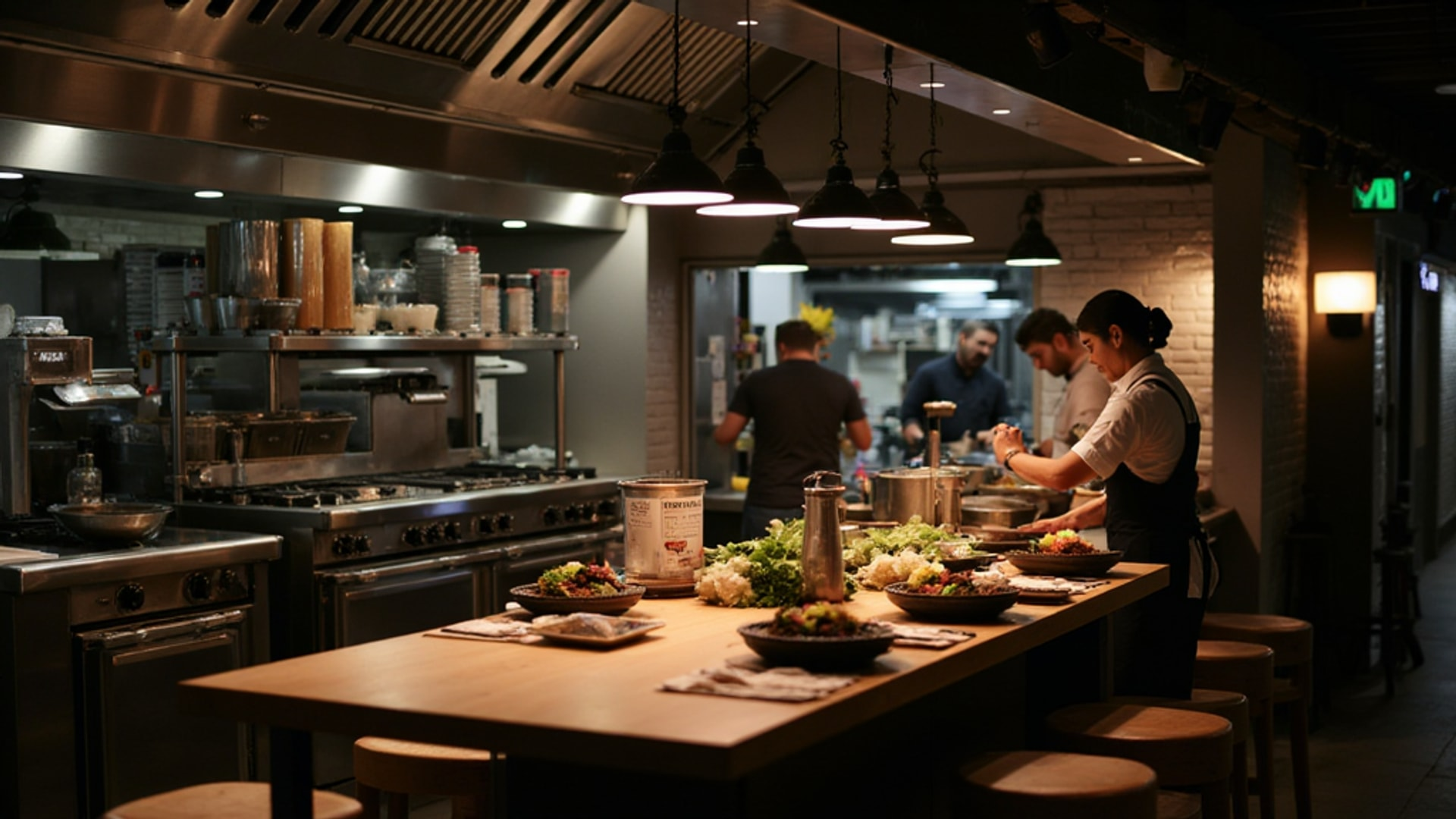
Most commercial kitchen disasters are not cooking disasters. They are design disasters — decisions made months before opening that force cooks to fight the room every single shift. A badly designed kitchen costs you in labor, food quality, safety incidents, and staff turnover, and most of it is invisible until service starts. Canadian Restaurant Supply and ContekPro both document the same pattern: operators make the same handful of design mistakes repeatedly, and they are expensive to fix after construction. Here is what those mistakes are and how to engineer them out before the first nail goes in.
Designing Without the Chef
The most consistent mistake across every source on commercial kitchen design is the same: the chef is not involved until after the layout is fixed. Architects and contractors design what they know — traffic patterns, code compliance, equipment clearances — but they cannot replicate the knowledge a working chef has about how orders flow during a Friday night rush.
The chef knows which stations need to communicate constantly, where the bottleneck will form at 7 pm, and why the walk-in placement matters more than it looks on a drawing. Getting the chef in the room from the first planning session is not a courtesy; it is the single most impactful thing you can do for long-term kitchen performance. Every operational problem that gets solved in the design phase costs a fraction of what it costs to fix during renovation.
Getting the Workflow Direction Wrong
According to ContekPro’s analysis of commercial kitchen design principles, food should move in one logical direction through a kitchen: receiving to storage, prep to cooking, cooking to plating, plating to service. This sounds obvious, but it is violated constantly when operators prioritize the position of a specific piece of equipment, then build the rest of the kitchen around it.
When workflow is disordered, cooks double-back across the kitchen, stations compete for shared equipment, and cross-traffic causes both collision hazards and cross-contamination risks. The principle is simple: draw the path of food from delivery truck to guest’s table, then design every station to support that path rather than interrupt it.
If you inherit a disorganized kitchen layout, map the actual movement patterns of your staff during a busy service. The paths that cross most often identify the stations that need to be repositioned.
Storage Placement That Creates Labor Waste
Placing dry storage on the opposite side of the kitchen from the receiving dock is one of those mistakes that only becomes visible when someone has to haul a 50-pound flour sack across a busy prep area for the fifth time. Canadian Restaurant Supply identifies poor storage placement as one of the primary causes of safety hazards and wasted labor in commercial kitchens.
The rule: storage should sit along the natural path from receiving to prep. When a delivery arrives, the path from loading dock to dry storage to refrigerated storage to prep tables should flow without crossing active cooking zones. Getting this right early eliminates daily labor waste and reduces the injury risk from heavy loads being carried through congested areas.
Storage is also chronically under-sized. Designers consistently prioritize cooking equipment square footage over storage, then operators spend years cramming shelving into corridors and using part of the prep counter as overflow storage. Design for the storage your peak inventory requires, not your average inventory.
Wrong Aisle Widths
Aisle sizing is a calibration problem. Too narrow and staff cannot pass each other safely, creating gridlock during peak service. Too wide and unnecessary steps accumulate across thousands of daily movements, adding up to real labor inefficiency. Canadian Restaurant Supply identifies incorrect aisle width as one of the most common layout errors.
The general industry standard for a primary cooking aisle — the working space behind the cookline — is 36 to 48 inches. Secondary aisles used for traffic and dishware movement typically need a minimum of 36 inches. Aisles where equipment is accessed from both sides simultaneously should be 48 inches or wider.
If you are designing from scratch, walk a contractor and a chef through a mock service using tape on the floor to simulate aisle widths. The difference between a 36-inch and a 42-inch aisle becomes obvious immediately when two people try to pass each other.
Cheap Equipment Decisions
The initial savings from buying lower-quality equipment are consistently consumed by repair costs, downtime, and the operational friction of equipment that cannot handle commercial volume. Canadian Restaurant Supply frames this clearly: kitchens are high-demand environments where equipment runs for 10 to 16 hours daily, and consumer-grade or light-commercial equipment fails quickly under that load.
Commercial kitchen equipment is an investment with a real return on investment calculation. A commercial-grade range that costs twice as much as a budget unit but lasts five times longer and requires minimal repairs is the better financial decision. Factor in that a broken fryer during Friday dinner service does not just cost the repair bill — it costs every ticket that fryer would have produced, plus the overtime of staff working around the gap.
Evaluate equipment on total cost of ownership: purchase price, energy consumption, expected maintenance costs, and operational lifespan. NSF certification should be non-negotiable for any food-contact equipment.
→ Read more: Restaurant Kitchen Layout: A Complete Guide to Getting It Right
Ventilation Underpowering
The push for lower exhaust ratings to reduce HVAC costs is one of the most regrettable design decisions a kitchen operator can make. Canadian Restaurant Supply identifies ventilation failure as a significant mistake, noting that insufficient airflow leaves staff working in temperatures exceeding 100 degrees Fahrenheit — a recipe for reduced productivity, heat-related illness, and high turnover.
Ventilation must be sized for peak cooking load, not average load. Every BTU of heat that cooking equipment generates must be removed by the exhaust system. When hood systems are undersized, heat and grease-laden vapor accumulate in the kitchen, coating surfaces, degrading food quality, and creating fire hazards.
The upfront cost of right-sized ventilation is almost always less than the cumulative cost of trying to fix an undersized system after installation. Once a hood is in and the ductwork is routed, resizing is a major construction project.
Wash Station Under-Design
One of the most consistent overlooked planning areas is the dishwashing and wash station. Canadian Restaurant Supply notes that planners should design wash areas for peak volume, not average volume. The standard recommendation is designing for the ability to process approximately 80 percent of the dining room’s seating capacity in dishes during a peak service period.
This means thinking through the entire dish pit: landing area for dirty dishes, scraping and pre-rinse station, the machine itself, and sufficient clean staging area. If the clean dish output has nowhere to land and plates stack up in front of the machine, the whole system backs up.
Small kitchens also frequently have insufficient hand-washing stations. Health codes typically require handwashing sinks accessible within a certain proximity to all food preparation areas — and these are distinct from prep sinks. Omitting handwashing stations or making them inconvenient creates both compliance problems and actual hygiene risks.
Compliance Oversights
Designing first and then retrofitting for code compliance is a costly mistake. Health department requirements covering ventilation, fire suppression, sanitation station placement, floor drainage, and equipment spacing all carry minimum specifications, and discovering late that a design violates them can mean expensive redesigns, delayed openings, and fines.
ContekPro’s principles analysis emphasizes that sanitation must be designed into the layout from the start: floor slopes toward drains, cleanable surfaces behind and under all equipment, adequate spacing for cleaning access between units, and handwashing stations positioned for actual use. Getting a health department pre-approval review of plans before construction begins is standard practice in most jurisdictions and eliminates the largest compliance risks.
Fire suppression systems must be engineered around actual equipment placement, and if equipment moves post-installation, the suppression coverage must be recertified. Plan equipment placement as permanently as possible before constructing the fire suppression system.
→ Read more: Commercial Kitchen Flooring: Materials, Safety, and Code Requirements
No Supervision Sightlines
ContekPro’s design principles include one that is easy to overlook in the equipment-focused planning process: the expeditor or head chef should be able to see every major station from a central position without physically visiting each station.
When sightlines are blocked by tall equipment islands, columns, or poor station arrangement, quality control becomes reactive rather than proactive. The chef only finds out a station is falling behind when dishes arrive at the pass late, rather than being able to read the entire kitchen in real time and adjust.
Open sightlines also improve communication. Cooks who can see the expo station respond to calls faster. The expo who can see all stations manages timing more accurately. This requires thinking about equipment heights and arrangement as a visual system, not just a workflow system.
Building for Today’s Menu Only
ContekPro identifies flexibility as the first principle of good commercial kitchen design — kitchens should accommodate menu changes and operational pivots without requiring major renovations. But most kitchens are designed around the current concept with no margin for change.
Menus evolve. Concepts shift. Operators who install fixed utility connections discover how expensive it is to add a new cooking station three years later. Designing with equipment on casters where possible, routing utilities to allow for future connection points, and leaving some open square footage for expansion costs little upfront and saves enormously over the life of the kitchen.
The single most useful mindset for kitchen design is to plan the kitchen you need for opening, then imagine the version of your concept that succeeds wildly and ask whether this kitchen can handle that future without a full renovation.