· Kitchen · 8 min read
Preventing Cross-Contamination: Allergen Control and Kitchen Safety Protocols
The operational systems restaurants need to prevent cross-contamination from pathogens and cross-contact from food allergens — two distinct hazards that require different prevention strategies.
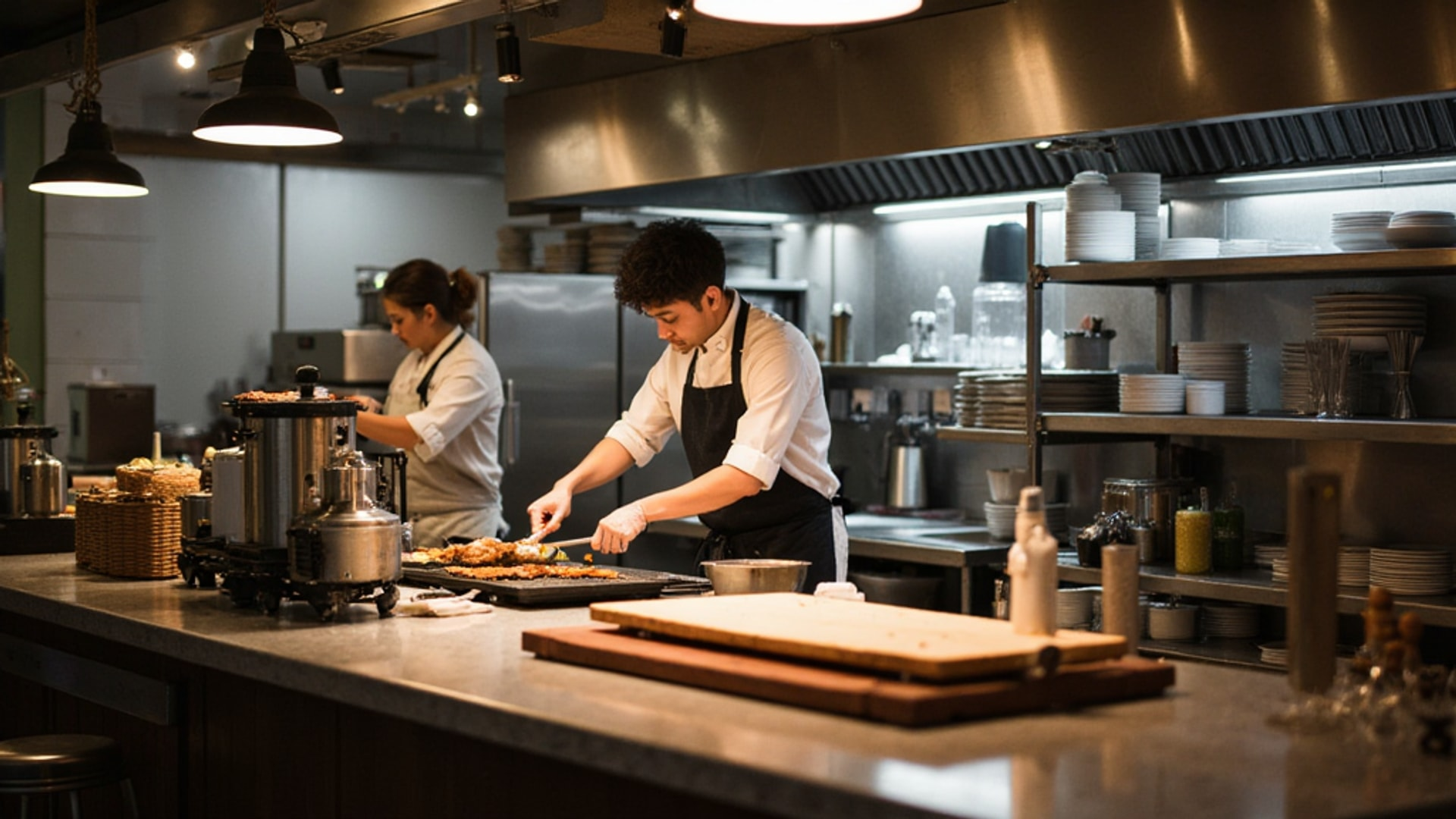
Cross-contamination and allergen cross-contact are often treated as the same problem in kitchen safety training. They are not. Understanding the difference is the first step toward building prevention systems that actually work, because the methods that stop Salmonella from spreading do not automatically stop a peanut protein from reaching a guest who will be hospitalized by it.
Both hazards can end careers, close restaurants, and harm guests. Both are preventable with the right systems and the right training.
Two Distinct Hazards
Cross-contamination is the transfer of biological contaminants — bacteria, viruses, parasites — from one surface or food to another. The classic example is raw chicken juices dripping onto ready-to-eat salad greens. Proper cooking would destroy the contamination in the chicken, but the greens won’t be cooked again. The contaminant transfers to the guest.
Cross-contamination is managed through temperature control, storage hierarchy, surface cleaning and sanitizing, handwashing, and physical separation of raw and ready-to-eat foods. These are the foundational HACCP-based protocols that every kitchen team should know.
Allergen cross-contact is a fundamentally different hazard. According to Toast’s analysis of cross-contamination and allergen control, cross-contact involves the transfer of food proteins between items — not bacterial contamination. Even trace amounts of food protein can trigger a severe allergic reaction in a sensitized individual. And unlike bacterial contamination, cooking does not destroy food allergens. The proteins that cause reactions survive the heat that would kill pathogens.
This means standard sanitizing protocols are insufficient for allergen removal. Simply wiping a surface with a sanitizer solution does not remove food proteins. Washing with soap and water is required.
The Nine Major Allergens
The FDA currently recognizes nine major food allergens. Per the FDA Food Code 2022 and Toast’s allergen control documentation, these are: milk, eggs, fish, shellfish, tree nuts, peanuts, wheat, soybeans, and sesame. The FDA added sesame as the ninth major allergen under the FASTER Act, which took effect January 1, 2023.
These nine allergens must be disclosed on packaged food labels, and many jurisdictions are moving toward requiring disclosure on unpackaged restaurant foods as well. California, for example, requires written allergen disclosure for unpackaged food sold in certain settings. Check your local requirements, but treat comprehensive allergen awareness as the operating standard regardless.
Handwashing: The Foundation of Both Protocols
Handwashing is the single most important personal hygiene practice in food safety — it prevents both biological cross-contamination and allergen cross-contact. The FDA Food Code requires dedicated handwashing stations positioned for convenient access throughout the kitchen.
Per Kellerman Consulting’s analysis of FDA Food Code 2022 requirements (sections 5-203.11, 5-204.11, and 5-205.11):
- At least one handwashing sink must be located inside or at the entrance to food prep areas
- Water temperature must reach a minimum of 85 degrees F (the 2022 update changed this from the older, less specific “comfortable temperature” language to a measurable standard)
- Liquid hand soap must be available — bar soap is not permitted in commercial kitchens
- A method for hand drying (single-use paper towels, continuous towel systems, or heated air dryers) must be accessible at every sink
- Handwashing sinks cannot be used for food preparation, equipment washing, or any other purpose
- Handwashing sinks must not be blocked or obstructed by portable equipment, boxes, or supplies
- Posted handwashing reminder signs are mandatory near each sink
Local jurisdictions may require additional sinks based on kitchen size or staff count. Some require specific languages on handwashing signage. Verify local requirements during your permitting process.
→ Read more: Food Allergen Kitchen Protocols: Managing the Nine Major Allergens During Service
The most common compliance failure isn’t the equipment — it’s a handwashing sink blocked by a stock pot or a supply box that drifted in front of it. Make sink accessibility a daily check-in during opening procedures.
Cross-Contamination Prevention: The Standard Protocols
For biological cross-contamination, the prevention system is built on several layers:
Separation: Raw proteins are stored below ready-to-eat foods (the storage hierarchy). Raw proteins are prepared on designated surfaces that are immediately cleaned and sanitized before any other use. Raw and cooked foods are never stored in adjacent containers without adequate separation.
Surface sanitation: The three-step process per FoodDocs’ SSOP guidelines — wash with hot soapy water to remove visible soil, rinse with clean water to remove soap residue, sanitize with approved chemical solution at correct concentration. For chlorine-based sanitizers: 50 to 100 ppm concentration with 7 seconds of contact time. For quaternary ammonium: 200 ppm concentration with 30 seconds of contact time. Chemical concentrations should be verified with test strips, not estimated.
Color-coded equipment: Color-coded cutting boards and utensils are one of the most practical systems for preventing cross-contamination in a busy kitchen. The conventional color coding used in many professional kitchens assigns red boards for raw beef, yellow for raw poultry, green for produce, blue for raw fish, white for dairy and bread, and brown for cooked meats. The system works because it creates a visual check — a red board near a salad prep area is immediately visible as a problem.
Handwashing triggers: Staff must wash hands before starting work, after handling raw proteins, after touching their face or body, after handling garbage, after cleaning duties, after using the restroom, and any time contamination could have occurred. The “after touching raw protein” trigger is the most commonly skipped because service pressure leads cooks to grab a towel instead of walking to the sink. Build the layout so the handwashing sink is within 10 steps of every station.
Allergen Cross-Contact Prevention
Allergen protocols require everything in the cross-contamination protocol plus additional measures specific to protein transfer.
Dedicated preparation areas: The highest-risk allergen orders require a dedicated preparation area or station separate from the main line. This isn’t always feasible in small kitchens, but even setting up a temporary clean area — away from the line, with freshly sanitized surfaces — reduces contact risk significantly.
Dedicated utensils and cookware: Toast’s allergen control guidance recommends a set of utensils and cookware reserved exclusively for allergen-free preparation, typically color-coded in purple to signal allergen safety. These items must be stored clean and separately from the general utensil supply, not stacked with regular equipment.
Soap-and-water surface cleaning: For allergen removal, washing with soap and water is required. Sanitizing solution alone does not remove proteins. Before preparing an allergen-free dish, clean the work surface and any equipment with soap and water, then sanitize. This is different from the standard sanitize-only protocol used between tasks.
Separate cooking oil: If a guest has a tree nut allergy and orders a dish that normally uses nut oil, switching the dish formulation is not sufficient. Shared fryer oil that has been used for nut-containing items carries allergen proteins. Allergen-free frying requires dedicated oil and dedicated equipment.
Fresh gloves: Change gloves before preparing an allergen-free item. Gloves that have been used in normal prep carry whatever proteins were handled during that prep.
Communication Systems
The best kitchen protocols fail if the information doesn’t flow correctly from the guest to the server to the kitchen. Establishing a clear communication system for allergy orders is as important as the physical protocols.
A practical system works as follows: the server identifies the allergy during order-taking and marks the ticket clearly (many POS systems have an allergy flag). The ticket reaches the kitchen with the allergy noted prominently. A designated allergen coordinator — typically the sous chef or a senior line cook — takes personal responsibility for the order, following the dedicated preparation protocol. The completed dish is expedited directly from the allergen coordinator to the server, not through the standard pass, to prevent accidental swap.
Train servers to never guess or assume about allergen content. “I think it should be fine” is not an acceptable answer to a guest with a severe allergy. The correct server response is “Let me confirm with the kitchen and come back to you.” Every time, without exception.
Staff Training Requirements
Training is where these systems become real or remain theoretical. Every kitchen team member needs to understand:
- The difference between cross-contamination (biological) and cross-contact (allergen)
- The nine major FDA-recognized allergens and which menu items contain each one
- Why cooking does not destroy allergen proteins
- The difference between cleaning (removing visible soil) and sanitizing (reducing pathogens to safe levels) — and that neither alone removes allergen proteins
- The specific protocols your kitchen uses for allergen orders
- When to escalate to a manager (any guest who indicates a severe allergy or mentions epinephrine auto-injection)
Consider designating an “allergen champion” on each shift — a team member with additional training who reviews all allergen orders and verifies protocol compliance before the dish leaves the kitchen. This single structural change dramatically reduces the risk of a protocol breakdown during the chaos of a busy service.
Allergen incidents are not just health events. They are legal events. A documented training program that demonstrates your kitchen took allergen management seriously provides meaningful protection in the event of a guest incident. Make training records part of your compliance documentation.
→ Read more: Kitchen Safety Training: Burns, Cuts, Ergonomics, and Emergency Response
→ Read more: Dietary Accommodations and Allergen Management: A Complete Restaurant Guide