· Operations · 7 min read
Allergen Management Protocol: The System That Keeps Guests Safe and Your Restaurant Protected
A complete allergen management protocol for restaurants — from order communication to cross-contamination prevention — because a food allergy is a medical condition, not a preference.

A guest with a severe peanut allergy dies after eating at a restaurant where the server assumed the kitchen knew about the allergy, the kitchen assumed the sauce had been made without peanuts, and nobody actually checked. This scenario — real, documented, and preventable — is why allergen management requires a system, not a best effort.
According to Culinary Agents, Food Allergy Research and Education (FARE) identifies eight major allergens responsible for approximately 90% of all allergic reactions: milk, eggs, fish, shellfish, tree nuts, peanuts, wheat, and soybeans. Allergic reactions range from mild discomfort to life-threatening anaphylaxis. This is not a dietary preference issue. It is a medical condition that requires your operation to respond with corresponding seriousness.
The Organizational Structure
According to Culinary Agents, effective allergen management requires a designated point person — typically the manager on duty — who oversees allergen protocols during every service period. This person coordinates communication between front-of-house and back-of-house teams and serves as the final checkpoint before any allergen-sensitive order reaches a guest.
This structure exists because communication failures in allergen management are almost always cross-functional. The guest told the server. The server told the kitchen. The kitchen thought it was covered. Nobody verified. The designated allergen coordinator is the verification layer that prevents that failure sequence.
The protocol must be:
- Documented in writing
- Shared with every staff member (not just food handlers)
- Customized to the actual layout, equipment, and menu of your restaurant
- Updated when the menu changes
Staff Training Requirements
According to Culinary Agents, all employees who handle food must receive allergen management training — from kitchen porters to executive chefs, from line workers to servers. Your operational training programs must cover:
- Ingredient identification for all eight major allergens across your entire menu
- Standard operating procedures for handling allergen-related orders
- Communication protocols between front and back of house
- Emergency response procedures for allergic reactions
The critical training message: food allergies are medical conditions. Staff who treat allergen requests as fussy or inconvenient create liability exposure and genuine safety risk. Every server needs to understand that a guest who claims a shellfish allergy could die from cross-contamination — and that the kitchen’s response to that order needs to reflect that reality.
The Order Management Protocol
When a guest declares a food allergy, the response follows a specific, documented sequence. According to Culinary Agents:
Step 1: Server acknowledgment The server acknowledges the allergy verbally and records it on the order ticket. Not a mental note. On the ticket, in writing, clearly marked.
Step 2: Visible ticket marking The ticket is marked with a distinctive visual indicator — a red “ALLERGY” stamp, a highlighted note, a different-colored ticket — that catches kitchen attention even during the busiest service periods.
Step 3: Redundant verbal communication The server communicates the allergy verbally to the kitchen in addition to the written ticket notation. Two communication channels are better than one. Written + verbal together create redundancy that prevents single-point-of-failure failures.
Step 4: Manager notification The designated manager is notified and confirms the kitchen has received and understood the allergen information. This is the verification step that most operations skip — and where most failures occur.
Step 5: Kitchen confirmation The relevant station cook verbally confirms to the expediter that they have seen and understood the allergen note before beginning preparation.
Step 6: Delivery verification The server or manager confirms with the kitchen that the dish was prepared per the allergen protocol before it leaves the pass. A dish that cannot be verified should not leave the kitchen.
→ Read more: Food Safety and CDC Foodborne Illness Prevention
Cross-Contamination Prevention
The order protocol addresses communication. Cross-contamination prevention addresses the physical preparation environment. According to Culinary Agents:
Dedicated equipment: Where feasible, maintain dedicated cutting boards, utensils, and cooking equipment for allergen-free preparations. Color-coded cutting boards (dedicated colors for allergen-free preparation) create visual accountability.
Surface cleaning: Preparation areas must be thoroughly cleaned before handling allergen-sensitive orders. Wiping a cutting board is not enough — the preparation surface needs sanitizing wash, not just a wipe-down.
Ingredient storage: Items containing major allergens must be stored separately and clearly labeled. A shared container for a tree nut garnish that sits next to the salad prep creates contamination risk in the storage environment, before anything reaches a cook’s hands.
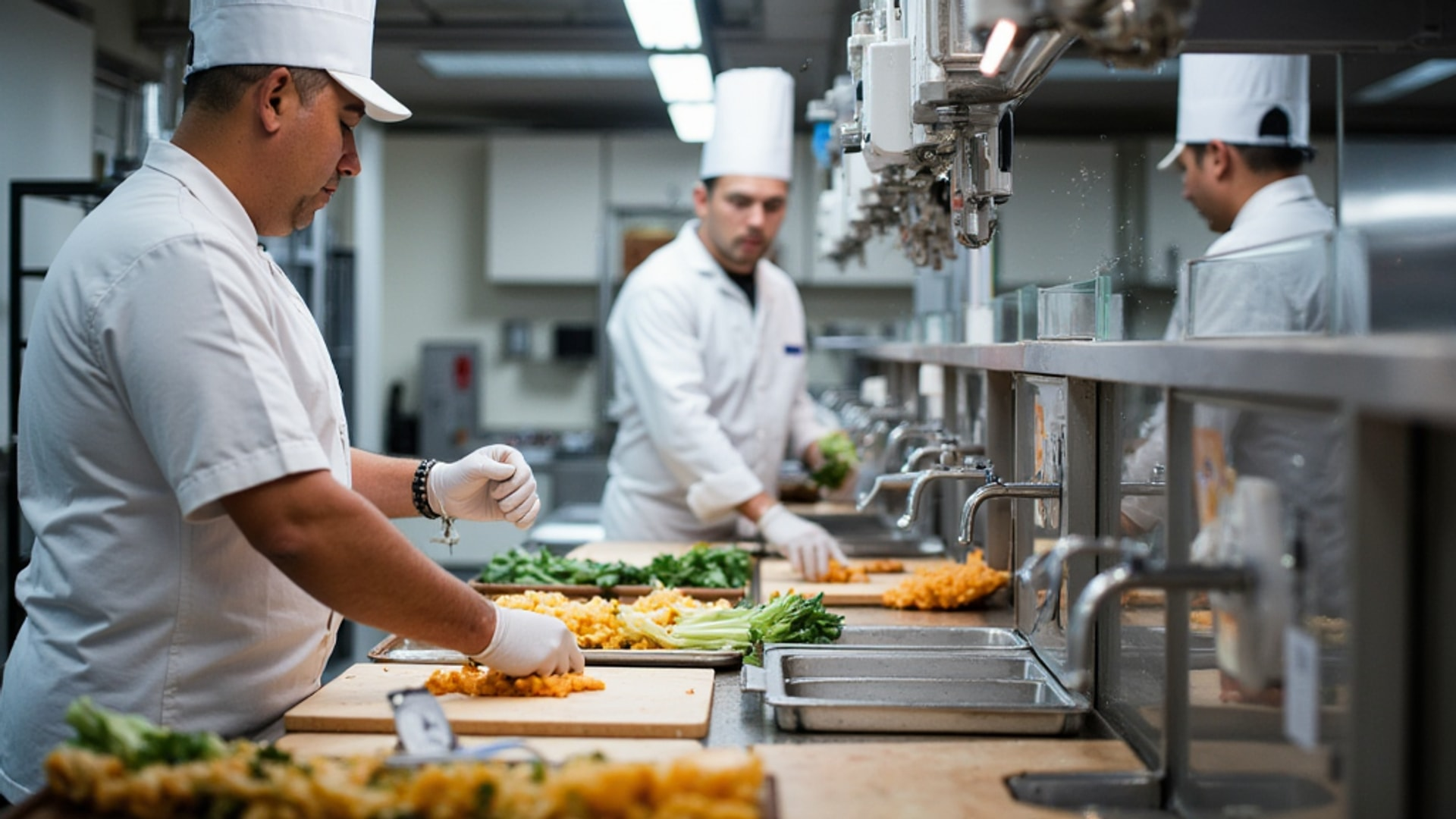
Glove changes and handwashing: Staff must change gloves and wash hands between handling allergenic and non-allergenic ingredients. This applies even when the visible handling is complete — if hands touched peanuts, they are contaminated until washed.
Frying oil: Cross-contamination in shared frying oil is one of the most frequently misunderstood allergen risks. A restaurant that fries shellfish and vegetables in the same oil cannot offer shellfish-allergy guests items from that fryer. Establish a dedicated frying station or oil for allergen-sensitive preparations, or train staff to communicate this limitation clearly to guests.
→ Read more: Preventing Cross-Contamination: Allergen Control and Kitchen Safety Protocols
Menu Transparency
According to Culinary Agents, proactive menu management reduces allergen incident risk before the ordering process begins:
- Each dish should clearly indicate the presence of major allergens using standardized notation (icons, bold text, or an allergen chart)
- A disclaimer about the possibility of cross-contamination should appear on the menu, particularly in kitchens that prepare diverse items
- Digital menus and dedicated allergen guides allow guests to self-filter before ordering
Being transparent about cross-contamination risk is not a liability admission. It is honest communication that helps guests make informed decisions and demonstrates operational integrity.
Emergency Response
According to Culinary Agents, every restaurant should maintain an emergency action plan for allergic reactions that covers:
- Location of epinephrine auto-injectors (if stocked) — all staff must know where they are
- Procedures for calling emergency medical services — designated person, script available
- Immediate response protocol — lay guest down, call 911, do not give food or water, stay with the guest
- Post-incident documentation — incident report completed immediately while details are fresh
Regular drills ensure staff can respond quickly and correctly when seconds matter. An allergic reaction during service is not a hypothetical — it is a scenario your team must be prepared to handle.
→ Read more: Dietary Accommodations and Allergen Management: A Complete Restaurant Guide
Keeping the System Current
Your allergen protocol is only as current as your menu. Every menu change — new dish, ingredient substitution, seasonal modification — requires allergen review. A sauce that previously contained no tree nuts but now includes a new ingredient must trigger an update to the allergen documentation.
Quarterly review checklist:
- Review all current menu items against allergen documentation
- Verify that any recipe changes have been reflected in allergen information
- Confirm that all staff have received updates to allergen documentation
- Test staff knowledge of allergen protocols through spot-check questions during pre-shift
- Review any allergen-related incidents from the prior quarter for protocol improvement
→ Read more: Restaurant SOPs: How to Build Standard Operating Procedures That Actually Get Followed
The Business Case
Allergen management is not simply a compliance exercise. It is a guest safety system with direct operational and legal implications. A guest who experiences an allergic reaction at your restaurant faces serious medical risk. Your operation faces liability exposure, regulatory scrutiny, reputational damage, and in severe cases, criminal liability. The FDA’s Food Code establishes the baseline requirements for allergen management in food service establishments.
The investment in a rigorous allergen management protocol — staff training, dedicated equipment, clear communication systems — is small relative to any of those consequences. And the byproduct is a kitchen team that is better trained, more attentive, and more capable of executing complex modifications for all guests, not just those with allergies.