· Kitchen · 9 min read
Kitchen Inventory Par Levels: Build the System That Prevents Stockouts
A practical guide to calculating par levels, setting up FIFO rotation, integrating POS data, and using variance reports to catch waste and theft before they erode your margins.
Every stockout tells the same story: someone guessed wrong about how much of something they had, or waited too long to order, or assumed a delivery would arrive as scheduled. The 86’d item on your menu at 7 PM on a Saturday is not bad luck — it is a system failure that plays out in front of paying customers.
Par level inventory is the antidote. It replaces guesswork with math, turns ordering into a routine rather than a scramble, and gives you a real-time picture of where your food cost is going.
What Par Levels Actually Are
A par level is the minimum quantity of an item that must be in stock at any given time to carry you comfortably until the next delivery. When your stock on hand drops to the par level, you order. The order quantity brings you back up to your target stock level.
According to the Toast par inventory guide, the par level formula is:
PAR level = (weekly usage + safety stock) / number of deliveries per week
Safety stock is a buffer — typically 10 to 20 percent above standard weekly usage — that absorbs unexpected demand spikes, supplier delays, or delivery quality issues that require rejection.
A Working Example
Your kitchen uses 200 pounds of chicken breasts per week. Your chosen safety buffer is 10 percent, so your target is 220 pounds. Your primary chicken supplier delivers twice per week, on Tuesdays and Fridays.
With two deliveries per week, each delivery covers half your weekly need plus safety stock. Your par level is 110 pounds. When your chicken inventory drops to 110 pounds, you trigger an order.
That same item with a once-per-week delivery would have a par level of 220 pounds — the full weekly need plus buffer — because there is a full seven days before the next replenishment opportunity.
Setting Initial Par Levels
You cannot set accurate par levels without usage data. For an existing restaurant, pull 4 to 8 weeks of purchasing and sales records and calculate average weekly usage by item. For a new operation, use your projected covers and standardized recipe quantities to estimate usage, then adjust par levels after the first 4 to 6 weeks of actual operation.
According to the Toast guide, factors that affect par level calculations:
- Day-of-week variation: Many restaurants use 30 to 50 percent more on weekends than weekdays. Track usage by day, not just weekly averages, and consider separate par levels for daily ordering versus bulk weekly orders.
- Seasonal demand shifts: Summer and holiday patterns can shift usage by 25 percent or more compared to the annual average. Adjust par levels before demand peaks, not after you run out.
- Supplier lead times: An item from a local purveyor with next-day delivery can carry a lower par level than an item from a distributor with a two-day lead time. Build lead time into the formula.
- Shelf life: Highly perishable items need tighter par levels that match shelf life — you do not want to hold two weeks of fresh herbs at a par level that means some always spoils. Less perishable dry goods and frozen items can carry larger buffers.
The Ordering Process
Par level systems work through a consistent counting and ordering cycle:
Daily count (for perishables): During opening prep or the end-of-day close, count the current stock of high-velocity and short-shelf-life items. Compare against par levels. Order the difference.
Weekly count (for dry goods and slower movers): A full physical inventory count of all items, typically at the same time each week — often before the primary supplier delivery so you are ordering to replenish from a known baseline.
Order quantity: The order quantity is the difference between your current on-hand count and your target stock level (which may be higher than your par level if you intentionally stock up before expected demand increases).
According to the Toast guide, digital inventory management systems that integrate with your POS can automate much of this process. As orders are entered into the POS, the system deducts the corresponding ingredients from inventory based on recipe specifications. This provides a running theoretical inventory that tells you, without counting, approximately where each item stands.
POS Integration and Real-Time Tracking
The shift from manual counting to POS-integrated inventory tracking is one of the highest-leverage technology investments a kitchen can make. According to the Toast guide:
- As servers enter orders, the POS deducts ingredients from inventory based on recipe specifications, providing a continuous theoretical count
- When inventory for a specific item drops below the par level, the system can automatically generate a purchase order to the assigned supplier
- This eliminates the delay between recognizing low stock and placing an order
- Management time previously consumed by manual order entry is freed for other tasks
The key phrase here is “theoretical count.” The POS tracks what should have been used based on sales. That number will never perfectly match physical reality — there is always some waste, some spillage, some portioning variance. Which is exactly why physical counts remain essential even with digital systems.
Physical Counts: Why You Still Need Them
A physical count is the only way to know what you actually have on hand, not what you theoretically have. According to the Toast guide, physical counts serve two purposes:
Inventory verification: The count confirms or corrects the theoretical inventory. Significant unexplained discrepancies trigger investigation.
Variance analysis: Comparing theoretical usage (what the kitchen should have used based on sales) against actual usage (change in physical inventory plus purchases) reveals the delta. That delta is your unexplained loss — and it could be waste, spoilage, theft, or portioning inaccuracy.
For high-volume restaurants, count perishable proteins and produce daily, or at minimum at every delivery. Count all items weekly. The count should happen at the same time and day each period so comparisons are apples-to-apples.
Variance Reports: Your Food Cost Diagnostic Tool
Variance reporting is the most powerful tool in the inventory management system. According to the Toast guide, a variance report compares what the kitchen theoretically should have used — based on items sold and standardized recipe quantities — with what was actually used, measured by physical count and purchase records.
The formula: Variance = Theoretical usage - Actual usage
A negative variance (used more than expected) points toward waste, spoilage, over-portioning, or theft. A positive variance (used less than expected) might indicate under-portioning, incomplete recording of sales, or errors in the theoretical recipe.
Consistent variance on a specific item is a signal, not noise. If your chicken breast consistently shows a 15 to 20 percent negative variance, you have a food cost system problem — and finding it is worth real money. At $5 per pound and 200 pounds per week, a 15 percent unexplained loss is $1,500 per month that vanishes without explanation.
FIFO Rotation and Labeling
Par levels control how much you order. FIFO (First In, First Out) controls how you use it. According to the Toast guide and the food storage temperature guidelines:
- When new deliveries arrive, existing stock moves to the front of the shelf or cooler. New items go behind it.
- Every item must be labeled with the item name, date received or prepped, and use-by date.
- Staff need to be trained on why FIFO matters — not just told to do it, but shown the financial consequence of a cooler where the new chicken goes in front of the old chicken and the old chicken becomes a $50 trash bag of spoilage.
Color-coded day-of-week labels are a practical tool for making FIFO rotation visible and intuitive. Rather than reading a date under poor lighting, a cook can immediately see that the yellow container was prepped on Wednesday and the red container was prepped on Saturday — and knows which one to grab first.
Dry Storage Par Levels
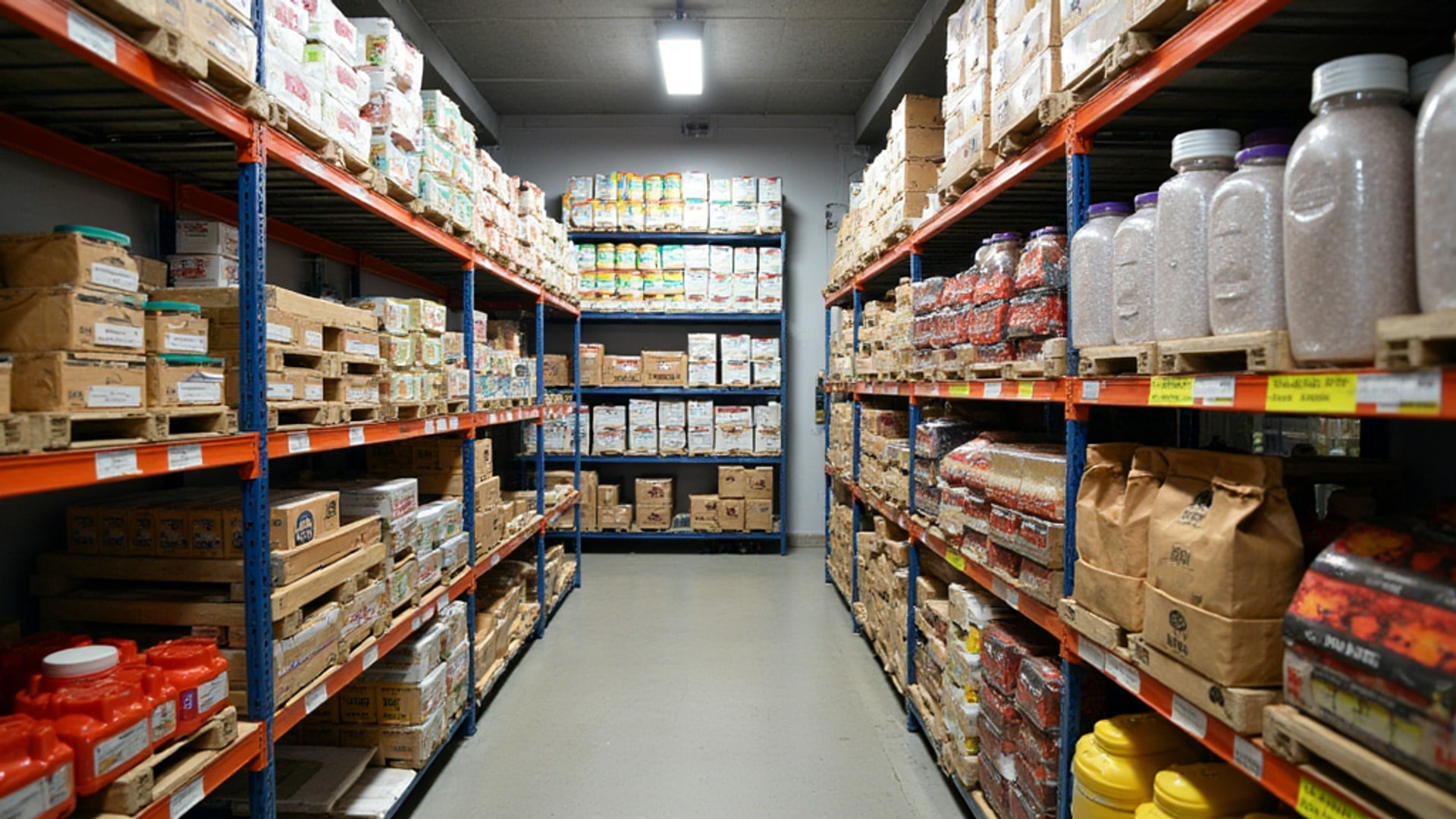
Dry goods inventory tends to be less urgent but no less important for cost control. According to the FDA food storage guidelines, dry storage items should be maintained at 50 to 70 degrees F, stored at least 6 inches off the floor on shelving, and rotated using FIFO like any other stock.
Par levels for dry goods typically reflect the lead time of your primary distributor plus a buffer for supplier reliability. A distributor with weekly delivery and reliable fill rates can support tight par levels with less buffer. A less reliable supplier justifies a larger buffer — that additional stock is essentially insurance against their performance. MarketMan’s par level guide provides additional formulas for calculating par levels across different product categories.
Handling Seasonal Adjustments
Par levels set in January will not serve you well in July if your concept is seasonal. Build a review into your operating calendar:
- 6 to 8 weeks before a major demand shift: Review historical data for the equivalent period in prior years and project usage. Adjust par levels upward for items you expect to sell more of. Adjust downward for items that slow.
- After new menu introductions: New items displace existing items. When a menu change launches, recalculate the affected item par levels based on projected new sales mix and adjust within the first two weeks of actual sales data.
- When suppliers change pricing or availability: A price increase on a key protein may shift your menu mix, which shifts your usage, which requires a par level adjustment.
The Difference Par Levels Make
According to the Toast guide, the benefits of a functional par level system are direct and measurable:
- Stockouts fall dramatically because ordering is triggered by math, not memory
- Over-purchasing falls because orders are sized to actual need rather than anxiety-driven buying
- Food cost becomes predictable because usage matches theoretical expectation
- Management time spent on ordering is reduced, particularly with automated purchase order generation
- Variance reports identify waste and portioning problems before they compound over months
A restaurant without par levels is operating on institutional memory — which walks out the door every time a manager leaves. A restaurant with par levels is operating a system that survives personnel changes, trains new managers faster, and produces fewer of the invisible losses that compound into serious margin problems over time.
The math is not complicated. The discipline to maintain the counts, label everything, and follow FIFO consistently — that is where most kitchens actually struggle. Build the habits before you build the spreadsheets, and the system will pay for itself within the first month.
→ Read more: Food Receiving Inspection: Procedures That Protect Your Kitchen
→ Read more: Supply Ordering Schedule: Build a System That Never Runs Out and Never Overstocks