· Marketing · 9 min read
Co-Branding and Cross-Promotion: Strategic Partnerships for Restaurants
How restaurants can use strategic brand partnerships and branded merchandise to expand their audience, reduce marketing costs, and create new revenue streams.
No restaurant is an island. The businesses surrounding yours, the brands your customers love, and the producers behind your ingredients are all potential partners in extending your restaurant’s reach and creating new revenue. Co-branding and cross-promotion turn these relationships into formal marketing arrangements where both sides benefit from each other’s audience.
Done well, strategic partnerships allow restaurants to access entirely new customer pools, share marketing costs, and create experiences that neither brand could produce independently. Done poorly, they produce awkward co-branded menus, confused customers, and frayed relationships.
The difference is in the selection process and the execution.
What Co-Branding and Cross-Promotion Actually Mean
The terms are related but distinct. The Cyphers Agency draws a useful line: co-branding occurs when two brands partner so both benefit from the association — shared identity, shared product, shared event. Cross-promotion involves mutual advertising where each brand promotes the other to its own audience without necessarily creating a shared product or event.
A restaurant partnering with a local brewery to create an exclusive beer served only at that restaurant is co-branding. The same restaurant and brewery each promoting the other’s events to their respective email lists is cross-promotion. Both create value. They require different levels of integration and commitment.
The fundamental business case is straightforward. According to The Cyphers Agency, two brands partnering splits costs and extends marketing budgets further while combined exposure increases consumer awareness through two separate brand audiences. A restaurant with 10,000 Instagram followers partnering with a local boutique of similar size can potentially expose each brand to 20,000 people through coordinated social content — at zero media cost.
Partner Selection: The Most Important Decision
The success or failure of a co-branding or cross-promotion initiative is largely determined before any campaign launches, in the partner selection process. The Cyphers Agency identifies this as the most critical decision: both brands should bring a new audience to the table, and the audiences should be compatible without being identical.
Compatible means the brands serve customers who share relevant characteristics — similar income levels, similar aesthetic preferences, similar lifestyle values — that make a cross-promotional message feel natural. Identical means the brands are direct competitors, which eliminates the benefit of audience expansion.
The ideal partner profile for a restaurant:
Complementary product categories — Businesses whose products or services enhance the restaurant experience without competing with it. Local breweries and wineries, specialty coffee roasters, specialty food producers, culinary bookstores, cooking equipment retailers, and gourmet ingredient shops all serve food-focused customers from non-competing positions.
Lifestyle adjacency — Businesses whose customers share the social and lifestyle profile of your restaurant’s regular guests. A fitness studio, a boutique hotel, a yoga studio, a high-end hair salon, or an independent theater may serve customers who match your demographic perfectly.
Geographic alignment — Partners whose customer base overlaps geographically with your restaurant’s trade area. A cross-promotion that drives customers from across the city is less valuable than one that drives customers from the surrounding neighborhood.
Shared values — Brands that share your restaurant’s positioning on sustainability, local sourcing, community engagement, or culinary philosophy. Alignment in values makes the partnership feel authentic to both customer bases.
Co-Branded Events: The Highest-Visibility Format
Co-branded events are the most visible and often most effective format for restaurant partnerships. They create newsworthy moments, generate social media content, and provide an experiential context that builds brand associations more powerfully than any advertisement.
The Cyphers Agency identifies themed dinner nights combining a restaurant’s cuisine with a beverage partner’s products, joint cooking classes, and collaborative pop-up experiences as the most effective event formats. Each has a different audience profile and commercial purpose:
Chef collaboration dinners bring two restaurants’ culinary teams together for a joint menu — typically a ticketed, prix-fixe experience where each chef contributes courses. These events generate strong media and social interest because they create a specific, time-limited experience with clear creative intent. They also tap both restaurants’ customer bases and often attract food media coverage.
Beverage pairing dinners with a brewery, winery, or spirits producer follow a similar logic but are operationally simpler. The restaurant’s kitchen produces the menu; the partner provides products and expertise. The resulting event showcases both brands’ quality in natural combination.
Pop-up experiences in partner locations bring the restaurant brand to new environments. A restaurant setting up a weekend brunch pop-up at a partnering boutique hotel, market, or retail location exposes the food to customers who have never encountered the restaurant on its home turf.
Limited-time collaborative menu items create product-level co-branding with urgency built in. A restaurant partnering with a local hot sauce producer to create an exclusive collaboration sauce — used across three menu items during a defined promotional period — creates a reason to visit, a product story to tell, and content to share across both brands’ channels. As The Cyphers Agency notes, the Doritos Locos Taco demonstrates how an innovative food product combination can capture enormous consumer attention at scale. The principle applies at the local independent level too.
Social Media Collaboration: Amplifying Combined Reach
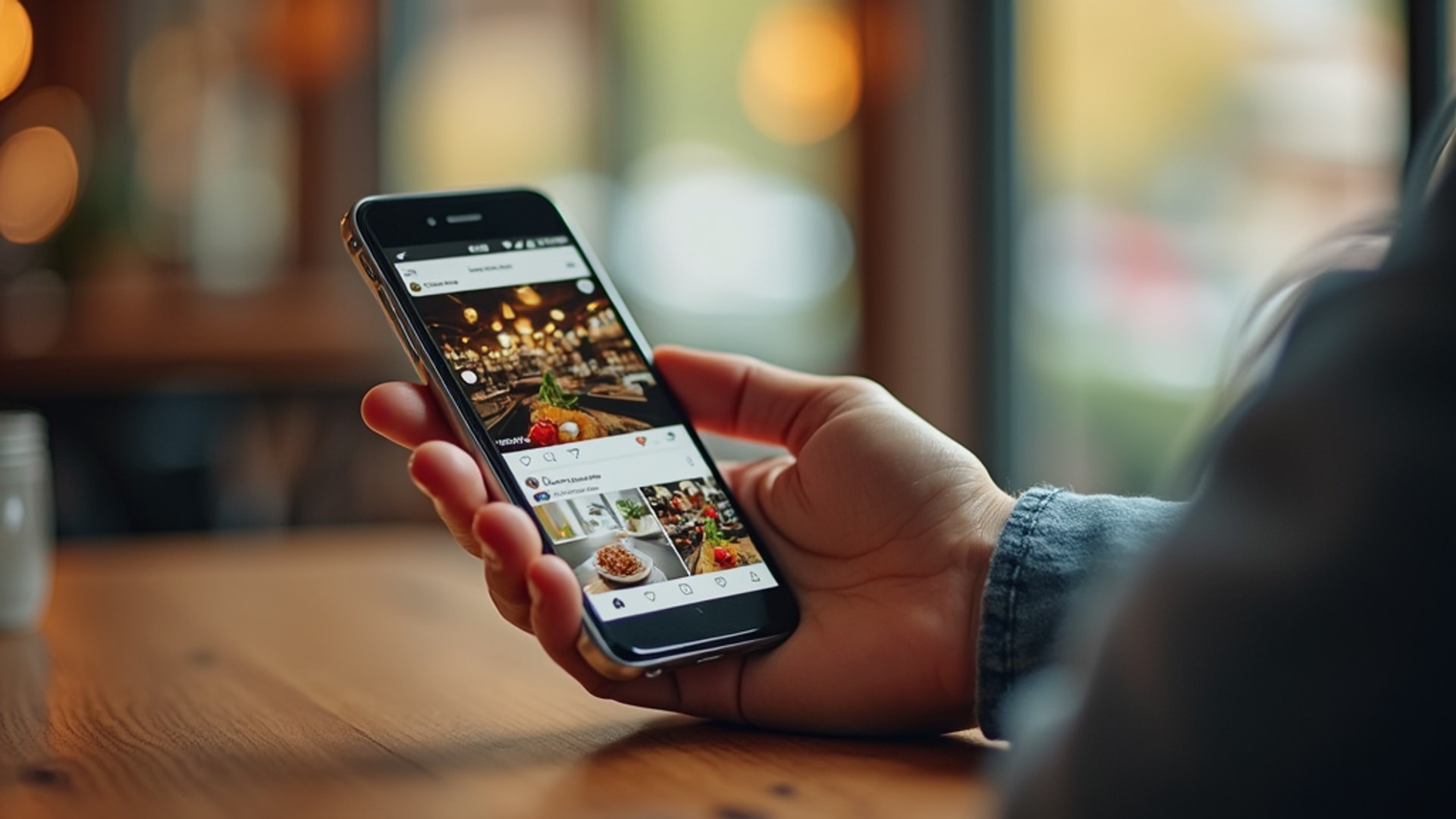
Joint social media campaigns are the most operationally accessible form of co-branding and can be deployed without significant production investment.
The Cyphers Agency recommends coordinated posting schedules, shared stories, mutual tagging, and joint giveaway contests as the primary tactics. Each works slightly differently:
Coordinated posts — Both brands publish content about the partnership or event on the same day, cross-tagging each other. Followers of both brands encounter the partnership from their own feed, and the mutual tagging drives traffic to both profiles.
Takeovers — One brand temporarily produces content for the other’s account. A brewer posting from a restaurant’s Instagram account about the beer pairing menu, or a restaurant chef taking over a local farm’s account during harvest season, creates novelty and exposes each brand to a warm but new audience.
Joint giveaways — A contest requiring entrants to follow both accounts and tag a friend creates rapid audience crossover. Platforms like Hootsuite can coordinate posting schedules across both partners’ accounts. A dinner-for-two prize split between the restaurant and a partner (wine included courtesy of the winery co-sponsor) is more compelling than either prize independently and requires entrants to engage with both brands.
→ Read more: User-Generated Content: How to Turn Every Diner into Your Best Marketer
Starbucks’ partnership with Spotify, as cited by The Cyphers Agency, exemplifies how co-branding can extend into technology and loyalty integration — both companies shared platform infrastructure and loyalty systems. At the independent restaurant scale, this might translate to a shared loyalty program with a frequent local business partner, where points earned at one can be redeemed at the other.
Branded Merchandise as Revenue and Marketing
Branded merchandise occupies a unique category in the co-branding landscape — it is both a direct revenue stream and an ongoing, self-funding marketing channel. Square’s analysis of restaurant merchandise provides the business case: merchandise margins start at approximately 40% and increase with scale, which significantly exceeds typical restaurant food margins.
The marketing value is arguably more important than the margin. As Square observes, every T-shirt worn to the gym, every coffee mug used in an office, and every tote bag carried to the grocery store is an unpaid advertisement. Unlike paid advertising, a well-designed branded item continues generating impressions for years after the initial purchase.
Square’s survey found that 90% of restaurant owners plan to develop new revenue streams beyond their core food and beverage operations, with merchandise being one of the most accessible entry points.
What merchandise works for restaurants:
- Apparel — T-shirts, hoodies, hats. High visibility in daily use, strong loyalty signal for customers who wear them
- Drinkware — Mugs, pint glasses, water bottles. Daily use in offices and homes, high impression frequency
- Kitchen and culinary items — Branded aprons, cutting boards, cooking tools. Connect naturally to the restaurant’s food identity
- Signature food products — House-made hot sauce, spice blends, specialty preserves, packaged pasta or seasoning kits. These sell well online and in-restaurant and allow customers to recreate the restaurant experience at home
- Accessories — Tote bags, stickers, prints. Lower price point, accessible impulse purchase, strong shareability for visually distinctive designs
The design quality standard is high. Square’s analysis emphasizes going beyond simply logo-stamping to designing thoughtful, useful items. A restaurant-branded item that a customer genuinely wants to wear or use in their daily life is effective marketing. An item purchased once out of loyalty but never used is a failed product.
→ Read more: Restaurant Merchandise: Branded Products as a Revenue Stream
Online sales expand the addressable market. Restaurants with strong social media followings or cult-like brand loyalty can sell merchandise to fans who may never visit the physical location — extending brand awareness geographically and converting emotional connection into commercial transactions.
Structuring a Successful Partnership Agreement
Before launching any co-branding initiative, establish the terms in writing. Even among friendly business neighbors, ambiguity about contribution, ownership, and revenue split creates conflicts that damage the relationship and the businesses.
Key terms to define:
- Creative ownership — Who approves the co-branded visual elements, menus, and event concepts?
- Marketing contribution — What does each partner commit to promoting, with what frequency and reach?
- Event cost split — For co-hosted events, how are production costs allocated?
- Revenue sharing — For any jointly sold products, how is revenue distributed?
- Duration and exit terms — How long does the partnership run? What is the process for ending it if it is not working?
Formal agreements do not have to be lengthy or lawyerly, but they do need to exist. The handshake deal that seemed obvious at the initial conversation often looks different to each party six months later.
Measuring Partnership ROI
Co-branding initiatives are often treated as unmeasurable brand-building activities. That is a mistake. Most partnership impacts can be tracked with relatively simple methods.
Unique tracking codes assigned to each partnership enable attributing visits or purchases to the partnership channel. A promo code exclusive to a brewery partnership email list tracks how many of that partner’s customers converted.
Social media metrics — follower growth, reach of co-branded posts, engagement rate on partnership content — measure the audience expansion impact. Track these using Meta Business Suite or Hootsuite Analytics.
Event revenue is directly measurable for ticketed experiences.
Email list growth from partner cross-promotions tracks audience acquisition.
Evaluate each partnership against a simple standard: did this partnership bring new customers who would not have visited otherwise, and did the cost (time, resources, shared promotional commitments) justify the result? Successful partnerships deserve continuation and deepening. Unsuccessful ones deserve honest evaluation and potentially respectful dissolution.
The restaurants that build the deepest partnership ecosystems develop a collective presence in their market that no single brand could achieve alone. Most independent operators never get past the first handshake deal. The ones who do build something competitors with bigger budgets genuinely struggle to replicate.
→ Read more: Community Engagement: Local Marketing That Builds Loyalty → Read more: Referral Programs: Building a System That Makes Your Customers Do Your Marketing