· Marketing · 7 min read
Social Proof for Restaurants: Building the Trust That Fills Dining Rooms
How to systematically collect, display, and amplify social proof across every marketing touchpoint to convert skeptical browsers into confident bookings.
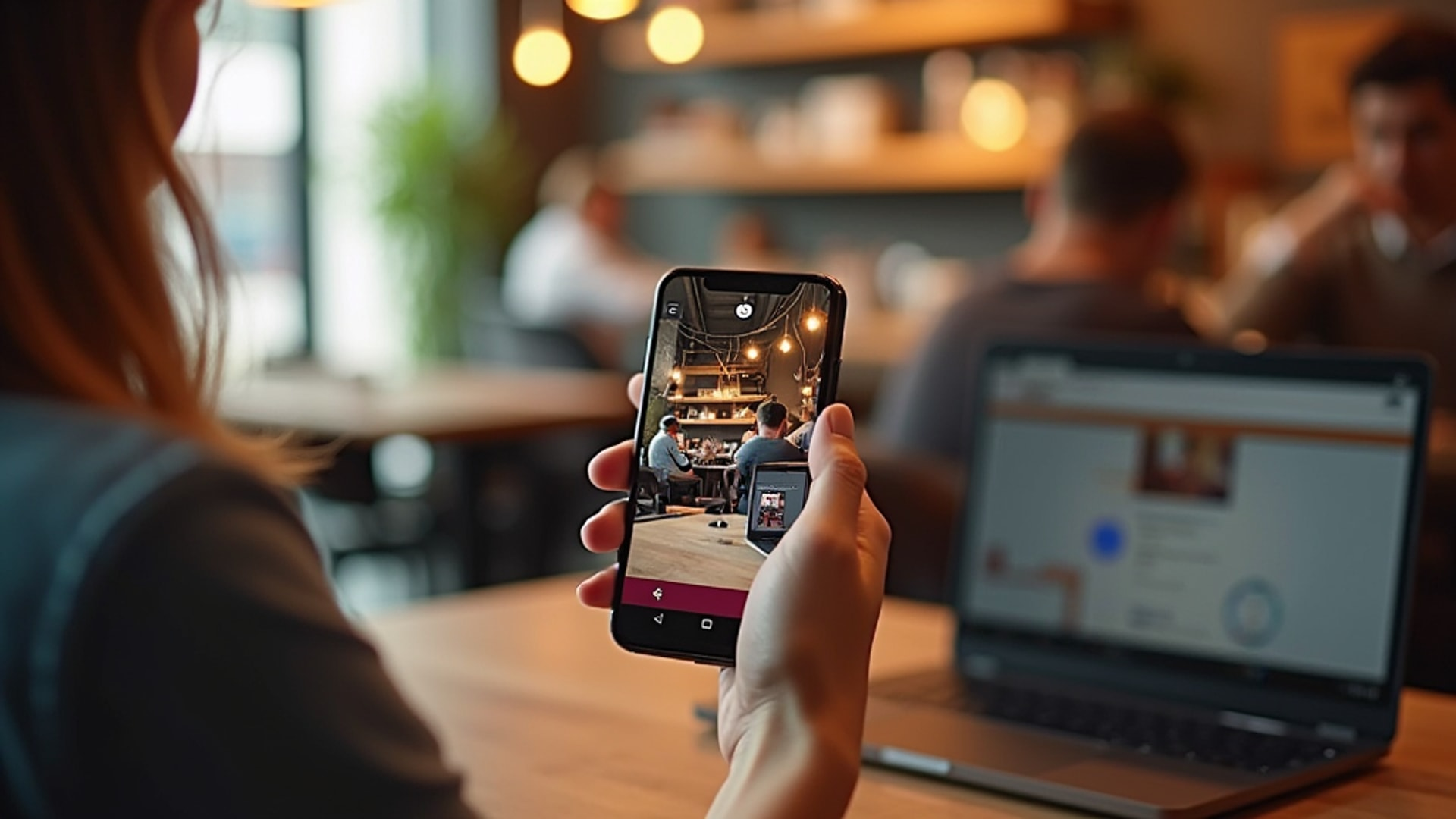
According to Restaurantify, 90% of people look at reviews before visiting a business. 84% trust online reviews as much as personal recommendations. These two statistics define the fundamental challenge of restaurant marketing in 2026: before a new customer ever steps through your door, they have already made a judgment based on what other people said about you.
Social proof is the psychological principle that people follow the actions and opinions of others when making decisions under uncertainty. For restaurants — where the experience cannot be previewed, tasted, or returned — social proof is how customers reduce the risk of a bad dining decision. Your job is to make sure the social proof they find is abundant, authentic, and strategically placed.
The Hierarchy of Social Proof
Not all social proof carries equal weight. Understanding the hierarchy helps you prioritize where to invest.
| Type of Social Proof | Trust Level | Example |
|---|---|---|
| Personal recommendation from a known friend | Highest | ”My colleague said this place is excellent” |
| Professional critic review | Very high | City magazine four-star review |
| Verified customer reviews (Google/Yelp) | High | 4.7 stars with 340 reviews |
| Influencer endorsement | Moderate-high | Food blogger with 50K followers |
| Celebrity visit | Moderate | Photo of a known figure at your restaurant |
| Award or recognition | Moderate | ”Best Italian 2025” badge |
| Social media follower count | Low-moderate | 12,000 Instagram followers |
| Testimonial on your own website | Low | Cherry-picked quote with no verification |
The highest-trust forms — personal recommendations and verified reviews — are ones you cannot directly control. But you can create the conditions that generate them and amplify them strategically across channels.
Reviews: The Foundation of Restaurant Social Proof
According to Restaurantify, five-star reviews serve as free resources that foster trust and sway potential customers. The volume and recency of reviews are equally important — a restaurant with 400 reviews at 4.6 stars is more credible than one with 12 reviews at 5.0 stars, because volume signals sustained quality over time.
Where reviews matter most:
| Platform | Why It Matters |
|---|---|
| Primary local search signal; reviews appear in Maps and Search results | |
| Yelp | 76 million monthly users; significant driver of first visits (per Toast) |
| TripAdvisor | Critical for tourist-heavy markets and travel discovery |
| OpenTable/Resy | Reservation-intent signals; reviews from verified diners |
| Reviews visible to social connections; local community credibility |
The review generation system:
You cannot ask customers to write reviews on Yelp (against their terms of service) or manufacture them artificially. But you can build a consistent, low-friction system that makes review writing easy for motivated customers:
Deliver an experience worth reviewing. This is irreducible. No tactic overcomes mediocre food and service.
Ask at the right moment. The moment a guest expresses genuine satisfaction — “everything was wonderful” — is the moment to mention reviews. Train staff: “We’re really glad you enjoyed it. If you ever feel inclined, sharing your experience on Google helps a lot.”
Post-visit email prompt. A simple “How was your visit?” email sent 2-4 hours after dining with direct links to Google and Yelp review pages converts satisfied customers into reviewers at dramatically higher rates than hoping they will find the platform themselves.
Make it visible passively. “Find us on Yelp” and “Review us on Google” stickers on your entrance, printed on receipts, and linked from your website ensure customers who are already inclined to review can do so easily.
The Reinforcement Loop
According to Restaurantify, positive social proof signals aggregate across touchpoints, creating a “reinforcement loop” that compounds trust. As positive reviews accumulate, media coverage increases, social media presence grows, and customer-generated content proliferates — each additional signal reinforces the others.
This compounding dynamic means early investment in social proof generates exponential returns over time. A restaurant with 200 Google reviews does not just have 200 data points — it has a pattern that tells every prospective guest that 200 different people chose to spend their time writing about a positive experience here. That is qualitatively different from 10 reviews.
The reinforcement loop works across all forms of social proof:
- More reviews → higher review platform ranking → more visibility → more visitors → more reviews
- Press coverage → social media sharing → new followers → more visits → more content → more coverage
- Influencer partnership → social media reach → new followers → visit interest → organic UGC → more influencer interest
Displaying Social Proof Across Channels
Generating social proof is only half the work. The other half is strategic display. According to Restaurantify, displaying review counts, ratings, and testimonials on the restaurant’s website and marketing materials amplifies trust by ensuring every customer touchpoint reinforces credibility.
Website Integration
Your website is where many first impressions are made. Social proof elements that should appear on your homepage:
- Google review badge: Real-time stars and count embedded from Google (use Google’s official widget or a review management platform)
- Yelp rating badge: Displayed near the reservation or ordering button
- Press mentions: Logos of publications that have covered you (“As seen in…”)
- Selected review quotes: 2-3 specific, detailed reviews with customer names and platforms
- Award badges: Current year awards and recognitions prominently displayed
- Instagram feed widget: Shows real customer photos, immediately demonstrating that real people enjoy the experience
Social Media
Instagram Stories are an excellent vehicle for sharing and amplifying social proof:
- Screenshot a particularly detailed Google or Yelp review (with platform attribution)
- Reshare a customer’s food photo with a quote from their caption
- Feature press coverage with a link to the full article
According to Restaurantify, UGC (customer photos, check-ins, social media tags) provides authentic endorsement that branded photography cannot replicate. When prospective customers see other guests’ unfiltered photos of your food, the credibility is immediate.
Email Marketing
Include social proof in every email you send:
- Footer: “Rated 4.8 stars on Google — 340 reviews”
- Monthly newsletter: Feature the week’s best customer review
- Promotional emails: Open with a relevant customer quote before the offer
Industry Awards and Recognition: Earned Credibility
According to Restaurantify, industry awards and “Best Restaurant” accolades serve as powerful credibility signals that distinguish a restaurant from competitors. These achievements should be prominently displayed across all marketing touchpoints.
How to pursue recognition:
Local media “Best of” lists: Most city publications run annual “best restaurant” surveys. Submit your restaurant every year. Build relationships with the journalists and editors who run them.
Industry award submissions: James Beard, Michelin (in applicable markets), local restaurant association awards, culinary competition programs. Research eligibility and submit consistently.
OpenTable and Yelp recognition programs: Both platforms offer annual “Top Restaurant” and “People’s Choice” designations based on review data. These require no application — they are earned through consistent review performance.
Food festival participation and wins: Local food festivals, chili cook-offs, burger competitions, and culinary showcases generate press coverage and award credentials.
Each award or recognition earned is a permanent credibility asset. Display them everywhere: on the website, on social media, on your physical menu, in press kits, and on email templates. A badge that says “Best New Restaurant 2024 — City Magazine” is not bragging. It is social proof in its most curated form.
Celebrity and Notable Visits: Capturing and Amplifying
When a known figure visits your restaurant, it is social proof at its highest-visibility form. According to Restaurantify, celebrity visits, media features, and press coverage serve as expert social proof.
How to handle notable visits:
- Ask for a photo only if the guest is comfortable and the moment is natural — never presume
- If a photo is taken and shared with permission, post it on social media immediately
- If the guest posts their own content about your restaurant, engage warmly and reshare
- Add notable guest history to your “About” section if appropriate to your brand positioning
This type of social proof has a multiplier effect: when followers see that a person they respect chose your restaurant, they inherit that endorsement.
The Social Proof Audit: Where You Stand Right Now
Take 30 minutes to conduct this audit monthly:
Review presence:
- Google reviews: Current count and average rating?
- Yelp: Current count, rating, and any “Recommended” badges?
- TripAdvisor (if relevant): Current ranking in your city/category?
Website social proof:
- Review widget displayed and current?
- Press mentions and awards displayed?
- Customer photos visible on homepage or gallery?
Social media social proof:
- Consistent resharing of customer content?
- Press coverage regularly featured in Stories and posts?
- Response rate to comments and reviews at 100%?
Awards and recognition:
- All current awards and recognition displayed across channels?
- Submission list maintained for upcoming award cycles?
Social proof is not a one-time project. It is an ongoing system. Build it, maintain it, and let it work for you continuously — because every new guest is another potential review, and every new review is another potential guest.
→ Read more: Online Reputation and Review Management: Turning Customer Feedback into Revenue → Read more: Restaurant Google Reviews: Building a Five-Star Reputation on Purpose → Read more: User-Generated Content for Restaurants: The Marketing You Do Not Have to Create