· Menu & Food · 9 min read
Calorie Labeling Requirements: FDA Rules and Menu Compliance
If your restaurant chain has 20 or more locations, federal law requires calorie counts on your menus. Here is exactly what the FDA requires, what is exempt, and how to build compliance into your menu design.

Federal calorie labeling requirements became enforceable on May 7, 2018, and they remain one of the most significant federal regulations affecting restaurant menu design. If your operation falls under the scope of the rules (chains with 20 or more locations), compliance is not optional and the requirements are specific.
This is not a source of creative anxiety. The FDA’s rules are clear, the exemptions are well-defined, and the compliance infrastructure is buildable with the right systems. What operators need is a precise understanding of what is required, what is exempt, and what ongoing operational demands compliance creates.
Who the Rules Apply To
The FDA’s menu labeling requirements apply to restaurants and similar retail food establishments in chains with 20 or more locations that operate under the same name and offer substantially the same menu items. This threshold is the key filter.
A single-location restaurant with no plans to expand is not covered by the federal requirement. A chain with 18 locations is not covered. A chain with 20 locations operating under slightly different names at each location may not be covered, depending on how “substantially the same” is interpreted for their menu structure.
The rules extend beyond sit-down restaurants to include any covered retail food establishment (bakeries, cafes, ice cream shops, pizza operations, movie theater concessions) that meets the chain size and menu similarity thresholds. If your concept has 20-plus locations serving substantially the same items under a consistent brand name, assume you are covered and verify with legal counsel rather than assuming exemption.
Individual non-chain restaurants and smaller chains are not covered by the federal requirement, according to the FDA’s published guidance. However, this does not mean no labeling obligations exist. State and local governments have enacted their own calorie disclosure requirements that vary by jurisdiction. New York City, for example, implemented calorie labeling years before the federal rule, and similar local requirements exist in other markets. Independent operators and smaller chains should check the specific rules in every jurisdiction where they operate.
The Core Requirement: Calorie Display on Menus
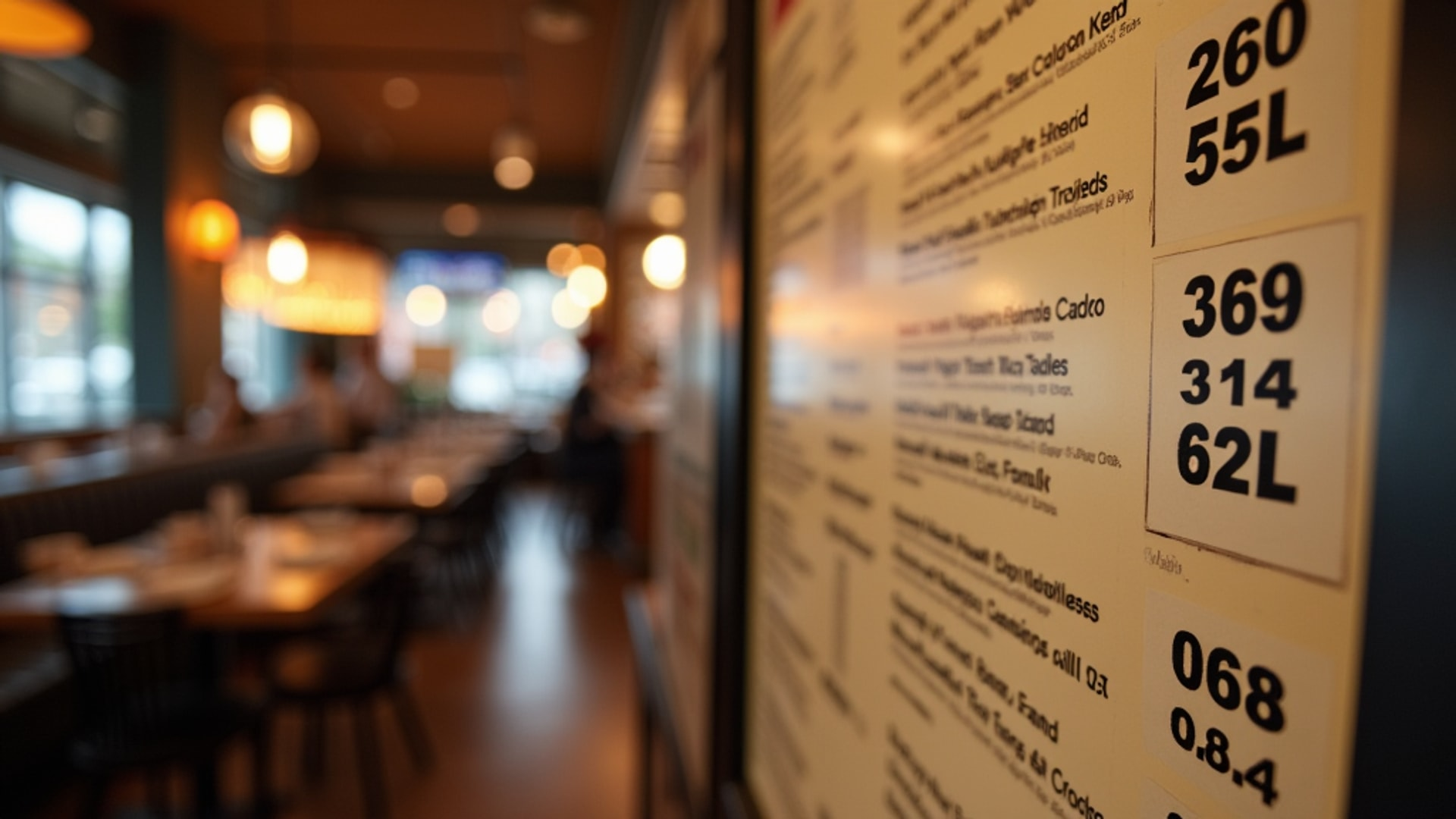
The fundamental compliance obligation is straightforward: calorie information must be displayed on menus and menu boards adjacent to the name or price of each standard menu item. The specific placement requirement (adjacent to name or price) means calories must appear immediately next to the item identification, not on a separate nutritional panel, not at the bottom of the page, and not in a separate document.
The font size requirement adds precision: calorie display must use type that is no smaller than the smaller of the item name or price. If the item name is in 10-point type and the price is in 8-point type, the calorie count must be in at least 8-point type. This prevents the practice of including required information in small print that guests cannot reasonably read.
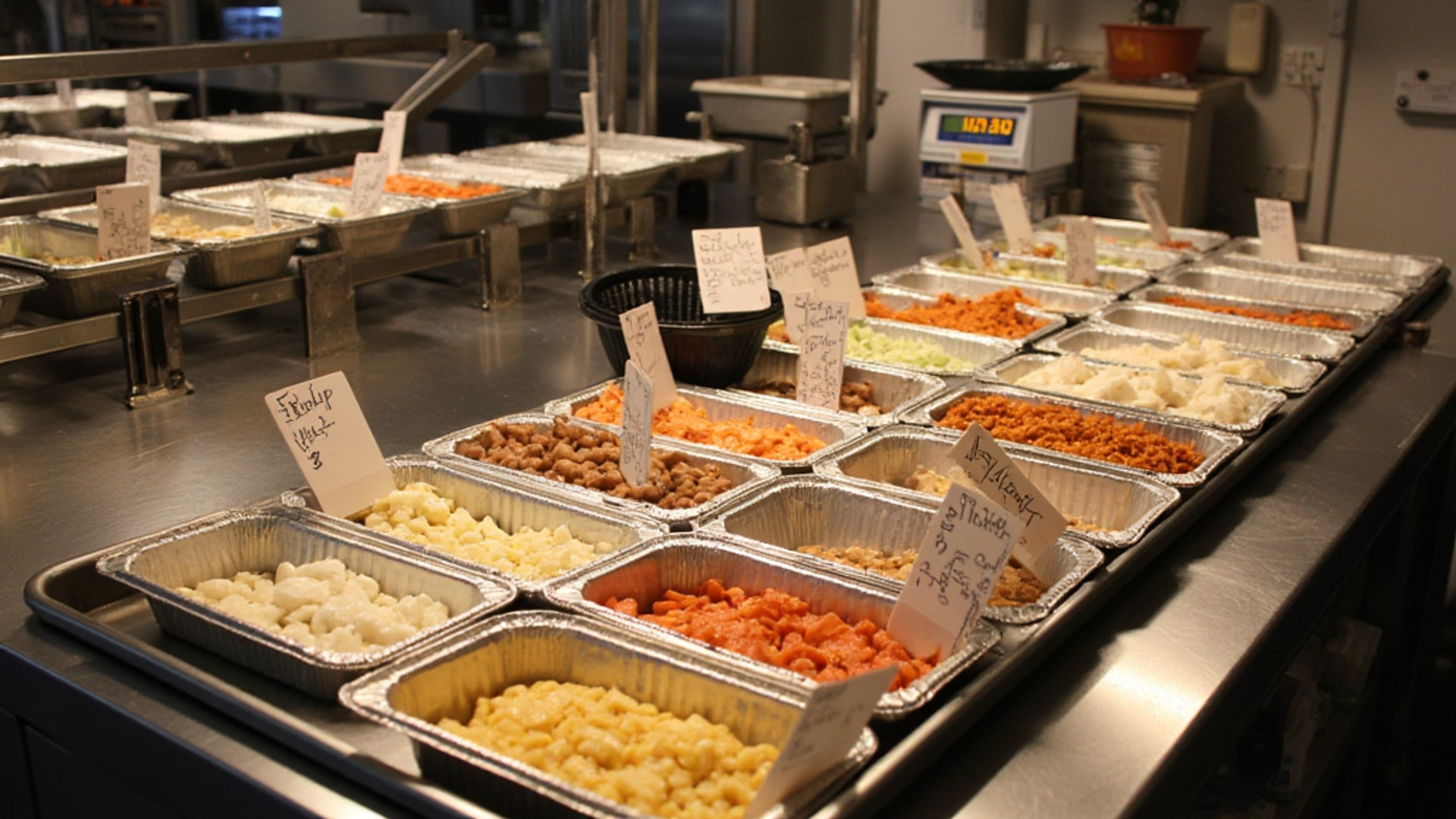
For self-service and display items (buffets, salad bars, bakery cases, grab-and-go displays), calorie information must be posted in close proximity to each item. The same adjacent-to-the-item logic applies, adapted to the physical format of the display.
The Two Required Statements
Beyond per-item calorie display, covered establishments must include two specific statements on their menus.
The first informs customers that additional written nutritional information is available upon request. This statement alerts guests that if they want more detailed nutritional data than calories, they can request it.
The second provides context about daily calorie intake. The required language establishes that 2,000 calories per day is the general reference for nutritional advice, consistent with the USDA Dietary Guidelines for Americans, while acknowledging that individual calorie needs vary. This contextualizes the per-item calorie counts and provides a frame of reference for guests assessing their selections.
These statements must appear on the menu, not just on a supplemental document. Their exact wording and placement are specified in the FDA’s guidance documents.
Additional Nutritional Information Available on Request
When customers request it, covered establishments must provide written nutritional information that goes beyond just calories. The full set of required information includes total calories, calories from fat, total fat, saturated fat, trans fat, cholesterol, sodium, total carbohydrates, dietary fiber, sugars, and protein.
This information does not need to appear on the menu itself. It must be available in written form when requested. In practice, this typically means maintaining a nutritional information binder, a printable nutritional reference document, or a digital format accessible in-store. The format matters less than the availability: staff must be able to produce it reliably when a guest asks.
Maintaining accurate supplementary nutritional information requires documented recipe standards. If portions change, if an ingredient is substituted, or if preparation methods shift in ways that affect nutritional composition, the nutritional data must be updated. This creates an ongoing operational requirement: recipe documentation must be treated as a living system rather than a one-time setup exercise.
What Is Exempt
Several categories of menu items are explicitly exempt from the labeling requirements, which matters for planning and compliance strategy.
Daily specials. Items that by definition change frequently are not subject to calorie disclosure. This exemption exists because daily specials cannot be subject to the same nutritional analysis as permanent menu items without creating an impossible compliance burden. The exemption applies specifically to items that genuinely rotate, not to items described as specials that actually appear consistently.
Food trucks. Items sold from food trucks are exempt from the federal menu labeling requirements.
Transportation vendors. Items sold on airplanes, trains, and similar transportation vehicles are exempt.
Alcoholic beverages. Most alcoholic beverages fall outside the calorie labeling mandate. This is a significant exemption for establishments where beverage revenue is substantial, though voluntary calorie disclosure on alcoholic beverages is possible and is increasingly practiced by large chain operators.
Temporary and customizable items. Items that are temporary or that can be substantially customized (and therefore have variable nutritional content) have more flexibility in how compliance is handled, though covered establishments should consult specific FDA guidance for their situation.
→ Read more: Dietary Accommodations and Allergen Management: A Complete Restaurant Guide
Building Compliance Into Menu Design
The operational challenge of calorie labeling for covered establishments is not the disclosure itself. It is the ongoing maintenance of accurate data as menus evolve.
The compliance infrastructure requires four components working together:
Standardized recipes. Every standard menu item must have a documented recipe with specified portions, ingredients, and preparation methods. These recipes are the inputs to nutritional analysis. If recipes are not standardized, if preparation varies by location, shift, or individual cook, the nutritional analysis cannot be accurate, which creates compliance risk.
Nutritional analysis for each item. Either through laboratory testing (expensive but most accurate) or software-based calculation using ingredient databases (more cost-effective for most operators), each standard menu item needs documented calorie and nutritional data. Software platforms like ESHA Genesis or Nutritionix for Business handle this calculation at scale.
Update protocols. Whenever a recipe changes (an ingredient is substituted, a portion size is adjusted, a preparation method shifts), the nutritional analysis must be updated and the menu display must reflect the updated data. Building a change management protocol into your recipe documentation process prevents the drift between actual and displayed calorie counts that creates compliance exposure.
Menu design integration. The physical and digital menu designs must accommodate calorie display without compromising readability or visual appeal. Work with menu designers who understand the placement and type size requirements from the beginning rather than retrofitting calorie information onto designs that were not built to accommodate it.
Voluntary Compliance for Smaller Operations
For independent restaurants and chains below the 20-location threshold, the question of voluntary calorie disclosure is worth considering strategically. Guests who actively want nutritional information are a real segment: health-conscious diners, guests managing specific dietary conditions, parents making food decisions for children.
Providing voluntary calorie information on the menu or via a QR code that links to nutritional data signals transparency and health-consciousness without requiring the full compliance infrastructure of covered establishments. It can also differentiate an independent operator from competitors who provide no nutritional information.
The practical consideration for voluntary disclosure is accuracy. A restaurant that voluntarily provides calorie counts but maintains imprecise recipe standards may end up with displayed calorie counts that diverge from actual nutritional content. This creates a trust problem with the exact guests — health-focused, nutrition-attentive diners — who are most likely to notice the discrepancy. If you are going to provide voluntary nutritional information, the same accuracy standards that covered establishments must meet are worth applying.
The Guest Communication Dimension
The FDA’s framework includes elements designed to support meaningful guest communication, not just data disclosure. The requirement that additional nutritional information must be available upon request is an invitation for guest interaction. Some guests will ask, and staff must be prepared to respond helpfully.
Train front-of-house staff to know that the additional nutritional information exists, where to find it, and how to present it to a guest who requests it. A server who says “I’m not sure we have that” when a guest asks about sodium content or allergens creates a trust problem that the compliance investment was designed to avoid.
The bigger communication opportunity is how calorie information is positioned to guests. Rather than treating it as a regulatory obligation presented apologetically, operators who present nutritional information proactively, including it naturally in menu descriptions and training servers to discuss it fluently, convert a compliance requirement into a competitive asset with health-conscious guests.
State and Local Variations
The federal requirement establishes a floor, not a ceiling. State and local governments may impose calorie labeling or nutritional disclosure requirements on establishments that the federal rule does not cover, or may impose additional requirements beyond the federal standard.
Multi-unit operators expanding into new markets should audit the applicable state and local requirements in each new jurisdiction as part of their pre-opening compliance review. Operating in a city or state with its own calorie disclosure law without awareness of that law creates compliance exposure that the federal-only compliance framework does not protect against.
Legal counsel familiar with restaurant regulatory requirements in each market the operation enters is the appropriate resource for this review, not an assumption that federal compliance covers all obligations.
→ Read more: Menu Localization: Adapting Your Menu for Regional Markets and Franchise Expansion → Read more: Recipe Standardization: Building Consistent, Profitable Dishes at Scale