· Operations · 10 min read
Restaurant Food Waste Reduction: Strategies That Save Money and the Planet
The average restaurant wastes 4-10% of purchased food before it reaches a customer — here's how to close that gap and capture the $8 return for every $1 you invest.

Food waste is one of the most quietly expensive problems in the restaurant industry, yet most operators treat it as an afterthought. According to the USDA, the industry loses an estimated $162 billion per year to food waste, and the EPA estimates that 60 to 80 percent of all restaurant garbage is food waste. When you add up spoilage, over-preparation, plate waste, and trim that gets tossed instead of repurposed, commercial kitchens typically throw away 4 to 10 percent of every dollar spent on food before it even reaches a guest.
The financial case for fixing this is straightforward: research documented by the National Restaurant Association shows that every $1 invested in food waste reduction yields approximately $8 in cost savings. For a restaurant spending $1 million annually on food, that means somewhere between $40,000 and $100,000 is currently walking out the back door in garbage bags. Even cutting waste by half is a six-figure improvement.
Here is how to build a program that actually sticks.
Start With Measurement — Not Guesses
You cannot manage what you do not measure. Before implementing any changes, establish a baseline by tracking every piece of food that gets discarded for two to three weeks. Your waste log needs to capture three things for every item: weight, type (spoilage, over-prep, plate waste, trim), and source (which station, which dish, which process).
This tracking phase will feel tedious. Do it anyway. Without it, you are spending money on solutions to problems you have not correctly identified. Most kitchens discover that their top three waste categories account for 60 to 70 percent of total waste — and those are the only places worth prioritizing initially.
Manual tracking works fine to start: a simple log sheet at each prep station and on the line. Digital solutions like Leanpath or Winnow automate the process and add data visualization, but they require investment. Start analog, prove the value, then upgrade.
The Waste Hierarchy: Prevention First
The EPA updated its Food Recovery Hierarchy in 2023 to a new model called the Wasted Food Scale. The principle is the same: the highest-value option is always to prevent waste from occurring in the first place. Donation comes second. Composting, anaerobic digestion, and organics recycling come after that. At the bottom of the hierarchy is landfill disposal — which is where most restaurant waste currently ends up.
This matters operationally because your ROI drops significantly as you move down the hierarchy. Preventing waste saves you the purchase cost of that food. Donating surplus saves disposal costs and may generate tax benefits. Composting reduces disposal fees but you have already absorbed the full food cost. Landfill disposal costs you the food cost plus disposal fees with no recovery.
The NRA recommends starting your prevention efforts with purchasing and prep — the two stages with the most leverage.
Fix Purchasing Before You Fix Anything Else
Over-purchasing is the single largest driver of food spoilage in most restaurants. The solution is tighter forecasting — aligning order quantities more precisely with expected demand.
Use historical sales data. Your POS has this. Pull weekly reports showing which menu items sold in what quantities on each day of the week. Layer in seasonality, reservation counts, local events, and weather patterns if your volume is sensitive to them. Most kitchens over-order by 15 to 20 percent because they are guessing rather than calculating.
Set and enforce par levels. A par level is the minimum quantity of an ingredient you need to have on hand before an order is placed. Set pars for every item and order only to bring inventory back to par. This is basic, but a lot of kitchens either have not set pars or do not enforce them because ordering “a little extra just in case” feels safer. It is not — it is expensive.
Order more frequently in smaller quantities for perishables. Getting three smaller deliveries per week instead of one large one reduces the holding time for fresh produce, proteins, and dairy. The per-unit cost may be slightly higher, but the spoilage reduction typically more than offsets it.
Review your menu for single-use ingredients. Any ingredient that appears in only one dish is a waste liability. If that dish sells poorly one week, you have a spoilage problem. Menu engineering that builds cross-utilization — where an ingredient appears in three to five dishes — is one of the highest-leverage waste reduction moves available.
Storage Practices That Extend Shelf Life
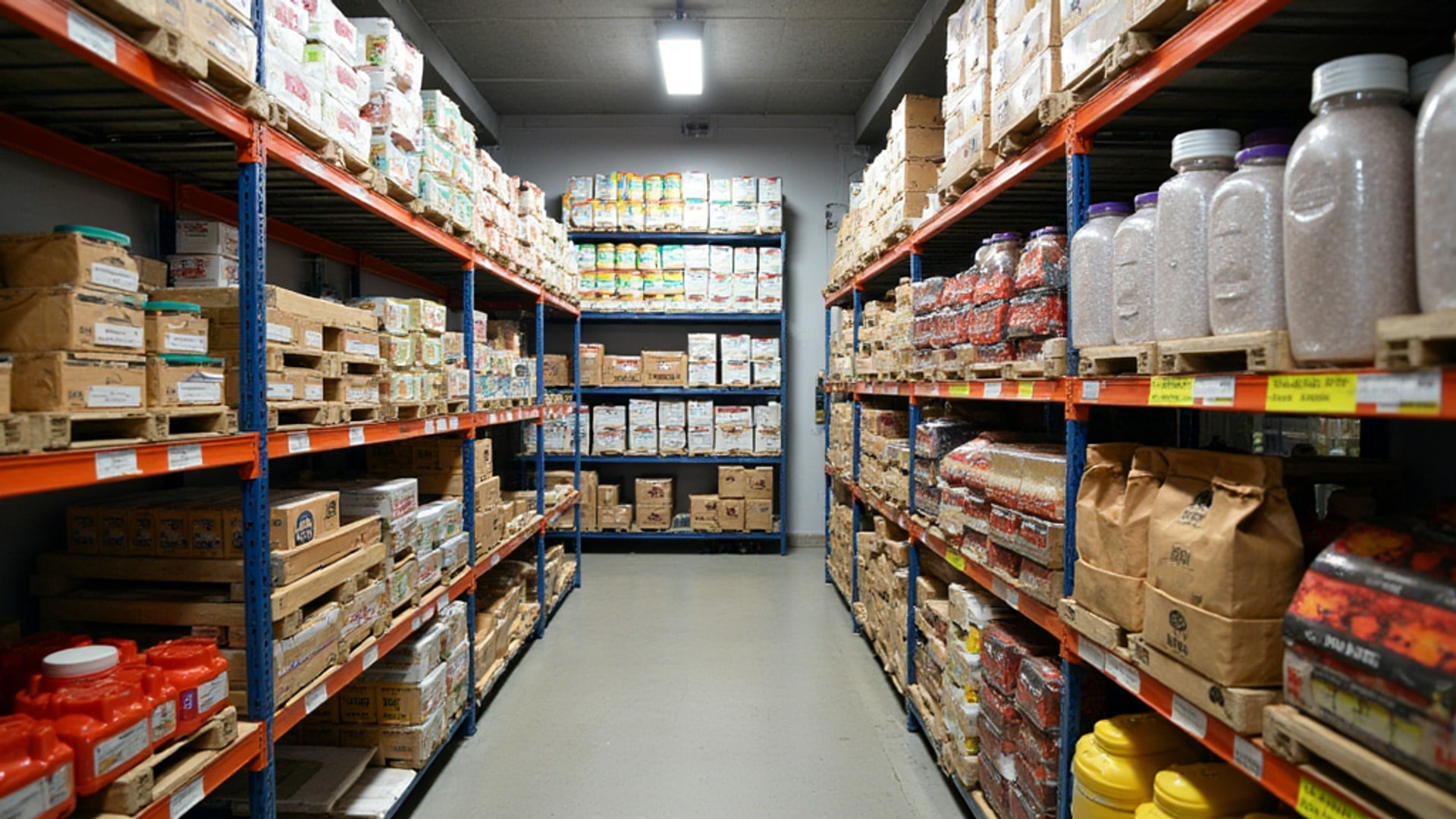
Even perfectly purchased inventory gets wasted if storage is mismanaged. FIFO (first in, first out) rotation is non-negotiable: every delivery gets dated, and newer stock goes behind older stock. This one discipline eliminates a significant portion of spoilage-related waste in most kitchens. A well-organized walk-in cooler reinforces FIFO discipline across all cold storage.
Beyond FIFO, a few specific practices matter:
- Temperature discipline. Walk-ins and reach-ins should be checked at the beginning of every shift. A unit running two degrees warm doubles spoilage rates on certain proteins.
- Proper containerization. Food stored in original packaging spoils faster than food transferred to airtight containers with date labels. Leafy greens stored with dry paper towels last two to three times longer than those stored without.
- Zoning refrigerators by use frequency. Ready-to-use prepped items go at eye level and front. Raw proteins go on the bottom shelf to prevent drip contamination and because they are used in planned quantities. Items approaching their use-by date get moved to a visible “use first” section.
Reduce Prep Waste Through Portioning and Repurposing
Prep waste — trimmings, off-cuts, and over-prepped quantities — is one of the easiest categories to reduce once you identify it. Two approaches work well together.
Standardized portion sizes and prep yields. If your recipe calls for 4 oz of sliced chicken and your cooks are plating 5 oz, you are wasting 25 percent of your protein budget. Standardized portion tools — scales, scoops, measured ladles — are inexpensive and effective. Documenting yield percentages for every protein and vegetable lets you order precisely: if your chicken breast yield is 85 percent after trimming, you need to order enough raw weight to hit your cooked portions.
Repurpose trimmings systematically. Vegetable trim becomes stock. Bread approaching staleness becomes croutons, breadcrumbs, or bread pudding. Leftover cooked protein from yesterday’s prep goes into today’s family meal or a specials dish. These decisions need to be designed into the kitchen workflow, not left to individual cooks to improvise.
The NRA and ReFED recommend a measured approach to implementation: identify your two or three highest-impact waste categories, implement specific procedure changes for those areas, and let them become routine before adding more. Trying to overhaul everything simultaneously leads to partial adoption and backsliding.
Manage Plate Waste and Portion Size
Plate waste is the food that guests leave uneaten. It is the hardest category to eliminate entirely, but you can reduce it significantly through portion calibration and menu communication.
If your busser reports are consistently showing large amounts of a specific dish coming back uneaten, that is a signal. Either the portion is too large, the dish is not executing properly, or guest expectations are not matching reality. Large portions may feel like good value but they create waste, increase food costs, and can actually reduce satisfaction if guests feel they overate.
Consider offering half portions or smaller price-point options for dishes where plate waste is consistently high. Some operators find that reducing portion size by 10 to 15 percent while slightly reducing the price generates the same revenue per cover while cutting waste and improving food cost percentages.
Food Donation Programs
Surplus prepared food and unused ingredients that cannot be repurposed represent the second-best option in the waste hierarchy. The Bill Emerson Good Samaritan Food Donation Act provides federal legal protection for restaurants that donate healthy, safe food to nonprofit organizations, removing the liability concern that used to keep many operators from donating.
Most cities have food banks, soup kitchens, and homeless shelters that will accept donations. The logistics typically require refrigerated transportation (some organizations will pick up) and documentation of what was donated. The EPA provides a calculator for estimating the methane emissions avoided by diverting food from landfills, which can be useful for communicating the environmental impact to your team and guests.
Composting: Handling What Cannot Be Prevented or Donated
After prevention and donation, composting handles the organic waste that remains. The EPA’s Wasted Food Scale ranks composting and anaerobic digestion as beneficial pathways that are significantly better than landfill — and for restaurants, diverting to compost also typically reduces disposal hauling costs because organic waste is heavy and landfill tipping fees are charged by weight.
Options for restaurant composting:
- Commercial composting service. Many waste management companies now offer organic waste collection alongside standard trash. Some municipalities require it. This is the simplest path: designated green bins at each station, pickup on schedule.
- Local composting partnerships. Community gardens, urban farms, and composting facilities sometimes accept restaurant food waste, often at lower cost than commercial services.
- On-site composting. Practical only for smaller operations with outdoor space. Requires consistent management to avoid odors and pests.
What can be composted: fruits, vegetables, bread, pasta, eggshells, coffee grounds, non-dyed paper products, cardboard. What cannot: meat, dairy, cooking grease — these attract pests and create odors that make commercial composting services refuse pickup.
According to Performance Food Service, a single full-service restaurant generates over 2,000 pounds of total disposed waste per week. Even diverting 30 percent of that to composting represents a meaningful reduction in disposal costs and environmental footprint.
The Staff Training Factor
Every waste reduction strategy ultimately depends on the people executing it. The EPA and NRA both emphasize that staff buy-in is as important as the procedural design.
Training should explain the why, not just the what. When a prep cook understands that the vegetable trim going in the compost bin represents real money — money that could fund better wages, more staffing, or equipment upgrades — they treat it differently than when they see it as an arbitrary rule.
Practical training elements:
- Show staff your current waste data and set a visible team goal
- Place small, clearly labeled collection containers at every prep station rather than requiring staff to walk to a central bin
- Include waste management in opening and closing checklists
- Recognize and reinforce improvement publicly — waste reduction wins deserve the same attention as sales wins
Track, Review, and Iterate
Waste reduction is not a one-time project. Set a monthly review date to look at your waste logs, identify trends, and adjust procedures. The most effective programs include waste as a line item in weekly food cost reviews alongside invoices and theoretical food cost calculations.
Food waste is one of the few cost categories where the entire reduction goes directly to the bottom line. You have already paid for that food. Getting more of it to paying customers — or at minimum out of the landfill and into a beneficial use — is pure operational profit. The investment required is mostly time, training, and discipline. The return, at 8:1, is hard to beat anywhere else in your operation.
→ Read more: Restaurant Inventory Management: Cut Waste, Control Costs, Protect Your Margins → Read more: Kitchen Inventory Par Levels: Build the System That Prevents Stockouts → Read more: Sustainable Kitchen Operations: Waste Reduction, Energy Savings, and Green Practices