· Operations · 6 min read
Waitlist Management: Turning Wait Time Into a Competitive Advantage
How to manage restaurant wait times with digital tools, accurate communication, and smart table sequencing — so guests who wait still leave happy.
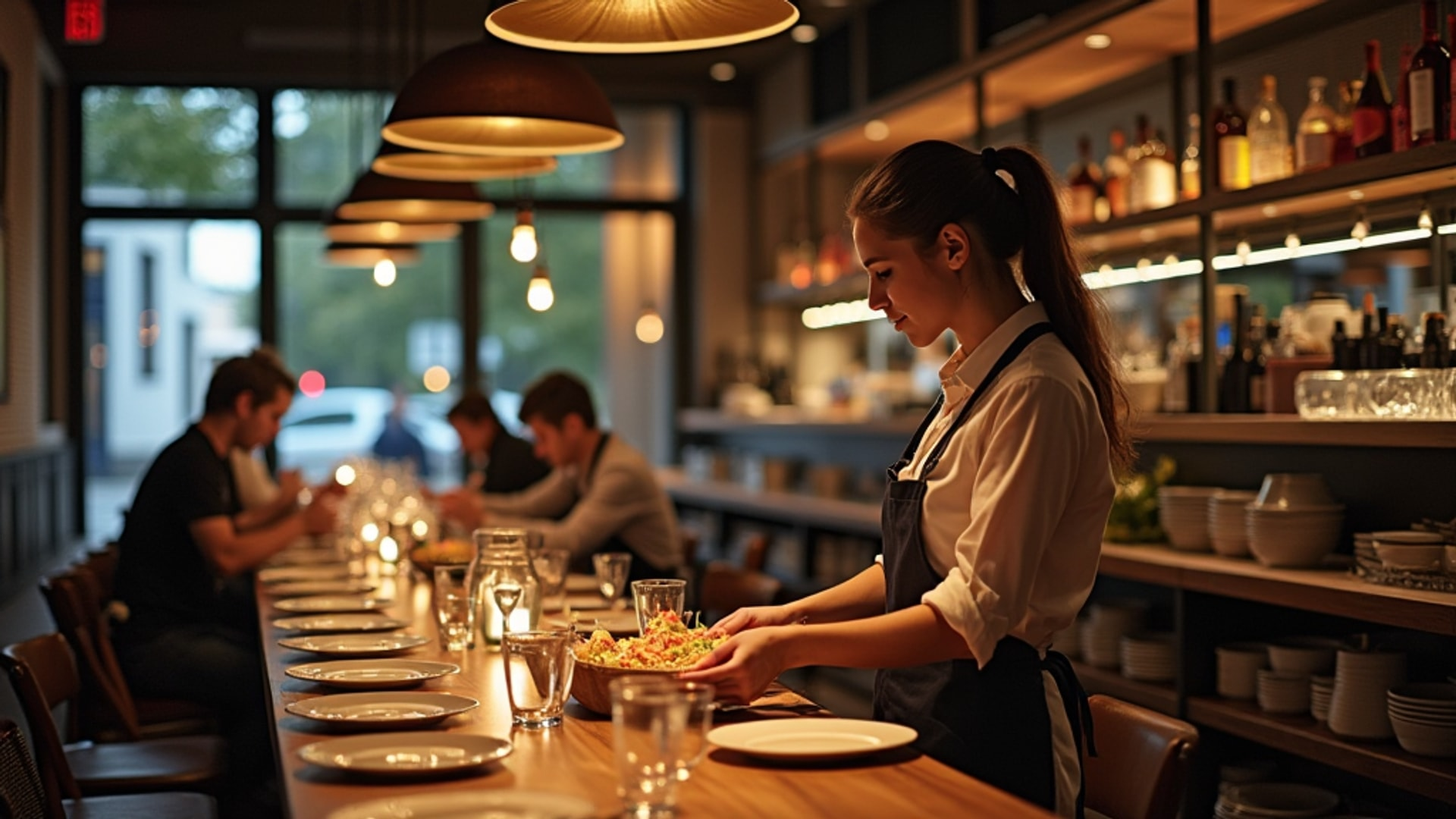
A 30-minute wait at a popular restaurant can feel like a minor inconvenience or a dealbreaker depending entirely on how you manage it. The food quality, the decor, the service — none of that matters if the guest experience starts with frustration at the host stand. Waitlist management is one of the highest-leverage operational improvements available to any full-service restaurant, and most get it wrong in the same avoidable ways.
The Numbers You’re Working Against
According to Chowbus, the average customer wait per party is 23 minutes. That is a significant amount of time that disproportionately shapes the guest’s perception of the entire visit — before they’ve touched their food. Even more critical: 86% of customers will leave if the wait is perceived as too long. The word “perceived” is doing a lot of work in that sentence.
Guests do not necessarily leave because the wait is long. They leave because they don’t trust the estimate, they can’t see any progress, and they have no control over their time. Fix the perception problem and you fix the abandonment problem.
Paper Lists vs. Digital Waitlist Systems
The paper list and the verbal “about 30 minutes” estimate are a liability, not a system. They rely on host memory, they scale poorly during rushes, and they provide zero accountability.
Modern queue management systems, according to Chowbus, digitize the wait experience:
- Guests join via smartphone, lobby kiosk, or phone number at the host stand
- The system tracks their position and provides estimated wait times
- SMS notifications alert guests when their table is approaching readiness
- Guests can manage their own time — browse the menu, get a drink nearby, or return when called
This transformation — from passive frustrating waiting to informed time management — is the single most effective waitlist improvement available to any restaurant without architectural changes.
Platforms to evaluate: OpenTable, Yelp Waitlist, Waitlist Me, Toast Tables, Resy
Setting Accurate Wait Time Estimates
The fastest way to destroy trust with a waiting guest is to under-quote and over-run the estimate. According to Chowbus, guests who receive accurate wait time estimates and proactive updates report significantly higher satisfaction than those left in uncertainty — even when the actual wait duration is identical.
The framework for accurate estimates:
| Factor | How to Account for It |
|---|---|
| Current party average dining duration by size | Track in your POS or table management system |
| Tables that are recently seated (long runway ahead) | Weight those tables differently in your estimate |
| Parties that have ordered and are on dessert/drinks | High-turnover prediction |
| Reservation commitments in next 30 minutes | Reserve those tables — remove from walk-in availability |
| Server section load balancing | A table may be physically clear but section may be full |
Under-promise and over-deliver. A quoted 25 minutes that turns into 20 creates genuine positive surprise. A quoted 15 minutes that turns into 30 creates a complaint before the guest sits down.
The Communication Protocol During the Wait
Your host team must proactively update waiting guests at predictable intervals. Guests who are communicated with feel managed; guests who are ignored feel abandoned.
Minimum communication touchpoints:
- Initial quote — specific number, not “about 20-30 minutes” (that range signals uncertainty)
- Halfway update — check in, confirm they’re still in queue, provide updated estimate
- 2-minute warning — send SMS or personal visit before calling them to the table
- Table ready call — name, not number (it’s more personal, it matters)
If the wait extends past the original estimate, your host should find the party and proactively acknowledge the delay before they come back to ask. Reactive communication after frustration builds is worth far less than proactive communication before it does.
Capacity Optimization: Reducing Wait at the Source
According to Chowbus, combining reservation data, historical traffic patterns, and real-time table status creates a comprehensive view of dining room capacity. Intelligent table assignment considers:
- Party size matching: Seating a 2-top at a 4-top when 2-top is available wastes covers
- Dining duration estimates: Long-dining reservation parties should not be seated adjacent to high-turnover tables when avoidable
- Server load balancing: Even distribution of covers per server prevents service degradation
- Turnover patterns: Identify which tables turn fastest and sequence walk-ins toward them
According to Chowbus, restaurants using data-driven strategies see 10 to 15% efficiency increases in table utilization. For a 100-seat restaurant doing 2.0 turns per night, that is 15 additional covers — without adding a single seat.
Mobile Ordering While Waiting
One of the most underutilized waitlist tactics is turning wait time into productive ordering time. When guests can browse the menu and place their order while in queue, the traditional dead time between seating and first contact with a server is eliminated.
According to Chowbus, mobile ordering integration has reduced customer wait times by 30% by compressing the post-seating ordering interval. The result: faster table turns, earlier kitchen output, and guests who feel their time is being respected from the moment they join the line.
Managing Walk-In Volume Against Reservations
The friction point in waitlist management is usually the interaction between walk-in guests and reservation commitments. A full walk-in waitlist and a 7 PM reservation block are not mutually exclusive — but managing both simultaneously requires explicit systems.
Best practices:
- Hold reservation tables until 5 minutes past reservation time, then release to walk-in queue
- Set a reservation policy and communicate it clearly (no-show fees, cancellation windows)
- Never seat walk-ins at a reserved table within 45 minutes of the reservation window
- Use your table management software to flag tables by reservation status so hosts see the full picture at a glance
The Lobby Experience
The physical waiting environment directly affects how long a wait feels. A crowded lobby with nowhere to stand, no reading material, no way to watch what’s happening — that wait feels longer than it is. A comfortable wait area with menus, natural sightlines into the dining room, and ambient sound that signals activity rather than chaos shortens the perceived wait significantly.
Small investments that pay off:
- Seating or bar-height ledge along a wall
- Menu display (digital or printed) in the wait area
- A clear sightline into the dining room so guests feel proximity to their destination
Data From Your Waitlist System
According to Chowbus, data analysis from queue management systems reveals patterns that drive operational decisions:
- Exact demand exceeding capacity by time and day — informs reservation allocation
- Actual vs. estimated wait times — reveals where estimates are systematically off
- Abandonment rate by wait duration — identifies your patience threshold and sets realistic quotas
Review this data weekly. After 30 days you will have enough pattern recognition to make meaningful scheduling, seating allocation, and reservation policy decisions based on real behavior — not assumptions.
The Bottom Line
Waitlist management is not a technology problem. It is a communication and process problem that technology helps solve. The core principles are simple: give guests accurate information, communicate proactively, reduce passive waiting time, and make every interaction between first arrival and seated feel like your team is on top of it. That is what keeps the 86% from walking out the door.
→ Read more: Table Management and Reservations: Choosing the Right System and Maximizing Every Seat → Read more: Peak Hour Management: How to Keep Quality High When Volume Peaks → Read more: Customer Service Excellence: Building a Culture of Hospitality → Read more: Speed of Service Benchmarks: The Timing Numbers Every Restaurant Should Know