· Staff & HR · 9 min read
Bartender Training: Building a Bar Team That Delivers
A trained bar team generates more revenue, fewer liability exposures, and significantly better guest experiences — here is how to build a structured bartender training program from scratch.
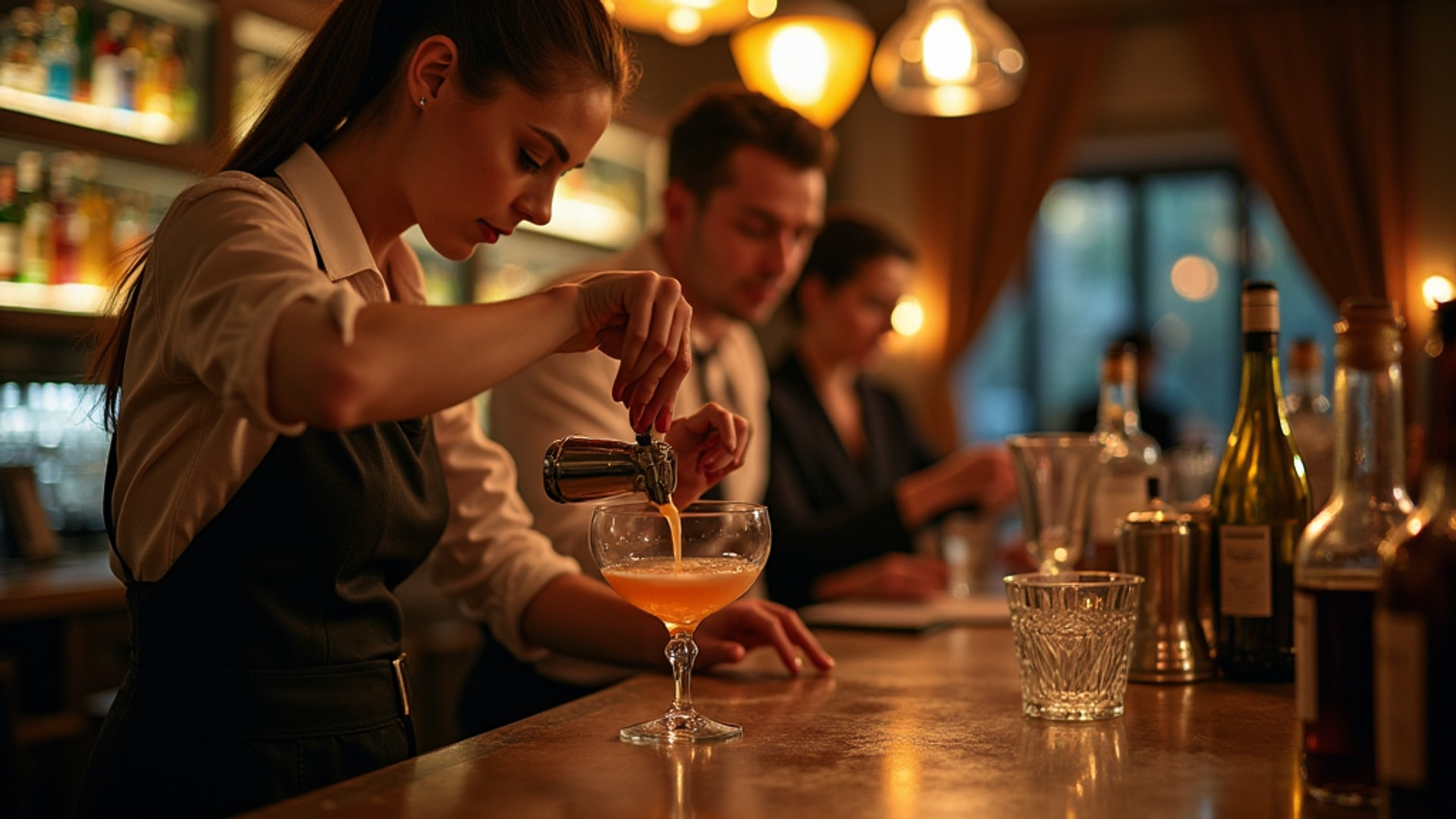
The bar is where your most profitable revenue lives. Beverage cost typically runs 18 to 25 percent, compared to food cost at 28 to 35 percent according to National Restaurant Association industry benchmarks, making every drink sold measurably more profitable than most food items. A bartender who knows your program deeply — who can describe the origin of the mezcal you carry, recommend a wine pairing for the cheese plate, and execute the house signature cocktail consistently every time — directly contributes to that profitability. A bartender who is slow, inaccurate with pours, unable to upsell, or poorly versed in responsible service represents both a revenue leak and a liability exposure.
The difference between these two outcomes is training. Not the informal “watch the bar for a night and ask questions” approach that many restaurants use, but a structured program with defined competencies, deliberate practice, measurable progression, and ongoing development.
The Foundation: What Every Bartender Must Know
Bar staff training should be built on a framework of non-negotiable competencies — skills every team member must demonstrate before working independently. These fall into four categories.
Technical Skills
Product knowledge. Every bartender should know every bottle behind the bar: the brand, the base spirit, the flavor profile, and the price point. They should be able to speak to the difference between your well bourbon and your premium selections in terms a guest can appreciate — not in specialist jargon but in accessible, evocative description. For spirits, the key facts are: what is it made from, how is it produced, where is it from, and what does it taste like?
Cocktail execution. Core cocktail families — sours, highballs, martini variations, Negroni format, Old Fashioned format — provide the structural vocabulary for understanding why cocktails taste the way they do. A bartender who understands that a sour is spirit plus citrus plus sweetener can make any sour, not just the specific recipe they memorized. Teaching the structure of cocktail families, not just individual recipes, develops genuine competence rather than rote execution.
Wine fundamentals. Backbar Academy’s server wine training framework applies equally to bar staff. The five major wine categories, basic varietal characteristics, and food pairing principles are the minimum. Bartenders who work a bar with a significant wine program — service bars, wine bars, restaurant bars where guests frequently order wine — need deeper knowledge, but the structure is the same as the server wine program.
Speed and efficiency. Speed matters at the bar in ways it does not in food service. A bartender who averages two minutes per drink on a service bar kills your kitchen’s throughput. A bartender who averages 45 seconds per drink keeps everything moving. Speed comes from organization — mise en place discipline, efficient reach patterns, anticipating what the next drink will be while making the current one — and it develops only through practice.
Consistent pours. Pour inconsistency is the most direct form of revenue leakage at the bar. Over-pouring by even a quarter ounce per drink adds up to thousands of dollars annually on a busy bar program. Bartenders should be trained with jiggers as a baseline, and any free-pour training should include regular calibration checks with measuring equipment.
Responsible Service
Responsible alcohol service is not optional. The legal liability exposure from over-service is substantial, and the practical consequences of serving an intoxicated guest who then injures themselves or others are severe.
ServSafe Alcohol and state-specific programs (California’s RBS certification, TIPS, and others) provide the training framework. Every bartender must understand:
- The observable signs of increasing intoxication: slurred speech, impaired coordination, altered mood, loss of fine motor control
- How to slow service before a guest reaches an unacceptable level of intoxication — an essential skill that requires intervening early rather than waiting for obvious impairment
- How to decline service respectfully without escalating conflict — specific language and techniques for cutting off service in a way that preserves the guest relationship and avoids confrontation
- ID checking protocols: which IDs are valid, how to detect obvious fakes, what to do when a guest refuses to show ID
- Your specific state’s dram shop liability exposure and what it means for the business
Role-playing these scenarios during training is essential. Most bartenders understand the theory but have never practiced the actual conversation of cutting off an upset guest. Simulation in a training context builds the muscle memory that makes the real conversation possible without freezing up.
POS and Systems Proficiency
Bartenders manage more transactions per shift than most other roles in the restaurant. POS fluency is not optional — knowing how to ring quickly, how to split tabs, how to apply discounts and comps, how to manage running tabs for multiple guests simultaneously, and how to close out efficiently at end of service directly affects both speed and accuracy.
The iSpring training framework’s guidance on eLearning applies here: digital training modules for POS operation allow bartenders to learn the system logic and navigation before they are standing behind a live bar. Pairing digital training with supervised practice shifts produces faster proficiency than throwing someone behind a bar with a note telling them to figure it out.
Guest Experience
The bar is where guests experience hospitality most directly. A server delivers food to a table and moves on. A bartender may interact with a bar-seated guest for two hours, building a genuine relationship over the course of an evening. This guest connection — remembering preferences, making conversation, noticing when a regular walks in and having their usual ready before they ask — is what creates the guests who come back specifically to sit at your bar.
Backbar Academy’s training research confirms the business impact: beverage-educated staff who can make genuine, confident recommendations drive measurably higher average check sizes and guest return rates. The difference between a bartender who asks “what can I get you” and one who says “we just got in a fantastic small-batch rye that would be excellent as an Old Fashioned if you like those” is not technique — it is knowledge and confidence, both of which are trainable.
Structuring the Training Program
Week One: Knowledge Acquisition
The first week of bartender training should not include independent service. This is the knowledge intake phase.
Day one and two cover house policies, systems, and compliance: POS training, responsible service certification, food safety basics, HR policies, and the specific rules of your bar program (comp policy, tab management, ID requirements, closing procedures).
Days three through five focus on product knowledge. Work through every category on the back bar systematically — spirits, beer, wine, non-alcoholic options. Use tasting where possible: a bartender who has tasted the products recommends them with genuine conviction. Pair knowledge sessions with recipe review for the house signature cocktails and the most commonly ordered classics.
Restaurant365’s training framework recommends companies prioritizing comprehensive training see 24 percent higher profit margins, validating the investment in structured knowledge acquisition before live service begins.
→ Read more: Bar Menu Creation
Week Two: Supervised Practice
Week two moves to supervised execution. New bartenders work alongside an experienced team member on all service, making drinks but not running tabs independently. This phase develops speed, reinforces product knowledge in practice, and builds the physical efficiency of moving behind the bar.
The shadowing and mentorship approach identified in the practical training methods research is especially effective here. Pairing a new bartender with an experienced one for their first two weeks allows learning through observation and real-time feedback that no formal training session can replicate.
Structure the practice sessions around specific skills: day nine focuses on speed and efficiency, day ten focuses on the house cocktail menu, day eleven focuses on wine service and tableside pours. Deliberate practice of specific competencies accelerates proficiency compared to generalized service time.
Week Three: Graduated Independence
Week three introduces graduated independence under light supervision. The new bartender runs their own section of the bar or manages the service bar while their mentor remains available. Feedback sessions at the end of each shift reinforce what went well and identify specific improvement areas.
The iSpring eLearning framework’s point about feedback loops applies directly: brief post-shift conversations where the new bartender and trainer discuss specific scenarios from the shift create the learning cycle that builds expertise faster than time alone.
By the end of three weeks, most new bartenders should be demonstrating the core competencies at a functional level. Full proficiency at your specific bar takes longer — typically three to six months of service experience — but the structured first-three-weeks program ensures they are not developing bad habits in the interim.
Ongoing Development
The Restaurant365 training guide’s emphasis on continual training for all employees, not just new hires, is directly applicable to bar programs. Even experienced bartenders benefit from:
Quarterly spirit education sessions. Most distributors offer tasting and education programs through their sales representatives. A 45-minute session on a new product category, a visiting distillery representative, or a guest mixologist doing a technique demonstration keeps the team engaged and builds knowledge that translates into better guest recommendations.
Seasonal cocktail menu training. Every time you update the cocktail menu, the full team needs training on the new drinks — why each was developed, the story behind it, how it is made, what makes it distinctive. New menu items sell better when the team understands and genuinely likes them.
Responsible service refreshers. Annual refresher training on responsible service keeps the knowledge current and reinforces that this is an ongoing commitment, not a one-time box to check. State requirements for recertification often mandate this on a two-to-three year cycle, but annual internal refreshers are better practice.
Wine list updates. Wine programs change with vintage availability, supplier changes, and menu evolution. Team tastings when the wine list updates ensure that the person recommending the Burgundy has actually tasted the current vintage, not the one from two years ago.
The investment in bartender training pays back through higher beverage revenue, lower liability exposure, better guest retention, and reduced turnover — experienced bartenders who feel invested in and developed stay longer than those who feel they are just a body behind the bar. Your bar is often a guest’s first and last impression of the night. Train the team who creates that impression accordingly.
→ Read more: Beverage Program Pricing
→ Read more: Cocktail Costing Method