· Case Studies · 8 min read
McDonald's Franchise and Real Estate Model: How the World's Largest Restaurant Company Actually Makes Money
McDonald's isn't primarily a restaurant company — it's a real estate and franchise fee business that happens to sell hamburgers, and understanding that distinction reveals why it prints money at 45% operating margins.
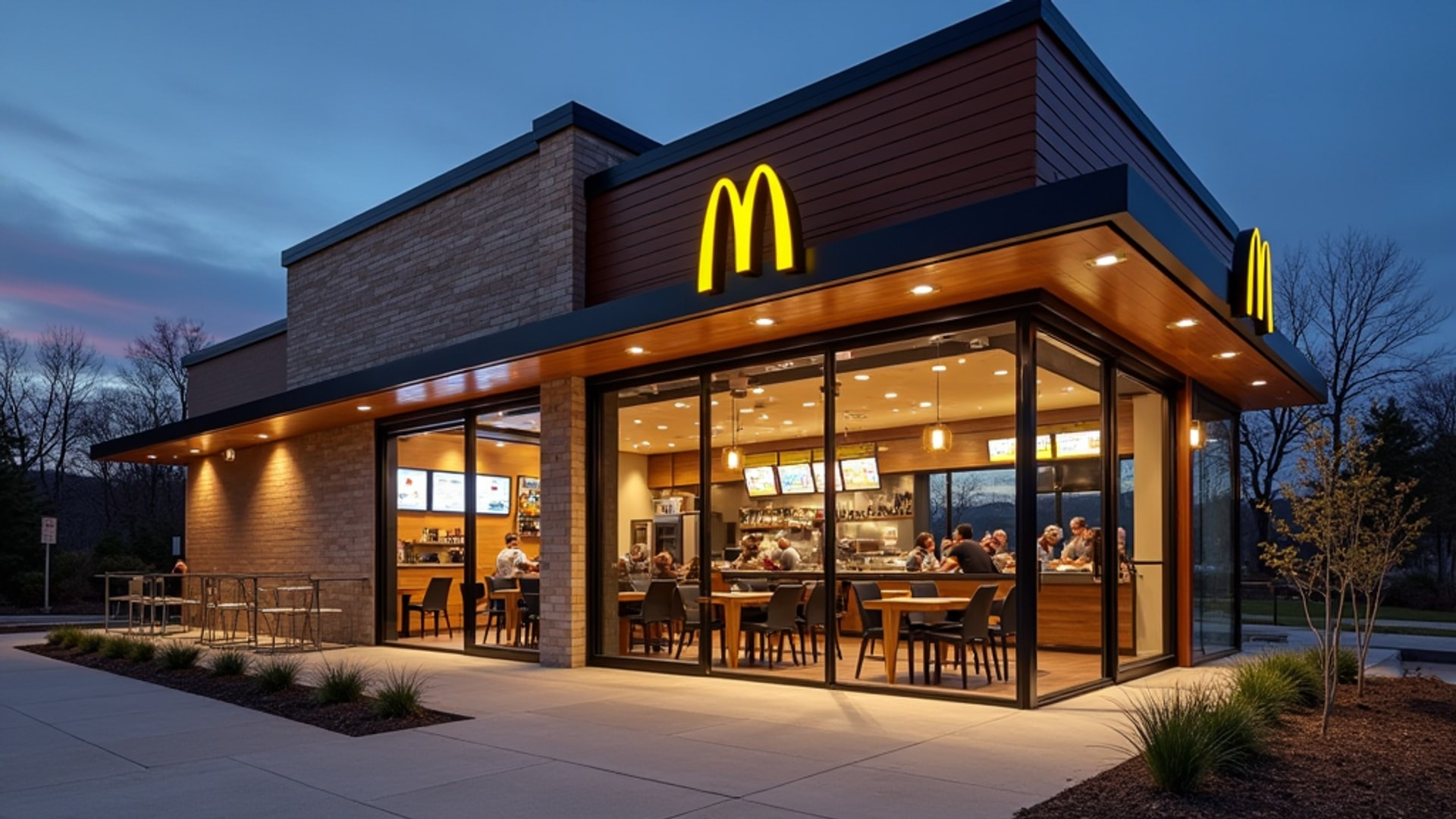
Ask most people what business McDonald’s is in, and they’ll say hamburgers. That answer is wrong in a way that costs restaurant operators real money — because if you misread how the most successful food service company in history actually generates profit, you’ll misread every lesson it has to teach.
McDonald’s is, at its core, a real estate investment company and franchise management operation. The hamburgers are the vehicle. The real product is the system.
The Numbers That Tell the True Story
As of 2023, McDonald’s operated 41,822 restaurants worldwide. According to ArthNova’s analysis of the company’s business model, 95% of those locations are operated by franchisees — not by McDonald’s corporate. That single fact changes everything about how you need to analyze the company.
A typical U.S. McDonald’s location generates approximately $4 million in annual sales. Franchisees who run these restaurants typically net between $150,000 and $350,000 per location after all expenses. Those are reasonable numbers — the kind of returns you’d expect from a single-unit owner-operator grinding through a complex quick-service operation.
McDonald’s corporate, meanwhile, achieves operating margins of approximately 45%. That’s not a restaurant margin. That’s a real estate and financial services margin. The gap between franchisee economics and corporate economics is the entire story.
How the Real Estate Model Works
According to University of Michigan Ross’ research on franchise vs. independent business models, the financial structure of a franchise determines long-term profitability as much as the operational model does. McDonald’s corporation owns or holds long-term leases on most of its restaurant properties worldwide. Franchisees do not own the buildings they operate in. They operate inside McDonald’s real estate.
This produces two powerful revenue streams from every franchised restaurant:
Royalty fees — franchisees pay 4-5% of monthly gross sales back to McDonald’s as a royalty for use of the brand, system, and supply chain.
Rent — franchisees pay 10-15% of monthly gross sales as rent to McDonald’s for the physical location.
Combined, McDonald’s is extracting 14-20% of every dollar in sales from each franchised restaurant, without bearing the operational risk and variability of actually running day-to-day restaurant operations. The franchisee handles staffing, food quality execution, local marketing, and customer service. McDonald’s collects rent and royalties on top-line revenue regardless of how efficiently the franchisee operates.
Meanwhile, the real estate itself appreciates. McDonald’s has spent decades acquiring prime commercial locations in high-traffic areas around the world. That property portfolio generates returns that have nothing to do with the price of a Big Mac.
This is why the corporation’s 45% operating margins are not only possible but sustainable — they’re structurally embedded in the model, not dependent on operational excellence at the restaurant level.

The Franchisee Investment Structure
Becoming a McDonald’s franchisee requires real capital. The investment to open a new location ranges from $1.3 million to $2.3 million per restaurant. That investment covers equipment, initial inventory, signage, and build-out costs — but not the real estate, which McDonald’s retains.
Franchisees also pay a $45,000 license fee per location for a 20-year term. This one-time fee is modest compared to the ongoing royalty and rent obligations, but it represents another revenue stream for the corporation at scale.
From McDonald’s perspective, franchisees are providing the growth capital that funds the system’s expansion while bearing the operational risk of individual restaurant performance. The corporation contributes brand equity, supply chain infrastructure, marketing investment, and — critically — real estate. It’s a division of labor that has funded the opening of tens of thousands of locations without McDonald’s having to finance each one independently.
What Operational Consistency Actually Requires
The franchise model only works if every location delivers a consistent customer experience. A customer who has a bad experience at one franchised location damages the brand equity that McDonald’s rents to every other franchisee in the system. Consistency is therefore a financial imperative, not just a quality preference.
McDonald’s enforces this through what is arguably the most comprehensive training infrastructure in the restaurant industry. Hamburger University, the company’s training program, ensures that operational standards translate across more than 100 countries. The program covers everything from food safety protocols to customer service standards to equipment maintenance.
This investment in system-wide consistency protects the brand value that generates the royalty stream. Every dollar McDonald’s spends on training and standards enforcement protects the royalty income from all 41,822 locations.

Growth Strategy: What 900 New Locations Means
McDonald’s has announced plans to add approximately 900 new U.S. locations by 2027. At the corporate level, each new location adds a new rent-and-royalty income stream. At the franchisee level, each new location requires $1.3-2.3 million in investment.
This growth strategy is largely self-funding from McDonald’s corporate perspective. Franchisees provide the capital. McDonald’s provides the real estate (or lease), the brand, and the system. The corporation’s exposure is primarily the cost of securing and developing the real estate before leasing it back to the franchisee.
The math of adding 900 locations is more about rent roll growth than restaurant revenue growth, which is why Wall Street values McDonald’s differently than it values most restaurant companies.
Lessons for Independent Operators
Most restaurant operators will never run a system at McDonald’s scale. But the lessons embedded in their model are transferable at every size.
Real estate matters more than most operators think. The most common way independent operators destroy long-term value is by operating in leased space they don’t control. When your landlord raises rent at renewal, your years of brand building transfer to the landlord’s balance sheet. McDonald’s solved this by controlling the real estate from the start.
System consistency is a financial asset, not just an operational preference. Every McDonald’s location reinforces the brand value that makes the royalty stream possible through rigorous standard operating procedures. Independent operators who maintain consistent quality across multiple locations are building the same kind of brand equity — but they’re keeping it internally rather than renting it to franchisees.
The business you think you’re in may not be the business generating your profit. McDonald’s thought it was in the burger business. Harry Sonneborn, one of the architects of the modern McDonald’s financial model, reportedly said: “We are not technically in the food business. We are in the real estate business.” That clarity of thinking about where profit actually comes from is available to any operator willing to examine their own numbers.
Franchising shifts capital requirements but not strategic obligations. If you ever consider franchising your own concept, understand that you’re entering the real estate and brand management business.
→ Read more: Franchise Disclosure Requirements Your franchisees’ success depends on the systems you build, not just on the brand you sell them.


The Limits of the Model
McDonald’s model is not infinitely scalable or universally applicable. The company’s ability to control premium real estate in high-traffic areas is increasingly constrained as urban commercial real estate costs rise globally. Competition for those premium locations from retail, logistics, and residential development has made the economics of property acquisition more challenging.
The franchisee pool itself requires careful management. When franchisees fail, McDonald’s loses rent income and bears reputational risk. The company has occasionally faced tensions with franchisees over cost-sharing for equipment upgrades, marketing fund allocations, and operational requirement changes. Managing a franchise system of 40,000+ locations requires substantial corporate resources dedicated to franchisee relations, compliance monitoring, and dispute resolution.
And the model requires continuous reinvestment in the brand. McDonald’s spends billions annually on marketing to maintain the brand value that justifies the royalty and rent rates it charges franchisees. If brand value erodes, so does the willingness of franchisees to pay those rates, and so does the entire financial model.
The Real Estate Company Lesson
What McDonald’s teaches restaurant operators is not how to make a better hamburger. It’s how to think about the structural drivers of profitability in a food service business.
The company’s extraordinary durability across economic cycles — recessions, pandemics, competitive disruptions — comes from the predictable, recurring nature of rent and royalty income. That income does not disappear when a single location has a bad quarter. It scales with top-line sales rather than fluctuating with operational efficiency. And it compounds as the real estate portfolio appreciates.
Understanding this structure won’t make your next restaurant a McDonald’s. But it will change how you think about your lease terms, your real estate options, and — if you ever scale to multiple units — whether the business you’re building has the structural characteristics that create lasting value or just the operational ones that create temporary cash flow.
→ Read more: Franchise vs. Independent Restaurant
→ Read more: Restaurant Lease Negotiation
The hamburgers are fine. The real product is the system.