· Design & Ambiance · 10 min read
Restaurant Fire Safety and Egress Design: Code Requirements and Best Practices
Fire safety and egress requirements are non-negotiable in restaurant design — understanding the code principles protects your guests, your staff, and your license to operate.
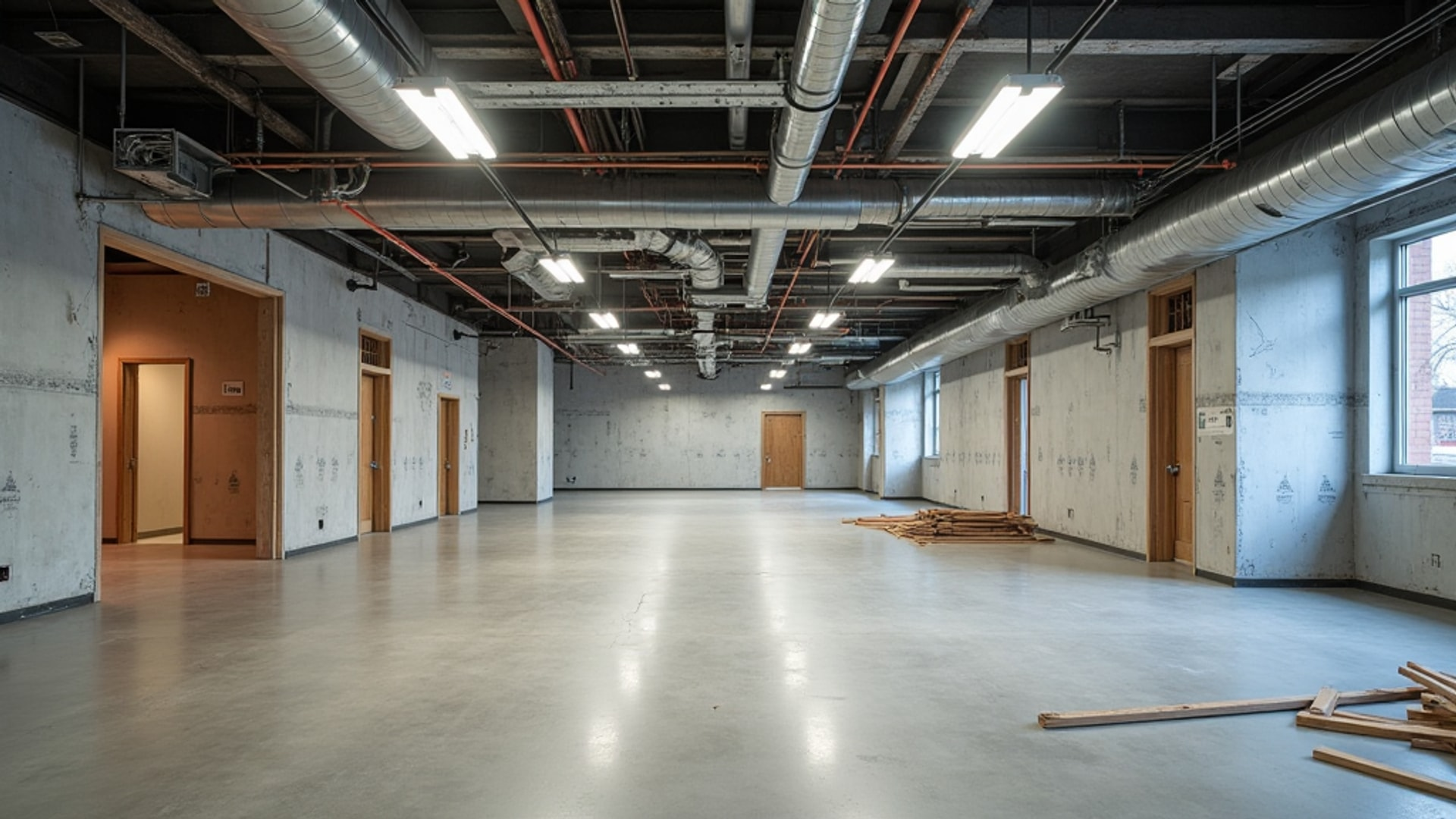
Fire safety code exists because people have died in restaurant fires. The regulations aren’t bureaucratic formality — they’re the accumulated lessons of events where poor egress design, inadequate suppression systems, or blocked exits prevented people from escaping burning buildings. Understanding why these requirements exist makes them easier to respect and implement correctly.
QRFS Blog’s analysis of restaurant fire safety regulations lays out the framework: the NFPA 101 Life Safety Code is the primary model code for most jurisdictions, and non-compliance can result in closure orders, significant fines, and personal liability in the event of an incident.
Assembly Occupancy Classification
The foundation of fire safety code is occupancy classification — the category that determines which code requirements apply to your building. Restaurants typically fall under assembly occupancy, which carries specific requirements for exits, fire protection systems, and interior finish materials.
Assembly occupancy is defined by spaces where people gather for purposes other than occupying or sleeping in the building. Restaurants qualify because their primary function is the gathering of people for dining. This classification is more stringent than general commercial occupancy in most code areas, reflecting the higher occupant density and the vulnerability that comes from large numbers of people concentrated in a space with limited familiarity with the exit routes.
The specific requirements that attach to assembly occupancy classification include:
- Higher exit capacity requirements based on occupant load calculations
- More restrictive interior finish material flame-spread ratings
- Requirements for emergency lighting and illuminated exit signage
- Specific seating arrangement restrictions in some code versions
- Additional fire suppression requirements depending on size and configuration
Your architect and the local authority having jurisdiction (AHJ) will determine the specific requirements for your location, as codes are adopted and amended at the state and local level.
Occupant Load: The Number That Drives Everything
Occupant load is the calculated maximum number of people a space is assumed to contain. It’s derived from dividing the gross floor area by a load factor that varies by occupancy type. For restaurants, the occupant load factor is typically 15 square feet per person in dining areas, meaning a 1,500-square-foot dining room has a calculated occupant load of 100 people.
The occupant load number drives virtually all other fire safety and egress requirements:
- The number of exits required
- The total width of exit capacity required
- The fire suppression system design
- The emergency lighting and sign requirements
This is why every significant change in dining room layout — adding tables, reconfiguring the floor plan, enclosing previously open space — should be reviewed for occupant load impacts before implementation. A modification that pushes occupant load across a threshold requiring an additional exit can turn a simple renovation into a major construction project.

The Fundamental Egress Principle: Two Independent Exits
The baseline egress requirement is clear and non-negotiable. According to QRFS Blog’s analysis: every building must have at least two means of egress that are independently accessible, and those egress points must be arranged so both cannot be rendered impassable by the same emergency.
“Independently accessible” and “cannot be rendered impassable by the same emergency” are the key phrases. They mean that a fire starting in one location must not be able to block access to both exits simultaneously. If one exit is engulfed in smoke or flames, the second must remain viable.
This requirement has direct implications for where exits can be located relative to each other:
- In sprinklered buildings, exits must be separated by at least half the diagonal dimension of the room
- Non-sprinklered buildings face a stricter requirement: exits must be separated by at least one-third the diagonal dimension
The diagonal of a room is calculated as the square root of (length squared plus width squared). For a 60-foot by 40-foot dining room, the diagonal is approximately 72 feet. A sprinklered version of this room requires exits separated by at least 36 feet. A non-sprinklered version requires at least 24 feet of separation.
Sprinkler systems thus do two things: they suppress fires and they allow somewhat more lenient exit spacing because the suppression system itself provides a degree of protection for the egress routes.

What Does Not Qualify as an Egress Path
QRFS Blog is explicit about which routes do not count: escape routes through kitchens, storerooms, or restrooms do not qualify as permitted means of egress.
This is a common source of confusion in restaurant design, particularly in spaces with limited exterior access. An interior path that passes through a kitchen might seem like a viable escape route — it’s a direct path to a rear exit. But the kitchen is itself a fire hazard zone with cooking equipment, combustibles, and accelerant materials. A fire starting in the kitchen could simultaneously block both the dining room’s primary exit and the kitchen exit path.
The same logic applies to storerooms and restrooms: these spaces may themselves become compromised during a fire, blocked, or inaccessible for other reasons. Only routes that provide clear, direct access to the exterior or to a protected exit stair qualify as permitted egress.
The practical implication for restaurant design: exterior exit doors must be provided from the dining room itself, or from corridors that lead directly to the exterior without passing through kitchen, storage, or restroom areas. In buildings where this is geometrically difficult, the architect and fire marshal will work through compliant alternatives — but the solution will never be a kitchen pass-through.
Exit Doors: Hardware and Unobstructed Access
Every component of the egress route must function reliably under emergency conditions, including when people are panicking and pushing against doors in the dark. QRFS Blog notes: emergency devices like panic bars must not impede egress even in case of device failure.
Panic hardware (also called exit devices or crash bars) is specifically designed for this scenario. The horizontal bar across the door width allows any person exerting pressure on it — regardless of strength, mobility, or familiarity with the door — to open the door immediately. The hardware must remain operable even if the electromechanical components fail.
Exit doors must also comply with opening force requirements: the pushing force required to open the door cannot exceed 30 pounds for interior doors or 15 pounds for the final exit door to the exterior. Doors that are too heavy to push open in a panic situation are a life safety failure.
QRFS Blog’s requirement that all egress routes remain unobstructed at all times and accessible to people with limited mobility adds both an operational and an accessibility dimension. Unobstructed means no chairs, equipment, boxes, or signage in the path of travel — ever, not just during business hours. Accessible means the route meets ADA requirements for width and surface character.

Commercial Kitchen Fire Suppression: NFPA 96
The commercial kitchen presents fire safety requirements beyond the general egress code. Fire suppression systems in commercial kitchens must meet NFPA 96 standards for cooking operations.
NFPA 96 is the Standard for Ventilation Control and Fire Protection of Commercial Cooking Operations. Its core requirements include:
Automatic fire suppression systems above all cooking equipment that produces grease-laden vapors. These systems — typically using wet chemical agents — activate automatically when a fusible link in the exhaust hood reaches a trigger temperature, discharging agent directly onto the cooking surface and shutting off the fuel supply to the equipment.
Listed exhaust hoods that capture and contain cooking vapors before they can spread through the kitchen and into ductwork.
Fire-rated exhaust ductwork that contains a duct fire without allowing it to spread to surrounding structure. Grease accumulated in ductwork is a significant fire risk — code requires both fire-rated construction and a regular cleaning schedule to remove accumulated grease.
Clearance requirements between cooking equipment and combustible materials, ensuring that heat generated by equipment cannot ignite adjacent surfaces.
The automatic suppression system must be inspected and serviced by a licensed contractor at intervals specified by NFPA 96 — typically every six months for high-volume cooking operations. This is not optional maintenance. Many jurisdictions require proof of current inspection before issuing or renewing an operating permit.

Emergency Lighting and Exit Signs
Emergency lighting ensures that occupants can navigate egress routes if normal lighting fails during an emergency. QRFS Blog notes that emergency lighting and exit sign circuits must be on independent power sources.
The code requirements specify:
- Minimum illumination levels along egress paths (typically 1 footcandle at floor level)
- Duration of emergency illumination (90 minutes minimum in most codes)
- Illuminated exit signs at every required exit door
- Directional exit signs at decision points within the egress route
In practice, most restaurants meet these requirements through self-contained emergency lighting units with built-in batteries that activate automatically when main power is lost, and battery-backed or generator-connected illuminated exit signs.
These systems must be tested regularly — monthly brief tests and annual full-duration tests — with results documented. Non-functioning emergency lighting and exit signs are commonly cited violations during fire marshal inspections because they’re immediately visible during routine checks.

Ongoing Compliance: Beyond the Opening Inspection
Fire safety compliance is not a one-time achievement. It’s an ongoing operational commitment. The most common fire safety violations found during routine inspections involve operational practices that erode what was code-compliant at opening:
- Exit doors propped open or blocked by equipment during service
- Grease suppression systems overdue for service
- Exit sign bulbs that have burned out and not been replaced
- Emergency lighting units with dead batteries
- Storage placed in corridors or against exit doors, reducing clear width
Establishing a compliance calendar — with scheduled dates for suppression system service, fire extinguisher inspection, emergency lighting tests, and egress path checks — is the operational infrastructure that keeps a compliant opening compliant through years of operation.
Assign responsibility explicitly. Egress compliance in particular requires that staff understand the operational rules: exits must remain unobstructed, nothing gets stored in exit corridors even temporarily, exit doors remain closed except during actual egress.

Working with the Authority Having Jurisdiction
Fire safety requirements vary by jurisdiction because different states, counties, and municipalities adopt different editions of the model codes and add local amendments. The NFPA 101 and NFPA 96 standards provide the model framework, but what actually applies to your restaurant is the locally adopted code, potentially including local amendments that are more stringent than the model code.
The authority having jurisdiction — typically the local fire marshal or building department — is the final word on what applies and how it must be implemented. Building a cooperative relationship with this authority early in the design process is not just diplomatic but practical. Fire marshals who are consulted during design can clarify requirements before construction begins, preventing expensive corrections after the fact. Fire marshals who first encounter your project at final inspection may find issues that require demolition and rebuild to correct.
Submit for pre-application meetings before permit submission. Share your egress plan with the fire marshal for informal review before finalizing construction documents. These steps add modest time to the design phase and can save weeks of correction and delay later.
Fire safety compliance is simultaneously a legal obligation, a moral responsibility, and a business protection. The restaurant that takes it seriously builds it into every design decision from the beginning. The restaurant that treats it as a checklist to complete at the end of construction will spend its operating life managing the consequences.
→ Read more: Restaurant HVAC Systems
→ Read more: Hiring a Restaurant Designer