· Design & Ambiance · 8 min read
Restaurant HVAC Systems: Ventilation, Exhaust Hoods, and Climate Control
HVAC is the most technically demanding and expensive system in any restaurant — here is how to design it right from day one.
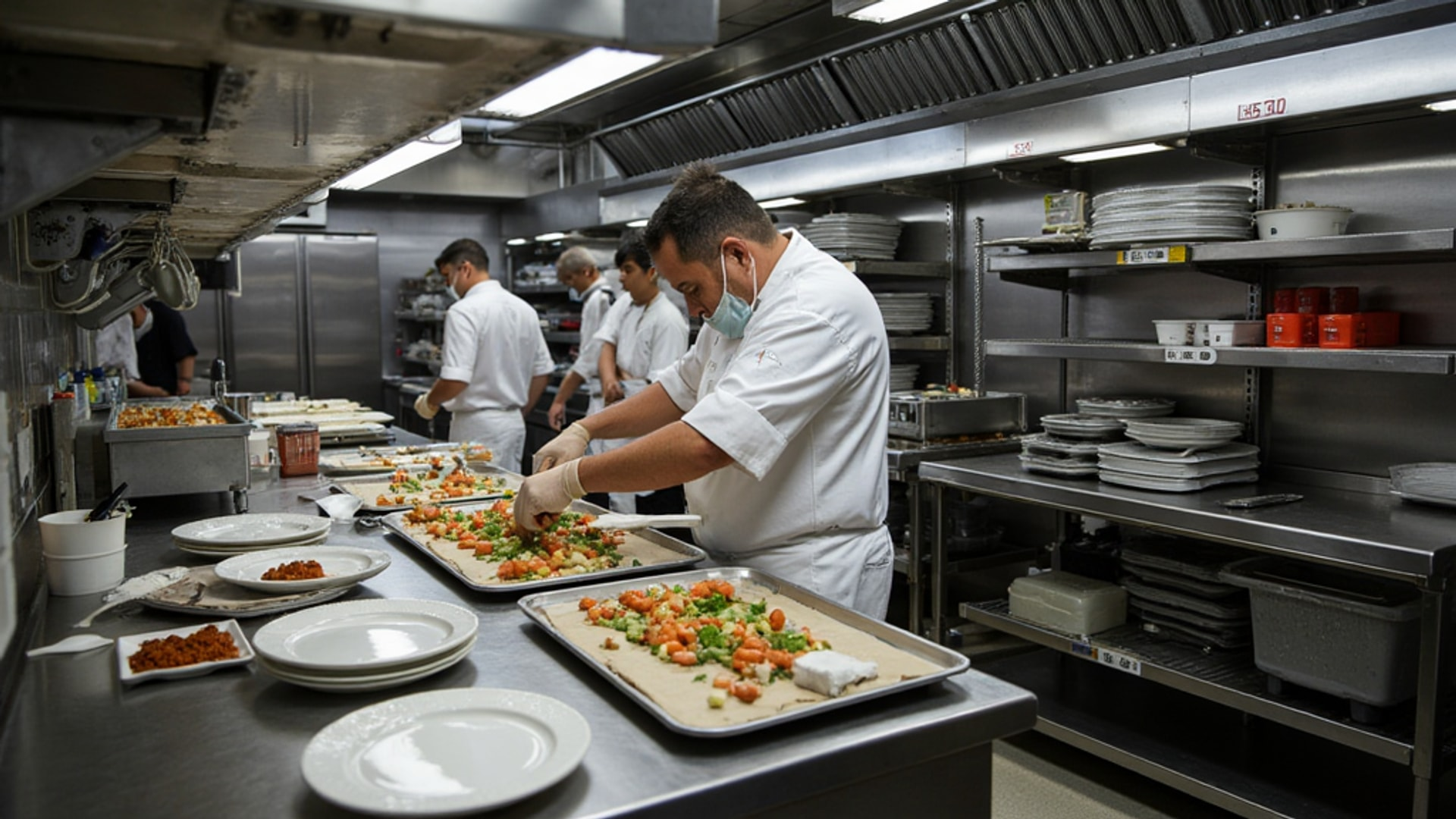
HVAC is not glamorous, but it will make or break your restaurant. Get it wrong and your kitchen cooks at 95°F, your dining room smells like the grill, and your energy bills eat profit every month. Get it right and your staff works efficiently, your guests are comfortable, and your utility costs are under control. According to Kitchen Services, HVAC represents approximately 30 percent of a restaurant’s total energy consumption — making it the single largest operating cost after food and labor that is locked in at the design stage.
This is not a project to cut corners on, and it is not something a generalist HVAC contractor can handle without restaurant-specific experience. The design requirements for a commercial kitchen ventilation system bear little resemblance to office or retail HVAC work.
Why Restaurant HVAC Is Different
A standard commercial building has one primary task: keep the occupied space at a comfortable temperature. A restaurant has five distinct zones — kitchen, dining room, restrooms, lobby, and any outdoor dining areas — each with radically different thermal loads, air quality requirements, and occupancy patterns, all operating simultaneously and all connected to the same structure.
The kitchen generates massive amounts of heat, grease-laden vapor, steam, and combustion byproducts. The dining room must remain comfortable regardless of how hard the kitchen is running. Restrooms need independent exhaust to prevent odor migration. The lobby and entrance area must hold temperature despite doors opening constantly during service. Each zone requires coordinated management to prevent uncomfortable temperature imbalances, odor cross-contamination, and energy waste from over-conditioning unoccupied spaces.
The Exhaust Hood: Foundation of Kitchen Ventilation
The exhaust hood is the most critical component of the entire system. Positioned above cooking equipment, it captures heat, smoke, steam, and grease particles before they can spread through the kitchen and into the dining room.
There are two hood classifications, and choosing the wrong one creates compliance failures. Type I hoods are required for grease-producing equipment — fryers, grills, ranges, and charbroilers. They must include grease filters and integrate with fire suppression systems. Type II hoods handle equipment that produces only heat and moisture, such as dishwashers, steamers, and ovens — no grease filtration required.
Hood sizing is calculated based on the equipment beneath it, cooking intensity, and the airflow rate measured in cubic feet per minute (CFM) needed to capture all cooking emissions. Under-sized hoods fail to capture smoke and grease, leading to grease accumulation in ductwork — a fire hazard — and odor migration into the dining room. Oversized hoods waste conditioned air by exhausting more than necessary, inflating energy costs.
Placement relative to the cooking equipment is equally critical. A hood positioned too high above the cooking surface loses capture effectiveness. The Severn Group notes that improper hood placement results in inadequate ventilation and grease accumulation in ductwork, increasing fire risk — a finding echoed by virtually every commercial kitchen HVAC authority.
Make-Up Air: The Overlooked Half of the System
Every cubic foot of air the exhaust hood removes must be replaced. This is the make-up air system, and it is the component most frequently under-designed or underestimated by operators and inexperienced contractors.
Without sufficient make-up air, the kitchen operates under negative pressure. The consequences are serious and immediate: doors slam and become difficult to open, drafts run throughout the restaurant, air quality degrades, and — most dangerously — combustion gases from gas-fired equipment can back-vent into the occupied space rather than exhausting properly.
Make-up air must be conditioned, meaning heated in winter and cooled or at least tempered in summer, before introduction into the kitchen space. Introducing raw outdoor air in January creates thermal shock for kitchen staff and can affect cooking performance. The make-up air volume must be balanced with the exhaust volume to maintain neutral or slightly positive kitchen pressure.
Packaged rooftop kitchen hood units combine exhaust and make-up air in a single system, simplifying installation and ensuring proper balancing. They are increasingly common in new construction and renovation projects.
Zoning: Different Spaces, Different Needs
Treating the entire restaurant as a single HVAC zone is a design error that leads to constant complaints and wasted energy. A properly designed system uses distinct zones with independent controls.
The kitchen zone maintains cooler temperatures to offset the enormous heat output from cooking equipment — typically targeting 68–72°F despite active cooking. The dining room zone focuses on guest comfort, typically 70–74°F with humidity control. The bar area, if applicable, often has its own zone due to different occupancy patterns and the heat output from refrigeration equipment. Storage areas need their own temperature control to protect ingredients. Restrooms require dedicated exhaust with no recirculation.
Zoning requires more upfront investment in equipment and controls, but it pays back in energy savings and operational comfort. Kitchen staff working in a properly conditioned space are more productive and less likely to call out sick from heat exhaustion during summer service.
→ Read more: Restaurant Electrical Requirements
Energy Costs and Efficiency
Kitchen ventilation systems can account for up to 50 percent of the total HVAC load including fan energy. This is the number that focuses the mind. Half your HVAC energy budget is the exhaust and make-up air system over the cooking line.
Variable speed drives (VSDs) on exhaust fans can reduce energy consumption by automatically matching fan speed to cooking intensity. During slow periods between services, the system runs at lower speed; during peak cooking, it ramps up. Demand-controlled kitchen ventilation (DCKV) systems use sensors to detect cooking activity and adjust exhaust airflow accordingly, a key element of sustainable restaurant design. Studies have shown that DCKV can reduce kitchen ventilation energy use by 30 to 50 percent compared to constant-speed systems.
Energy-efficient equipment selection across all HVAC components — high-efficiency motors, insulated ductwork, quality heat recovery units — compounds these savings over the life of the system.
Code Compliance: NFPA 96 and IMC
Two standards govern restaurant ventilation in the United States, and both must be met:
NFPA 96 — the Standard for Ventilation Control and Fire Protection of Commercial Cooking Operations — governs the fire safety aspects of kitchen ventilation. It specifies hood dimensions, duct clearances, grease filter requirements, fire suppression system integration, and cleaning intervals for ductwork. NFPA 96 is the standard most commonly referenced in health department and fire marshal inspections.
The International Mechanical Code (IMC) covers the broader mechanical engineering requirements for the complete HVAC system, including make-up air sizing, duct materials, equipment installation clearances, and energy performance standards.
Additionally, ASHRAE Standard 62.1 establishes minimum ventilation requirements for occupied spaces, mandating a minimum of 7.5 cubic feet per minute of outside air per person in restaurant and bar areas. This baseline ensures fresh air replacement for diner comfort and indoor air quality.
Local jurisdictions frequently add requirements on top of these national standards. Always verify local amendments before finalizing design.
Common Design Failures
The most expensive mistakes happen during design, not operation. Oversized equipment that short-cycles wastes energy and creates temperature fluctuations more disruptive than properly sized equipment running at full capacity. Undersized ductwork increases static pressure, forcing fans to work harder while delivering less airflow. Insufficient duct sealing allows conditioned air to leak into wall cavities and ceiling spaces, conditioning the building structure instead of the occupied zones.
Substandard ductwork is a particular problem. Kitchen exhaust ductwork must be fabricated from the correct gauge steel, have welded rather than screwed joints in grease-laden sections, and have cleanout access panels at appropriate intervals for mandatory duct cleaning. Commercial kitchen ductwork that fails inspection requires demolition and replacement — an extremely costly error.
Maintenance Obligations
NFPA 96 mandates documented cleaning intervals for kitchen exhaust ductwork based on cooking volume and type. High-volume operations cooking with solid fuels require quarterly cleaning. Monthly cleaning is required for 24-hour operations. Most restaurants fall into the 6-month or annual cleaning category.
Beyond ductwork, the complete preventive maintenance schedule includes quarterly filter inspection and replacement, annual fan belt and motor inspection, coil cleaning on all air handling units, and regular calibration of zone controls and thermostats. Deferred maintenance compounds rapidly in restaurant HVAC systems — a dirty coil reduces system efficiency, which increases operating costs and accelerates equipment wear.
What to Budget
HVAC and ventilation represent a significant portion of restaurant construction costs. According to industry data, commercial kitchen exhaust hood systems alone typically run $10,000 to $40,000 depending on length, type, and fire suppression integration. Make-up air units add $8,000 to $25,000. The complete HVAC system for a 2,000–4,000 square foot restaurant typically runs $50,000 to $150,000 installed, varying by climate zone, system complexity, and local labor costs.
This is not a place to find value engineering. Underfunding the HVAC system in design will produce ten times the cost in operational problems, energy waste, and premature replacement within five years.
Hire an HVAC engineer with documented restaurant project experience, not a general commercial contractor. A qualified restaurant designer can coordinate HVAC with the overall design.
→ Read more: Fire Safety and Egress Design
→ Read more: Restaurant Energy Management Get the design peer-reviewed by the equipment manufacturer’s representative. And build the maintenance budget into your operating pro forma before you sign the lease.