· Design & Ambiance · 9 min read
Ghost Kitchen Design: Layout and Infrastructure for Delivery-Only Concepts
Ghost kitchens eliminate the dining room entirely — every square foot and every dollar goes to production, so the design decisions are radically different.
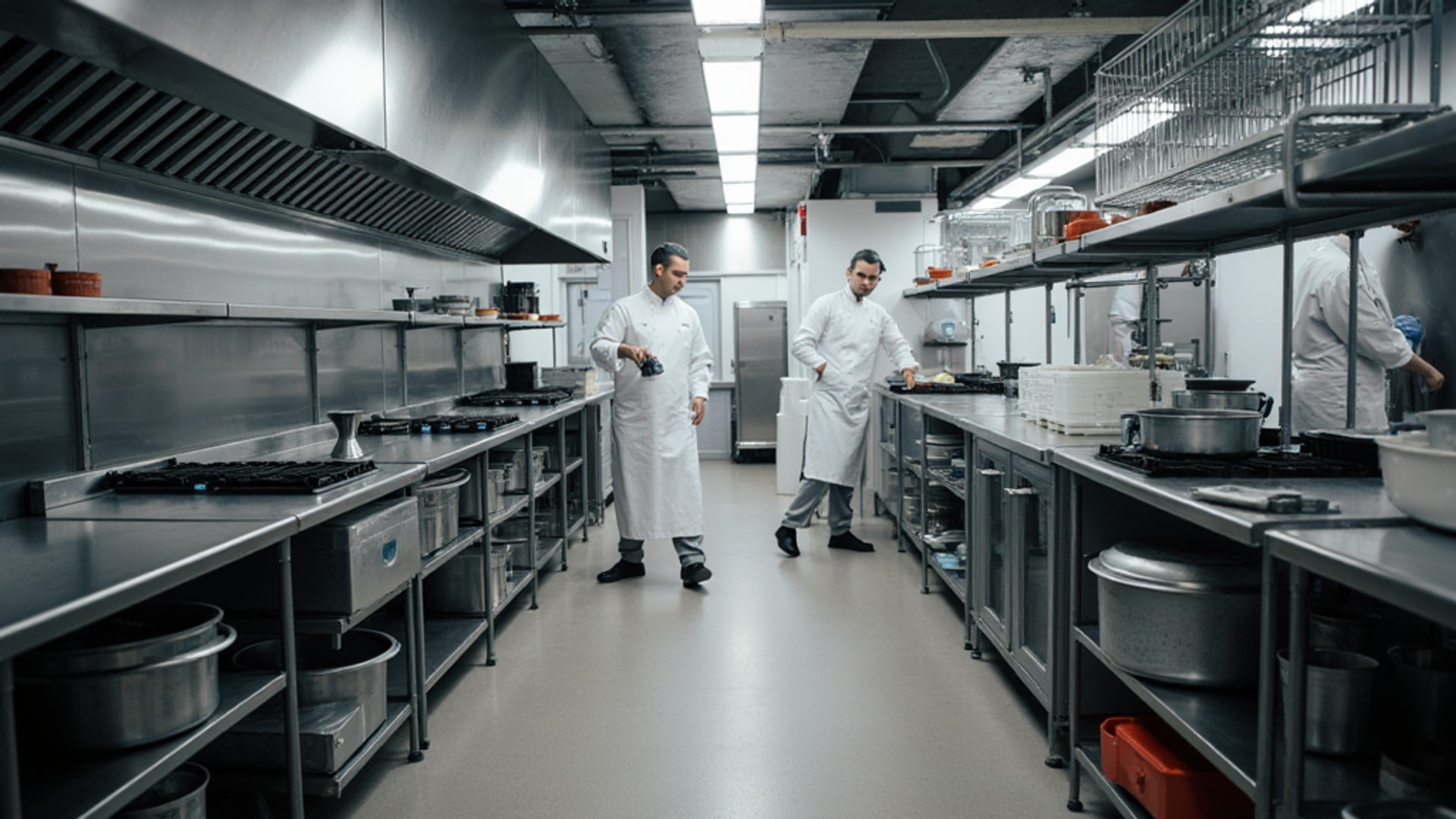
A ghost kitchen — also called a cloud kitchen, virtual kitchen, or dark kitchen — is a food production facility that exists solely to fulfill delivery and pickup orders. There are no dining room tables, no host stand, no ambient lighting choices, no front-of-house staff. Every design decision flows from a single priority: maximum production efficiency per square foot.
This sounds simple. It is not. Ghost kitchen design requires the same rigor as a traditional restaurant kitchen — HVAC, hood systems, plumbing, electrical, equipment layout — but applies different optimization criteria. In a traditional restaurant, kitchen design serves both production and diner experience. In a ghost kitchen, production efficiency and driver logistics are the only criteria that matter.
The Fundamental Difference in Design Philosophy
Traditional restaurant design allocates roughly one-third of space to the kitchen and two-thirds to the dining room. Ghost kitchens invert this or eliminate the split entirely. According to CloudKitchens, the ghost kitchen model eliminates dining space completely, dedicating 100 percent of the facility to production. This changes every sizing decision.
A traditional 2,000 square foot restaurant might have a 600-700 square foot kitchen serving a 1,200 seat dining room. A ghost kitchen in the same 2,000 square feet can operate multiple virtual brands simultaneously from a space that is entirely kitchen, storage, and driver staging. The production capacity per square foot is dramatically higher.
This is the economic logic of ghost kitchens: lower real estate cost (industrial and secondary locations versus high-street retail), lower build-out cost (no FOH finishes, furniture, or lighting design), lower labor cost (no servers, hosts, or bussers), and the ability to run multiple menu concepts from the same kitchen infrastructure.
Location Selection Criteria
Ghost kitchen location decisions are driven by entirely different factors than traditional restaurant site selection. Foot traffic and street visibility are irrelevant. According to CloudKitchens, location selection for delivery-focused operations prioritizes proximity to dense residential areas and easy access from major roads, rather than the foot traffic and visibility that traditional restaurants value.
The key metrics for ghost kitchen site selection:
Delivery radius coverage. Third-party delivery apps typically display restaurants within a 3–5 mile radius to customers. The ghost kitchen should be positioned to cover the highest-density residential areas within that radius. Mapping the target delivery zone against population density and order history data from existing delivery platforms guides this analysis.
Driver accessibility. High-volume ghost kitchens have dozens of delivery drivers arriving and departing every hour. The facility needs easy access from major roads, adequate parking or staging area for drivers, and a loading zone that does not create street congestion. Locations in dense urban cores often fail this test, making inner-ring industrial areas and mixed-use neighborhoods with light commercial zoning more suitable.
Ceiling height and infrastructure. Industrial and light commercial buildings often have the ceiling height (14–16 feet or more) required for commercial kitchen ventilation ductwork without costly structural modifications. They also frequently have the electrical service capacity, gas capacity, and drain infrastructure that a production kitchen requires.
Cost per square foot. The ability to operate from secondary real estate at 30–60 percent of the cost per square foot of high-street restaurant locations is one of the primary financial advantages of the ghost kitchen model. Do not sacrifice this advantage by selecting a location in a retail corridor.
Kitchen Layout for Multi-Brand Operations
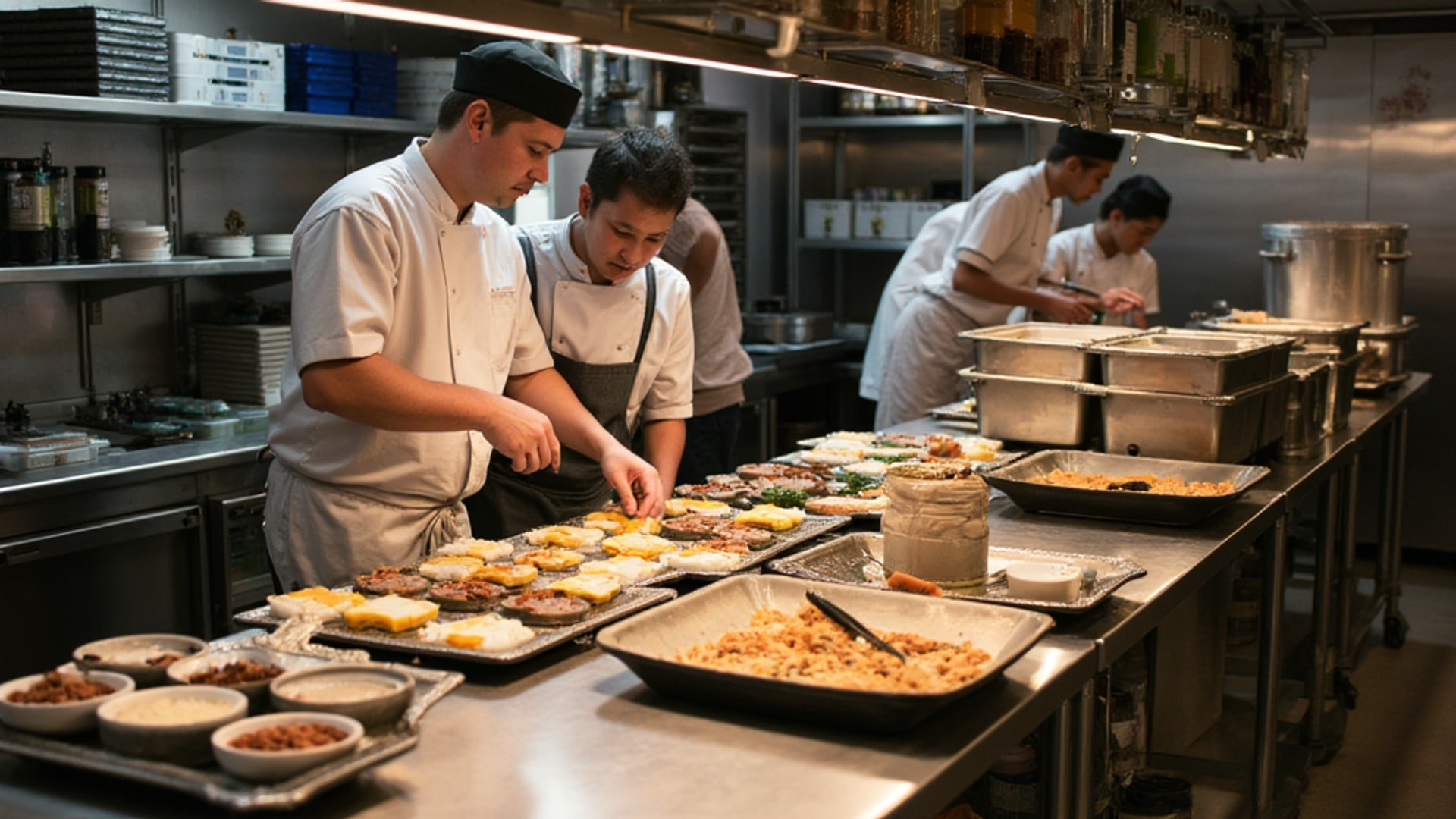
The most common ghost kitchen model operates multiple virtual brands from a single production kitchen. A single operator might run a burger concept, a wing concept, a sandwich concept, and a salads concept — all from the same kitchen, all on the same equipment, all fulfilling orders simultaneously on different third-party apps.
This multi-brand approach creates specific layout requirements:
Shared production stations with dedicated brand prep areas. Cooking equipment — fryers, ranges, ovens, grills — is shared across all brands. What differentiates production is the prep work and ingredients. Dedicated refrigeration drawers or reach-in units for each brand’s specific ingredients prevent cross-contamination and reduce ticket confusion.
A single central pass window. All completed orders route through one pass window to the packaging and staging area. This concentrates quality control at one point and allows a single packer to manage output from multiple brands.
Clear KDS (kitchen display system) zoning. Each cooking station needs a display that shows only the tickets relevant to that station’s function. A fryer station should see only items that require frying, regardless of which brand ordered them. This prevents the cognitive overload of staff trying to parse multi-brand, multi-item tickets on a single screen.
The kitchen layout types that work best for high-volume, multi-brand ghost kitchens are the assembly line and zone configurations. The assembly line excels for brands with standardized, repeatable menu items — build order components from left to right, plate at the end, move to packaging. The zone layout groups related cooking methods together and works better when brands have diverse cooking requirements that cannot be standardized into a linear sequence.
Driver Staging and Handoff Design
The driver-facing interface of a ghost kitchen is the staging and handoff area — the operational equivalent of a dining room for the delivery customer. A poorly designed staging area creates driver wait times, order mix-ups, and negative ratings that damage the concept’s visibility in delivery app algorithms.
According to CloudKitchens, ghost kitchens provide dedicated food preparation space with designated driver handoff areas. The handoff area needs:
Numbered or named staging shelves. Orders waiting for pickup should be organized on labeled shelving that drivers can scan immediately. Organization by driver name, order number, or platform name allows instant location without staff assistance.
A visible order status display. A screen showing which orders are ready for pickup reduces driver inquiries to staff. Every second a driver spends asking a staff member about order status is a second that staff member is not packing the next order.
A separate driver entrance from any street access. If the ghost kitchen shares a building with other tenants, the driver entrance should be separate from any retail-facing or employee entrances. This protects both safety and building access control.
Adequate staging depth. At peak hours — typically 12–1 PM and 6–8 PM — a high-volume ghost kitchen might have five to fifteen drivers present simultaneously. The staging area must accommodate this without creating a bottleneck that backs up into the kitchen. Plan for a minimum of 150–200 square feet of dedicated driver staging space.
Packaging Station Design
In a ghost kitchen, packaging is not an afterthought — it is the primary customer touchpoint. The packaging station is where the brand experience is created, because the package is all the customer sees.
The packaging station should be positioned at the pass window, with:
- Counter space for assembling multi-item orders without stacking
- Dedicated storage for each brand’s packaging materials (bags, boxes, containers, lids)
- A label printer for each brand, connected to the ordering platform
- Condiment, utensil, and napkin storage within arm’s reach
- A quality check protocol — temperature check, item verification, container seal
Every order should be labeled with the brand name, customer name, order number, and itemized contents. Label errors create disputes with customers and drivers and damage the brand’s reputation on delivery platforms.
Technology Infrastructure
Ghost kitchens are technology-first operations. The kitchen display system, order aggregation platform, inventory management software, and delivery platform integrations are not optional add-ons — they are the operational backbone.
CloudKitchens emphasizes that technology integration connects online ordering platforms directly to kitchen production systems. This means orders from DoorDash, Uber Eats, Grubhub, and direct online ordering all flow into the same KDS interface with automatic routing to the appropriate stations. Staff should never be manually transcribing orders from tablet screens to paper tickets.
Reliable high-speed internet with a backup connection is infrastructure, not IT support. A ghost kitchen that loses internet connectivity loses its ability to receive orders entirely. Install dual ISP connections from different providers, with automatic failover.
HVAC and Ventilation for Production-Focused Spaces
Ghost kitchen HVAC design follows the same standards as any commercial kitchen — NFPA 96, Type I and Type II hoods, make-up air systems, zone-based climate control — but without the dining room design constraints. This actually simplifies some decisions.
There are no guests to consider when sizing the kitchen climate control. The temperature target is staff comfort and food safety, not ambient dining experience. The hood system should be sized generously relative to the cooking equipment footprint, because multi-brand operations often run all cooking equipment simultaneously at peak, creating higher heat loads than a single-concept kitchen of the same size.
Grease trap sizing for ghost kitchens deserves particular attention. Multi-brand operations that include fried items across several concepts generate substantial FOG output. The grease trap must be sized for the combined load of all concepts running simultaneously, not for any single concept in isolation.
The Hybrid Model: Micro Storefront Plus Production Kitchen
According to CloudKitchens, the emerging hybrid model combines a small customer-facing pickup storefront with a production kitchen designed for delivery, capturing both walk-in and online order revenue without the overhead of a full dining room.
This model typically allocates 200–400 square feet for a walk-up counter and minimal waiting area, combined with 800–1,500 square feet of production kitchen. It adds brand visibility in a pedestrian environment, enables walk-up order revenue, and creates an address that appears as a real location on delivery apps — which some research suggests improves consumer confidence and conversion rates.
The design challenge is creating a storefront that looks intentional and brand-appropriate rather than industrial, while maintaining a tight footprint. Consistent branding, quality materials at the customer-facing counter, and a clearly designed menu board can accomplish this without the design investment of a full dining room.
Financial Design Considerations
Every ghost kitchen decision is a financial decision. The design should be evaluated against the pro forma, not against aesthetic preferences.
Build-out cost per square foot for a ghost kitchen typically runs $80–$150 in most US markets, compared to $250–$500 or more for a full-service restaurant with a designed dining room. This cost advantage is the primary financial justification for the model. Protect it by resisting unnecessary investments in finishes, equipment, or space that do not directly improve production efficiency or driver logistics.
Equipment selection should prioritize multi-use capability. A combination oven that handles roasting, steaming, and baking eliminates three separate pieces of equipment and the space each requires. Shared fryer banks with separate baskets for different brands reduce equipment cost and simplify hood system design.
The ghost kitchen model is not inherently profitable — it is a different risk profile. Lower startup cost means lower revenue potential per location. Profitability depends on running multiple high-volume brands at strong unit economics. The design should be built for that scenario, not for a single brand at moderate volume.
→ Read more: Restaurant Delivery and Pickup Area Design
→ Read more: Kitchen-to-Dining Room Ratio