· Kitchen · 7 min read
Commissary and Central Kitchen Operations: The Hub-and-Spoke Model for Multi-Unit Consistency
How commissary and central prep kitchens work, when they make financial and operational sense, and how to run cold chain logistics between a central facility and multiple locations.

At some point in the growth of a multi-unit restaurant group, the duplicated prep work happening at each location becomes impossible to defend. Every location has a prep cook dicing onions, making the same sauce, and portioning the same proteins — the same tasks performed by different people to inconsistent standards, at a combined labor cost that would run a single centralized prep operation multiple times over.
The commissary kitchen — also called a central kitchen or central prep facility — solves this problem at scale. Understanding how it works, when it makes sense, and how to operate it effectively determines whether it becomes a genuine efficiency engine or an expensive experiment.
The Hub-and-Spoke Model
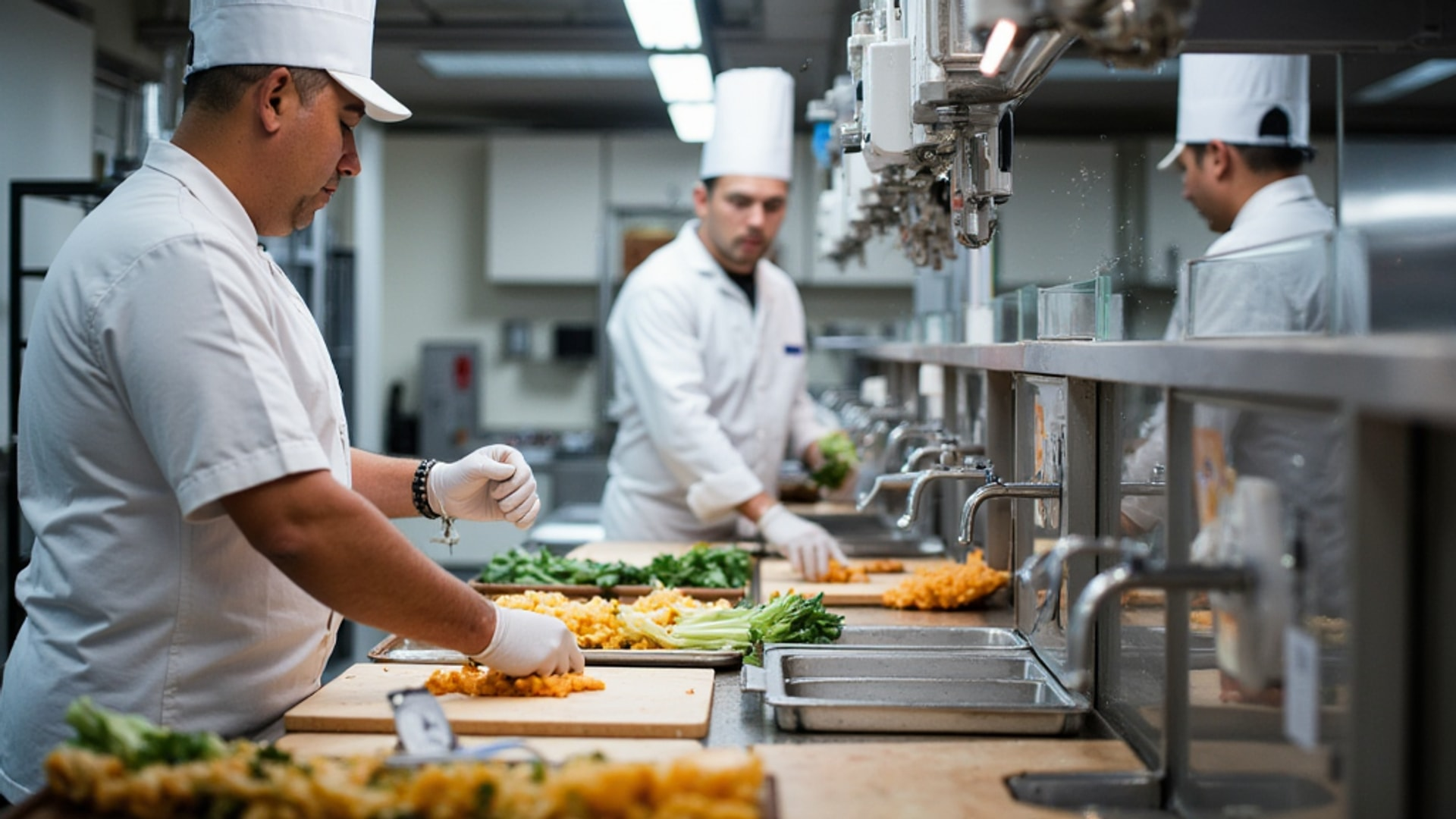
According to Restaurant365, a commissary kitchen is a licensed, fully-equipped commercial kitchen that centralizes food preparation for distribution to multiple restaurant locations. The operational model is hub and spoke: the central kitchen is the hub where labor-intensive prep work happens; individual restaurant locations are the spokes where prep items are finished and served.
The commissary handles:
- Butchering and portioning proteins
- Making sauces, dressings, and marinades
- Producing doughs, batters, and baked components
- Par-cooking items that will be finished at location
- Portioning and packaging ingredients for distribution
Location staff receive ready-to-cook or finish-to-order items. Their job shifts from prep-intensive work to cooking, plating, and service.
Why Consistency Wins the Argument
The quality argument for commissary operations is compelling. When all locations receive identically prepped ingredients from the same source, the variability that comes from different prep cooks at different locations is eliminated.
Consider a signature sauce made at three locations by three different prep cooks with three slightly different interpretations of the recipe. Customer experience varies by location. In a commissary model, the same batch of sauce distributed to all three locations ensures every guest encounters the same product, regardless of which unit they visit.
This consistency advantage is especially valuable for:
- Signature dishes and proprietary recipes that define your brand
- Highly technical preparations where skill variation is greatest
- High-cost ingredients where portioning precision directly affects food cost
- Items with precise texture requirements that depend on correct preparation technique
The Labor Math
The labor efficiency gains are significant for multi-unit operators. Instead of each location employing dedicated prep cooks performing the same tasks, a smaller team of specialized prep workers at the commissary can serve multiple units.
A simple illustration: three restaurant locations each employ one full-time prep cook at 40 hours per week. Total prep labor: 120 hours per week. A commissary kitchen staffed by two specialized prep workers at 50 hours each can produce the same prep volume in 100 hours with superior consistency, because those two workers become expert at their specific tasks through repetition and specialization.
The math becomes more favorable as unit count grows. Four units, five units, eight units — the commissary labor advantage compounds because the hub operation does not grow linearly with unit count. Adding a fourth location to a commissary serving three requires adding capacity, not duplicating the entire operation.
Location staff benefit from this model too. By receiving ready-to-cook items rather than raw ingredients, location cooks spend more time on the skilled cooking tasks they were hired for and less time on repetitive prep. This can improve retention and morale in operations where prep work has been a source of turnover.
Purchasing Power
According to Restaurant365, bulk purchasing power increases as orders consolidate through a single facility. Instead of three locations each ordering 15 pounds of salmon per week, a commissary orders 45 pounds in a single purchase — better pricing, reduced delivery frequency, and consolidated vendor management.
For high-cost proteins, specialty ingredients, and commodities where price varies by purchase volume, the purchasing efficiency of commissary operations can produce savings of 5 to 15 percent on ingredient costs. A group purchasing organization can amplify these savings further. Over the scale of a multi-unit operation’s annual ingredient spend, this is significant.
Shared-Use Commissary Kitchens: A Different Model
A parallel market serves a completely different operator profile: the shared-use commissary kitchen.
Shared-use commissaries rent time or dedicated stations to entrepreneurs, food truck operators, caterers, and startup restaurant concepts that need licensed kitchen space without the capital investment of building out their own facility.
Many health departments require mobile food vendors to operate from a commissary as their base of operations. A food truck operator who cannot store, prep, or clean their vehicle at a licensed kitchen may be prohibited from operating. Shared-use commissaries fulfill this compliance requirement.
For startup operators, shared-use commissary access reduces the capital barrier to entry significantly. A concept that needs 15 hours per week of licensed kitchen time pays for 15 hours rather than building out and maintaining a full kitchen. This is a natural entry point for concepts testing viability before committing to a full buildout.
Cold Chain Logistics: The Operational Challenge
The efficiency advantages of commissary operations depend on logistics. Getting prepped items from the central kitchen to each location — safely, on schedule, and without quality compromise — is the operational discipline that makes or breaks the model.
Logistics require careful planning around three areas:
Cold chain management during transport: Prepped proteins, sauces, and temperature-sensitive items must remain at safe temperatures (below 40°F for refrigerated items) throughout transport. This means insulated delivery vehicles, temperature loggers on shipments, and receiving protocols at each location that verify delivery temperature before acceptance.
Delivery scheduling: Each location’s prep needs drive the delivery schedule. A restaurant that needs portioned salmon for Friday dinner service needs that delivery by Thursday afternoon at the latest, with enough buffer for any quality issues. Building delivery schedules around location-specific service calendars rather than commissary convenience is the discipline that keeps the model working.
Inventory tracking: Items produced at the commissary must be tracked from production through distribution and into each location’s usage. Inventory systems that provide visibility from the commissary through to each unit’s usage prevent both overproduction (waste at the commissary) and underproduction (stock-outs at locations). Modern restaurant management software that integrates commissary production planning with location-level inventory provides real-time visibility across the operation.
When a Commissary Makes Sense
The commissary model generates its returns at scale. As a general guideline:
- 2 to 3 locations: The logistics and overhead of a commissary may exceed the savings, unless locations are geographically clustered and production volume is high
- 4 to 6 locations: The efficiency math begins to favor a dedicated commissary, particularly for concepts with labor-intensive prep or high consistency requirements
- 7+ locations: The commissary model becomes increasingly compelling; the alternative (fully independent prep at each location) becomes increasingly difficult to manage consistently
Volume matters more than unit count in some cases. A three-location concept doing 3,000 covers per night has commissary economics that a seven-location concept doing 500 covers per night does not.
Health Department Compliance
A commissary kitchen must be licensed and inspected as a commercial food facility, regardless of whether it sells food directly to consumers. The licensing process covers the same requirements as any commercial kitchen: equipment sanitation, temperature control, handwashing facilities, pest control, and employee hygiene.
Items distributed from the commissary to locations must be properly labeled with production date, use-by date, and in some jurisdictions, the commissary’s license number. Check with your local health department for specific labeling requirements for commissary-distributed items.
→ Read more: Multi-Unit Restaurant Operations: How to Scale Without Losing What Made You Successful
→ Read more: Setting Up a Ghost Kitchen: Equipment, Layout, and Operational Requirements
→ Read more: Food Storage and Temperature Control: Zones, Rotation, and Compliance