· Menu & Food · 6 min read
Portion Control and Consistency: The Discipline Behind Menu Profitability
Inconsistent portions are one of the most common — and most preventable — drivers of food cost overruns in restaurant kitchens.
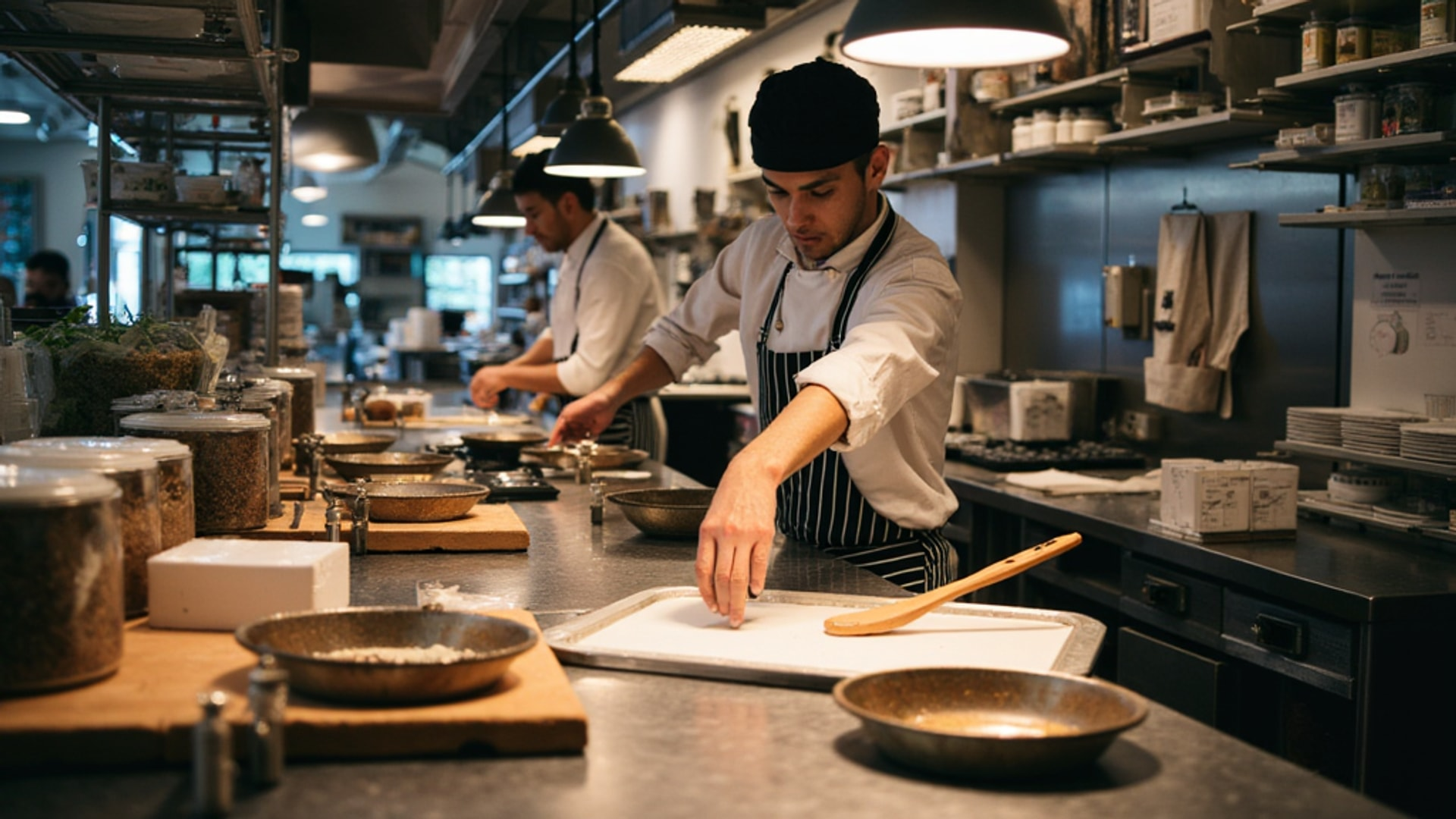
A restaurant’s food cost targets exist on paper: a calculated ideal cost percentage based on standardized recipes and theoretical usage. The gap between that theoretical cost and the actual cost that shows up on the P&L is called variance. And the single biggest driver of that variance in most kitchens is not theft, not waste, and not supplier price changes — it is inconsistent portioning.
According to Chef’s Resources, accurate plate cost calculation requires understanding the distinction between As Purchased (AP) cost and Edible Portion (EP) cost. Once that distinction is correctly captured in recipe costing, the next requirement is ensuring that what is portioned in practice matches what was costed in theory.
Why Portion Inconsistency Is Expensive
The math is straightforward. If a salmon fillet is costed at 6 ounces and priced to produce a 32% food cost, but cooks are routinely portioning 7 ounces, the actual food cost on that dish is 16% higher than the target. On a dish selling 100 times per week, that 1-ounce excess represents meaningful cost leakage over time.
| Dish | Targeted Portion | Actual Portion | Extra Cost/Plate | Weekly Volume | Weekly Excess |
|---|---|---|---|---|---|
| Salmon fillet | 6 oz | 7 oz | $1.80 | 100 orders | $180 |
| Pasta (dry weight) | 4 oz | 5 oz | $0.35 | 200 orders | $70 |
| Cheese (for board) | 2 oz | 2.5 oz | $0.90 | 60 orders | $54 |
These numbers compound. A single item over-portioned by one ounce across 100 weekly covers costs $180 per week — nearly $9,400 per year, from one dish.
The Yield Percentage Foundation
Before portion control can be enforced, the recipes behind it must correctly account for yield. According to Chef’s Resources, yield percentages represent how much usable product remains after trimming, peeling, and processing — and failing to account for yield leads to both inaccurate costing and inconsistent portioning guidance.
Common yield issues:
Produce: A bunch of spinach purchased by the pound has significant stem and damaged leaf waste. If the recipe says “4 ounces spinach” but doesn’t specify edible portion, cooks interpret this differently.
Proteins: A center-cut salmon portion cut from a whole fillet behaves differently than a belly portion. Yield variation by cut source affects both consistency and cost.
Sauces and reductions: A sauce that reduces by 40% during cooking must be batch-costed on its final yield, not the starting volume. According to Chef’s Resources, for shared costs like cooking oil, the recommended approach is to divide monthly usage by monthly covers and add that per-plate cost to each relevant item.
Tools That Enforce Portion Standards
Portion control without enforcement tools is aspiration, not system. The physical tools that make consistency achievable:
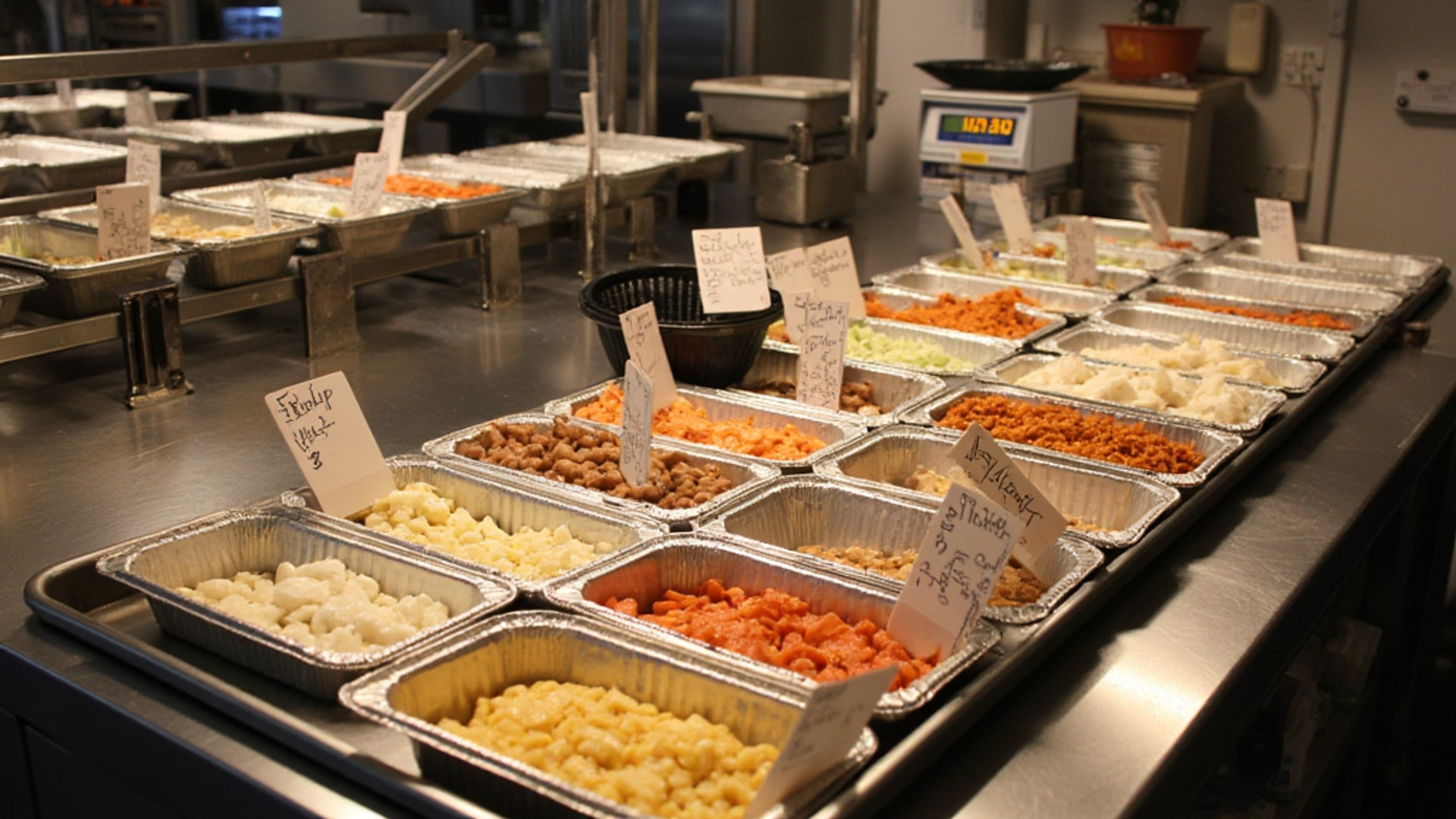
Digital portion scales: The most critical tool in any kitchen where weight-based portioning is used. Every protein station, every garde manger station, and every dessert station should have a calibrated digital scale within arm’s reach. If reaching the scale takes more than 3 seconds, cooks will not use it consistently under pressure.
Volume scoops: For bulk items portioned by volume (rice, mashed potato, pasta, grain bowls, ice cream), calibrated scoops eliminate the “eyeball” problem. A #8 scoop holds exactly 4 ounces. A #12 scoop holds approximately 2.7 ounces. Match the scoop size to the recipe specification and use no substitutes.
Ladles: Sauces, soups, and liquid components should be portioned by ladle size, specified in the recipe. A 4-oz ladle of sauce should be noted as “one 4-oz ladle” in the recipe, not “drizzle over the plate” or “to taste.”
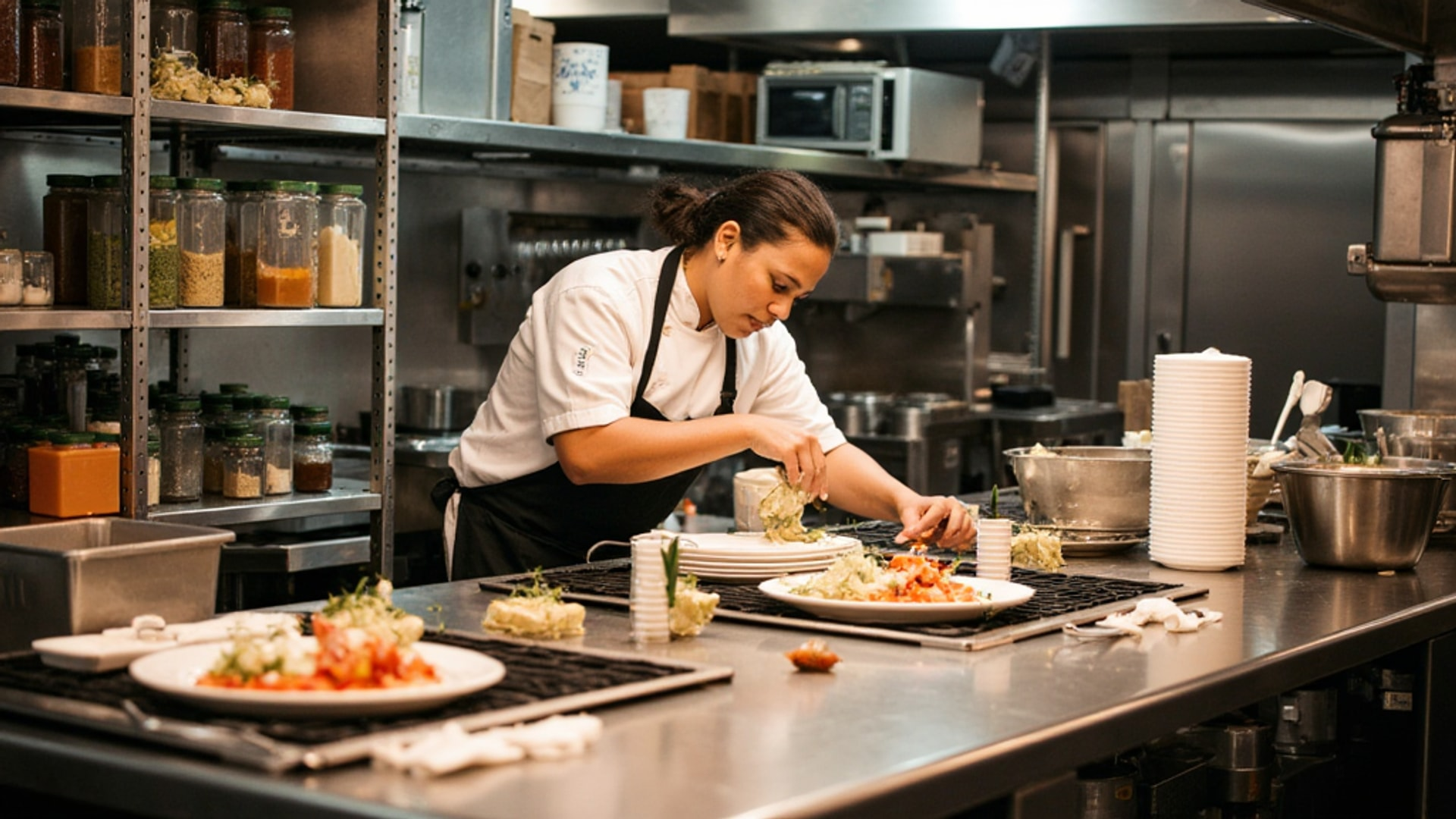
Portion plates or templates: For visual-consistency items — composed salads, charcuterie boards, dessert plates — a template plate or laminated reference photo at the station gives cooks a visual standard to match. This is particularly important for new staff or complex presentations.
Portion Control in Recipe Cards
According to Food Cost Chef, recipe costing templates should organize information including quantity used, yield percentage, and cost per portion. The portion control specification belongs in the same document as the cost calculation — not in a separate “plating guide” that may or may not be consulted.
Minimum recipe card specifications for portioning:
| Field | Example |
|---|---|
| Protein portion | 6 oz EP (edible portion, post-trim) |
| Sauce | 2 oz (one 2-oz ladle) |
| Starch/grain | 4 oz (one #8 scoop) |
| Garnish | 3 leaves microgreen, 1 tsp herb oil |
| Plated weight (target) | ~14 oz total |
The target plated weight serves as a final check. If a cook weighs a completed dish and it is consistently 2 to 3 ounces over target, something in the portioning sequence is off and needs to be identified.
Training for Consistency
Standardized recipes and good equipment produce consistent portions only when kitchen staff are trained to use them correctly. According to Escoffier School of Culinary Arts, staff education on executing seasonal and new menu items must be built into any menu transition. The same logic applies to portion standards year-round.
Onboarding protocol for new kitchen staff:
- Show the recipe card and explain every specification, including yield percentages
- Demonstrate the portioning technique for every component
- Have the new staff member portion under supervision until consistent
- Spot-check random dishes against weight targets for the first 2 weeks
Ongoing reinforcement:
- Monthly spot-check of random dishes against recipe card weights
- Immediate correction when over- or under-portioning is observed (not at end-of-shift)
- Quarterly full recipe costing audit comparing theoretical vs. actual food cost
→ Read more: Recipe Standardization: Building Consistency Into Every Dish → Read more: Menu Item Costing Spreadsheet: Building Your Recipe Costing System
The Food Waste Reduction Connection
Portion control and food waste reduction reinforce each other. According to National Restaurant Association, offering full and half portions reduces plate waste because customers order an amount they can actually consume. When a restaurant actively manages both its outgoing portioning (what leaves the kitchen) and its plate waste (what comes back), it gains a complete picture of ingredient utilization.
Half-portion strategy:
- Offer half portions of high-demand, expensive dishes
- Price at approximately 65% of full portion (not 50%, because fixed costs don’t halve)
- This captures revenue from guests who would otherwise not order the item due to size
According to National Restaurant Association, one Portland tavern saved 65 lbs of butter and 90 lbs of bread dough monthly by converting complimentary bread to a paid menu item, projecting $5,000 in additional annual revenue while eliminating waste. Portion decisions about complimentary and “free” items carry the same financial consequences as those about paid menu items.
Variance Tracking: Closing the Loop
The portion control system is only complete when variance is measured. Monthly at minimum, compare:
- Theoretical food cost (what cost should be, based on standardized recipes and sales mix)
- Actual food cost (what purchasing and inventory tracking reports show)
A variance greater than 2 to 3 percentage points indicates either portioning issues, waste, purchasing errors, or recipe costing inaccuracies. Investigate before assuming causes — the variance tells you something is off; only kitchen observation and spot-checking reveals what.
→ Read more: Food Cost Control Tips: Practical Strategies for Reducing Restaurant Food Costs → Read more: Food Waste and Menu Engineering: Designing a Menu That Reduces Waste