· Menu & Food · 6 min read
Food Pairing Principles: Building Dishes and Menus with Complementary Flavors
How understanding flavor relationships helps you build better dishes, more cohesive menus, and more compelling tasting experiences.
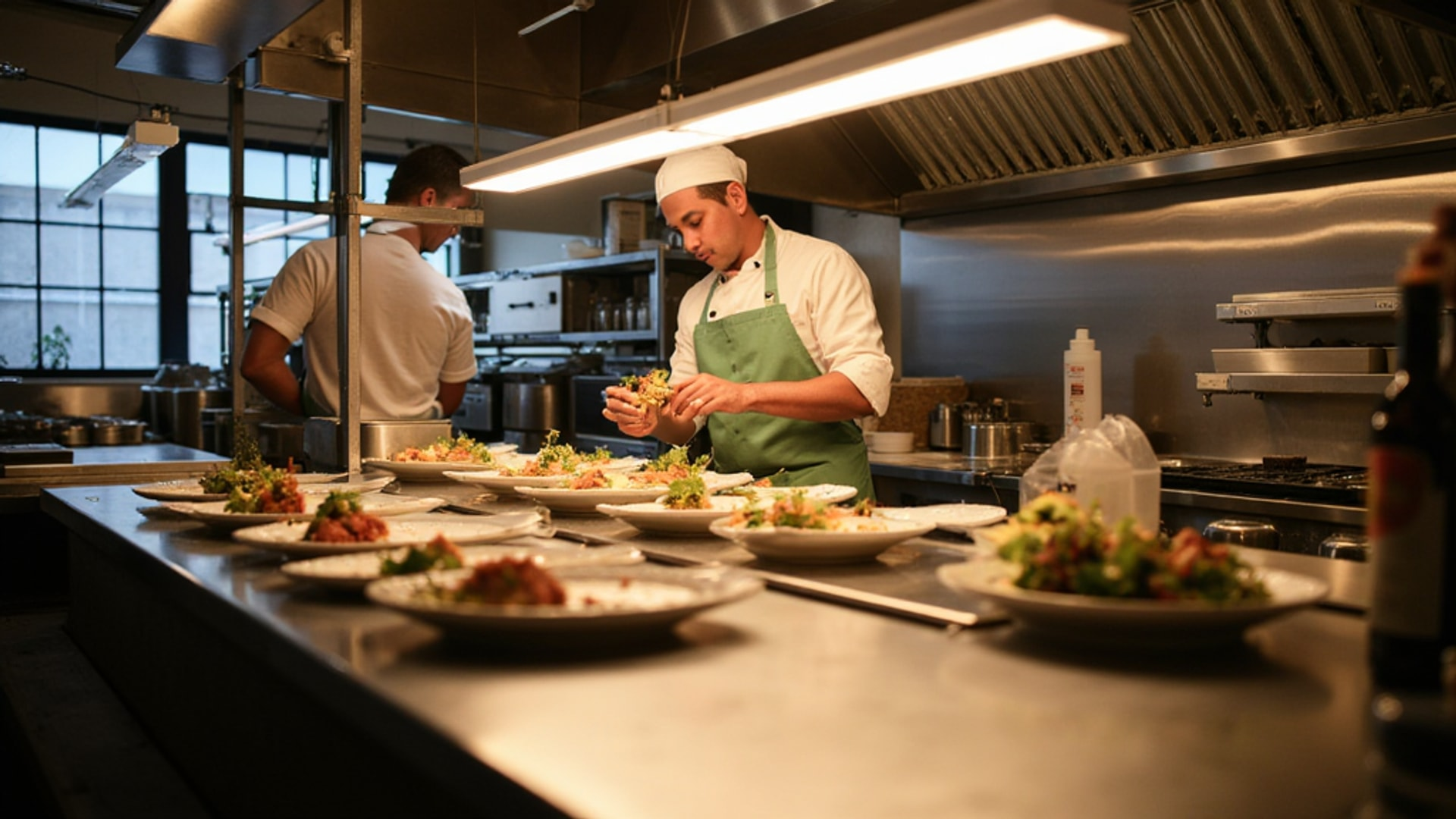
Menu development without a framework for flavor relationships produces menus that feel arbitrary — dishes that are technically correct but don’t cohere as a complete food program. Understanding how flavors interact, contrast, and complement each other is what separates a menu that reads as a collection of individual dishes from one that feels like a considered culinary statement.
→ Read more: Menu Trend Analysis: How to Read the Market and Apply It to Your Menu
Restaurant Business Online found that the most successful 2025 menu operators apply trending flavors to familiar formats rather than introducing unfamiliar preparations wholesale. This is a pairing principle in practice: new flavor + familiar structure = accessible novelty. The underlying logic of pairing guides decisions across every level of menu construction, from individual dishes to complete tasting menus.
The Five Flavor Relationships
1. Complement
Flavors that share underlying taste components enhance each other. Sweet and savory (teriyaki glaze on grilled protein, maple and bacon, caramelized onion in a savory tart) work because the sweetness amplifies the savory depth and vice versa. This is the most common and safest pairing strategy.
Menu applications:
- Rich proteins (duck, pork belly) paired with acidic or fruity elements (cherry reduction, apple purée)
- Umami-rich preparations (mushroom, parmesan, miso) paired with earthy elements that extend the savory character
- Spicy preparations balanced with cooling components (yogurt, cucumber, coconut)
2. Contrast
Flavors that differ along a taste dimension — sweet and bitter, rich and acidic, creamy and crunchy — create interest through opposition. A salad with sweet roasted beet, bitter radicchio, and creamy goat cheese uses contrast at multiple points simultaneously.
Menu applications:
- Fatty proteins (salmon, short rib) served with acidic accompaniments (citrus, vinegar-based sauce, pickled vegetables)
- Sweet desserts offset by salt (salted caramel, chocolate with fleur de sel)
- Smooth textures paired with crunchy elements (creamy soup with crispy garnish, smooth pâté with toast)
3. Bridge
A bridge ingredient contains flavor components shared by two other ingredients that would not otherwise pair naturally, connecting them. Vanilla bridges chocolate and fruit (a component found in both). Mushroom broth bridges fish and red wine in a preparation that would otherwise clash.
Menu applications:
- Using shared aromatic compounds (herbs, spices) to unify proteins and vegetables from different flavor families
- A sauce that picks up characteristics from both the protein and the cooking method to create coherence
- Fermented components that introduce complexity bridging disparate elements
4. Regional and Cultural Coherence
Ingredients from the same culinary tradition have been refined together over generations and carry an inherent compatibility. Thai basil, lemongrass, galangal, and fish sauce cohere because Thai cuisine has developed them as a system. Tomato, basil, olive oil, and garlic cohere for the same reason.
Toast highlights that global and ethnic cuisines provide natural templates for menu development — and this is partly because the internal flavor logic of each tradition is already validated. Building dishes within a coherent regional framework dramatically reduces the risk of incompatible flavor combinations.
Menu development implication: When developing new dishes, anchoring flavor profiles within a culinary tradition provides a validated starting point. Departure from that tradition requires understanding why the elements work within the tradition before substituting or adding components from outside it.
5. Seasonal Alignment
Ingredients that grow together tend to taste good together. Stone fruits and tomatoes peak in summer simultaneously — and both pair with each other and with peak-summer proteins like grilled fish and chicken. Root vegetables and braises belong together in winter. Spring peas and ramps share a delicacy that holds up alongside lighter proteins and butter-based sauces.
Diced OS found that 59% of consumers are more likely to choose a dish labeled as seasonal. The commercial motivation for seasonal menus aligns directly with the culinary rationale: in-season ingredients taste better, cost less, and pair naturally with each other.
Applying Pairing Principles to Tasting Menu Design
Prix fixe formats allow chefs to design curated experiences that tell a cohesive story through complementary dishes — each course designed to complement what came before and set up what comes after. This sequential pairing logic is the tasting menu’s defining characteristic.
Progression principles for multi-course menus:
- Begin with lighter flavors (acidity, delicacy, brightness) and progress toward richness and depth
- Introduce the menu’s dominant flavor themes early and develop them through subsequent courses
- Create contrast between consecutive courses (a rich course followed by something acidic or light)
- Return to familiar elements in new forms as a narrative thread
- End with sweetness and comfort, which signals conclusion and satisfaction
Example 5-course flavor arc:
- Amuse: Bright and clean (citrus, herb)
- First course: Delicate with umami depth (seafood, dashi, light acid)
- Second course: Transition to richness (vegetable with butter, earthy mushroom)
- Main: Full expression of richness (braised protein, root vegetable, sauce)
- Dessert: Sweet contrast that references earlier themes (caramel with smoked salt, fruit with herb ice cream)
Beverage Pairing Integration
Restaurants that offer beverage pairing programs on prix fixe and tasting menus significantly increase per-guest revenue. The flavor logic behind beverage pairing follows the same contrast and complement principles as food pairing.
Basic wine and food pairing principles:
| Food Characteristic | Pairing Approach | Example |
|---|---|---|
| Fatty, rich | High acid wine cuts through fat | White Burgundy with butter-poached lobster |
| Acidic preparation | Match acid level in wine | Sauvignon Blanc with lemon-dressed seafood |
| Spicy / hot | Off-dry or low-alcohol | Slightly sweet Riesling with Thai-inspired dishes |
| Umami-rich | Wines with similar savory depth | Red Burgundy with mushroom-based preparations |
| Sweet dessert | Wine sweeter than the dish | Sauternes with fruit tart |
Low-ABV cocktails and lower-alcohol wines are expanding beverage menus in 2025. Building beverage pairing options that include lower-alcohol choices — sake, pét-nat wines, aperitivo-style cocktails — captures the growing mindful-drinking segment while maintaining the pairing logic.
Practical Menu Development Application
When developing a new dish:
- Identify the dominant flavor of the main component (protein, vegetable, grain)
- Identify its natural contrast element (acid, sweetness, bitterness, heat)
- Find a bridge element or sauce that connects them
- Choose a textural complement (creamy to crunchy, smooth to crisp)
- Consider regional coherence — what tradition informs this combination?
- Confirm seasonal alignment — are these ingredients in season together?
This framework does not constrain creativity. It provides a structure within which creative choices can be evaluated for coherence before committing to production. The dishes that fail in testing are usually the ones where this evaluation was skipped.
→ Read more: Seasonal Ingredient Sourcing: Building Supplier Relationships That Strengthen Your Menu → Read more: Menu Testing and Soft Launch: How to Validate New Items Before You Commit