· Operations · 8 min read
Food Costing and Recipe Pricing: The Math Behind Every Profitable Menu Item
Pricing your menu without knowing your food costs is guessing with your business — here is how to build the calculations that turn knowledge into profit.

Most restaurant operators know their food costs are either too high or too low. Very few know them precisely. This gap between awareness and precision is where margin disappears — not in dramatic failures, but in the slow leak of over-portioned proteins, imprecisely scaled recipes, and menu prices set by feel rather than calculation.
Food costing is the analytical foundation of restaurant profitability. According to Restaurant365, understanding the precise cost of every menu item enables informed pricing decisions, identifies margin improvement opportunities, and provides early warning when costs drift from targets. This is not an accounting exercise — it is the most practical tool available for protecting and improving your bottom line. It also connects directly to prime cost management, the single number that predicts overall restaurant profitability.
The Core Metric: Food Cost Percentage
Everything in food costing traces back to one number: your food cost percentage.
The formula is straightforward. Divide your total food costs (cost of goods sold) by your total food sales, then multiply by 100. The result tells you what percentage of every revenue dollar you are spending on ingredients.
Restaurant365 places healthy food cost percentages between 28 and 35 percent of revenue. That is the industry benchmark range, but your specific target depends on your concept, price point, and competitive positioning. Fine dining can sustain higher food cost percentages because premium pricing absorbs the cost. Quick-service operations need tighter control because margins are compressed by lower price points and higher volume requirements.
Track this number daily and weekly, not just monthly. A monthly review reveals where you ended up — a weekly review tells you while there is still time to do something about it.
Pricing Methods: From Ingredients to Menu Price
Two primary pricing approaches derive from the food cost framework. Understanding both allows you to apply the most appropriate method for each item.
The Food Cost Percentage Method works backward from your target cost percentage. Divide the total ingredient cost of a dish by your target food cost percentage to determine the minimum viable menu price.
A dish that costs $4 in ingredients with a 30 percent target food cost should be priced at a minimum of $13.33. The math: $4 / 0.30 = $13.33. This is your floor — the price below which you cannot achieve your margin target.
The Gross Profit Margin Method uses a different formula that focuses on what you keep rather than what you spend. The formula is: Raw Food Cost / (1 - Target Gross Profit Margin) = Menu Price.
If your target gross profit margin on a dish is 72 percent and the dish costs $4 to make: $4 / (1 - 0.72) = $4 / 0.28 = $14.29. This method is preferred when you want to ensure a specific gross profit contribution from each item.
Use both methods to bracket your pricing decisions. The food cost percentage method gives you a floor, and the gross profit margin method often gives you a slightly higher target. The actual price you charge must also account for competitive positioning, perceived value, and the psychological anchoring of your overall menu price architecture.
Building Accurate Recipe Costs
A food cost percentage is only as accurate as the recipe costs feeding into it. This means you need a complete, current cost attached to every ingredient in every recipe.
Start with your actual invoices, not theoretical prices. The cost of chicken on your menu should reflect what you paid last week, not what you budgeted six months ago. Ingredient prices fluctuate — sometimes significantly — and recipe costs that are not updated when prices change will lead you to price items incorrectly.
For each recipe item, calculate: quantity of each ingredient used per portion × current ingredient cost per unit = ingredient cost contribution. Sum all ingredient contributions to get the total plate cost.
Do not forget the minor ingredients that are easy to overlook: the portion of butter used to finish a sauce, the garnish herbs, the cooking oils. These can collectively add 5 to 10 percent to actual ingredient costs in a recipe. Restaurant365 specifically calls out the importance of regular recipe cost updates as ingredient prices fluctuate — a practice that should happen at minimum quarterly, and more frequently for high-volatility items like protein and produce.
Actual vs. Theoretical: The Gap That Costs You Money
The most powerful management tool in food costing is not the menu price calculation — it is the comparison between actual and theoretical food costs.
According to Restaurant365, theoretical food cost represents what costs should be if every ingredient is used exactly as specified in standardized recipes with zero waste. It is the ideal cost assuming perfect execution. Actual food cost is what the operation actually spent.
The variance between these two numbers is where operational problems hide. A 2 percent variance in a restaurant doing $100,000 per month in food sales represents $2,000 in unaccounted-for cost. Over a year, that is $24,000. Causes of this variance include over-portioning (most common), recipe non-compliance, waste and spoilage, theft, and pricing errors where the wrong price was entered into the POS.
When your actual food cost exceeds theoretical by more than 1 to 2 percent, treat it as a signal requiring investigation. Which items have the highest variance? Is the variance consistent across all shifts or concentrated in specific dayparts or staffing configurations? The answers point directly to the corrective actions needed.
Portion Control Is the Physical Discipline
All the recipe costing in the world is undone if kitchen staff portion inconsistently. Portion control is where food cost management moves from analysis to physical discipline.
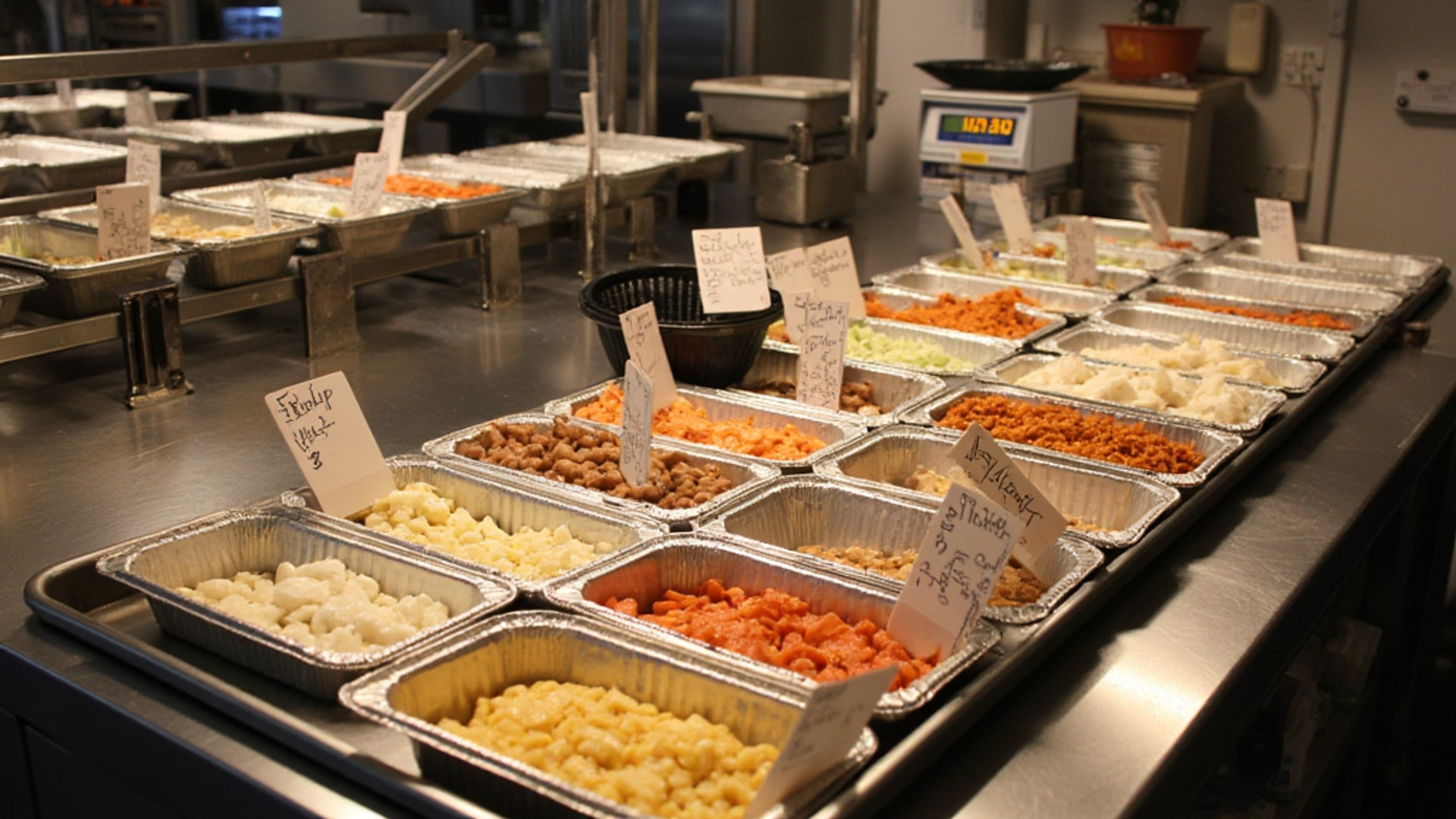
The tools are straightforward: digital portion scales (available through restaurant supply vendors like WebstaurantStore) for proteins and starches, standardized ladles and spoons for sauces and liquids, consistent scoop sizes for portioned items. Every station needs the measuring tools appropriate for what it produces. Random portioning by “eye” is a reliable path to food cost variance.
Train staff on portion standards with clear, visual references. A 6-ounce salmon filet should be demonstrated, not just described. Conduct regular line checks — before service, not during — where the opening chef verifies that portions, mise en place, and recipe compliance meet standards. According to Restaurant365, portion control training prevents over-serving that erodes margins and is the single most consistent source of actual-versus-theoretical variance in most kitchens.
Standardized recipes reduce the interpersonal variable. When the recipe specifies exactly how much of each ingredient goes into every dish, consistent execution becomes trainable and verifiable. When it does not, every cook’s personal interpretation of “a generous portion” becomes its own food cost variable.
Responding to Ingredient Cost Increases
Ingredient prices change. Your pricing response should be deliberate rather than reactive or passive.
When a key ingredient cost increases, you have three options: absorb the cost through improved operational efficiency elsewhere, raise the menu price of affected items, or modify the recipe to maintain the target food cost at the current price point.
Each response is appropriate in different circumstances. If your overall food cost percentage has room to absorb a modest ingredient increase without exceeding your target range, and you are in a competitive environment where price increases risk losing guests, absorption may be correct. If the increase is substantial or sustained, a menu price adjustment is the more sustainable response.
Recipe modification — adjusting portion size, substituting a component, or changing a preparation method — can maintain target food costs without requiring a price increase. This approach works best when the modification does not materially affect the guest’s perception of value. A half-ounce reduction in a protein portion that goes unnoticed is a better outcome than a price increase that generates pushback.
Making Food Costing Part of Daily Operations
Food costing should not be a once-a-month review. It should be embedded in daily operations as a natural consequence of how the kitchen runs.
Standardized recipes are the daily vehicle. When recipes are consistently followed, actual costs track theoretical costs and variances stay small. When they drift, variance appears in weekly cost reports and can be addressed before it compounds.
Waste tracking adds a real-time dimension. A daily waste log that records what was discarded and why — spoilage, over-production, cooking errors — creates the data needed to identify whether waste is a prep volume problem, a storage problem, or a quality problem in receiving.
The discipline of food costing is ultimately a discipline of paying attention. Costs that are measured, tracked, and compared against targets shrink over time. Costs that are estimated and reviewed occasionally trend upward. In an industry with margins measured in single-digit percentages, that difference between attention and inattention often determines whether the business survives.
→ Read more: Restaurant Inventory Management: Cut Waste, Control Costs, Protect Your Margins → Read more: Kitchen Food Cost Control: From Theoretical to Actual — Closing the Gap → Read more: Prime Cost Management: The One Number That Predicts Restaurant Profitability