· Culture & Sustainability · 9 min read
The Food Hall Concept: Community Dining, Shared Spaces, and Business Models
With 321 food halls operating in the U.S. and another 145 in development, the format is booming — but the business model is still being figured out by everyone involved.
The modern food hall is one of the most discussed formats in the restaurant industry. Walk through almost any major urban center and you’ll find one: a curated collection of food vendors sharing a large, designed space that’s equal parts market, restaurant, and community gathering spot. The numbers behind the trend are compelling. The operational realities are more complicated.
If you’re considering a food hall as a tenant, a developer, or an operator, here’s an honest look at how this format actually works.
The Scale of What’s Happening
The Food Institute counts 321 food halls currently operating across the United States, with another 145 in development. Restaurant Business Online reports that the food hall sector grew at a compound annual growth rate of 14.9 percent between 2020 and 2025, with 375 businesses now operating in the industry.
The global food hall market reached $25.8 billion in 2024, according to US Foods’ analysis, with projections to reach $62.3 billion by 2033 at a 10.2 percent CAGR. That trajectory puts food halls on a sustained growth path even as other restaurant formats face significant headwinds.
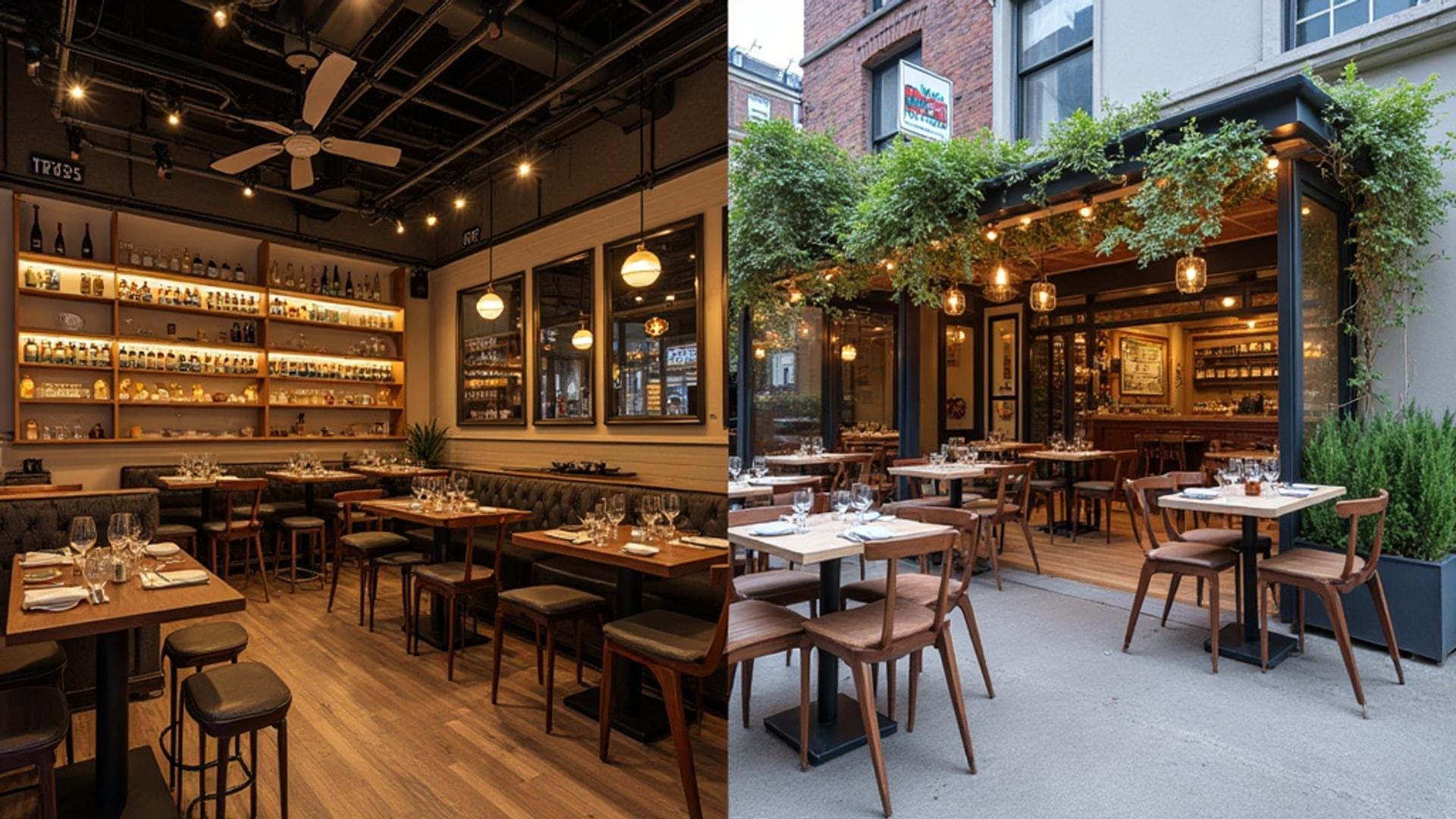
These are not food courts. The distinction matters. Traditional food courts in malls offered fast food from national chains in functional, fluorescent-lit spaces optimized for throughput. Contemporary food halls combine the variety of a food court with the quality, design, and culinary intention of chef-driven dining. Venues like Topanga Social in Los Angeles feature 27 vendors under one roof, anchoring mixed-use developments and functioning as neighborhood destinations.
Who’s Driving the Investment and Why
Real estate developers have become among the most enthusiastic advocates for the food hall format, and their motivation is straightforward. US Foods’s analysis notes that food halls are being used to revitalize urban neighborhoods and increase foot traffic in mixed-use developments. A well-designed food hall creates daily visitors in a way that retail tenants no longer reliably can.
The economics from the developer perspective are also favorable in theory. US Foods cites data showing that food hall stalls can produce up to ten times the per-square-foot revenue of traditional restaurants, thanks to lower individual overhead, shared infrastructure, and the foot traffic generated by having multiple concepts under one roof.
For the developers building and operating the halls themselves, the model is similar to retail leasing with restaurant-specific complexity. Operators lease space and pay into shared services (kitchen infrastructure, cleaning, shared dining room upkeep, marketing). The hall operator benefits from a diversified tenant base and the draw of variety.

The Case for Vendors
For culinary entrepreneurs, food halls represent a genuinely lower-barrier entry point to the restaurant industry. Restaurant Business Online’s analysis highlights that food halls serve as accessible entry points for independent operators, particularly minority and immigrant entrepreneurs, offering lower barriers than standalone restaurants.
The math explains why. A standalone restaurant in a prime urban location might require $500,000 to $1 million in startup capital plus the negotiating leverage to secure a lease. A food hall stall can be launched for a fraction of that cost, typically with a shorter-term lease commitment and without the requirement to build out a full kitchen from scratch, since shared kitchen infrastructure often reduces that burden.
The traffic benefit is also real. A food hall generates foot traffic from the combined draw of all its vendors. A new concept launching as a standalone restaurant has to generate all its own traffic from zero. In a food hall, early discovery is partially outsourced to the hall’s marketing and the draw of neighboring vendors.
For testing concepts before committing to a full restaurant buildout, the food hall is a compelling laboratory. You’re operating in real conditions, serving real customers, developing real operational knowledge, with lower capital at risk than a standalone launch.
The Consumer Pull
The format resonates with what contemporary diners say they want. US Foods cites data showing 76 percent of consumers seek venues combining dining with entertainment. Millennials and Gen Z specifically prefer venues offering variety, ambiance, and community engagement. Food halls check all three boxes in a single visit.
The group dining problem that food halls elegantly solve is worth emphasizing. When a group of diners has diverse preferences (one person wants ramen, another wants Korean BBQ, a third wants a burger), traditional restaurants require a compromise that satisfies no one fully. A food hall lets each person choose exactly what they want while sharing the same social space. This flexibility is increasingly valued as dietary diversity within friend groups and families grows.
The competitive socializing component also drives food hall traffic. US Foods reports that the competitive socializing market, where venues combine entertainment with food and drink, grew 38 percent over five years. Food halls that incorporate live music, pop-up events, and social programming capture this consumer appetite effectively.
The Persistent Challenges
Restaurant Business Online, while bullish on the growth numbers, is candid about the operational friction that persists in the format.
The group dining timing problem. Different vendors operate independently, with different preparation times and queue lengths. When a party of four each orders from different vendors, coordinating arrival of food at the same table at the same time becomes a genuine logistical challenge. No one has fully solved this. Some halls use paging systems; others accept that group coordination is the customer’s responsibility. Neither solution is entirely satisfying.
Seating scarcity during peaks. During lunch rushes and weekend afternoons, finding a seat can become the defining experience of a food hall visit, and not in a good way. The shared seating model that makes food halls socially dynamic during off-peak hours creates a competitive scramble during high demand.
Vendor turnover and vacant stalls. Food halls shut down at a notable rate, and even successful halls experience vendor churn. Vacant stalls undermine the sense of abundance and curation that makes food halls appealing. A hall with two or three empty stalls looks depleted in a way that a restaurant with empty tables does not.
The economics for vendors don’t always work. While the startup cost barrier is lower, the ongoing economics of a food hall stall can be challenging. Lease costs per square foot may be comparable to or higher than traditional restaurant space, since the developer is providing shared infrastructure and traffic. Commission structures vary widely between halls and can cut significantly into margins. And vendors are competing not just with external restaurants but with every other stall in the same hall.
Quality drift. Restaurant Business Online raises the concern that better-capitalized chains may increasingly replace the independent vendors that give food halls their distinctive character, mirroring the evolution of traditional mall food courts. If the vendors that make a food hall interesting are replaced by established brands seeking lower-risk expansion, the format loses its primary appeal.

The Financial Model: Figuring It Out in Real Time
The honest assessment from Restaurant Business Online is that the food hall model’s profitability remains a challenge, and operators are still working to develop financial models that benefit all participants. This is not a knock on the format. It’s an acknowledgment that the model is relatively young and genuinely complex.
From the hall operator’s perspective, the revenue streams include vendor rent and fees, beverage sales if the hall operates its own bar, event income, and sometimes parking or adjacent retail. The expense structure includes the physical space, shared kitchen infrastructure and maintenance, shared service staff (cleaning, security, information desk), and marketing. Getting those variables to produce a sustainable margin requires careful structuring and, often, higher-than-expected occupancy.
From the individual vendor’s perspective, the key question is whether the traffic and reduced startup cost justify the ongoing lease cost and the loss of operational independence. Vendors in food halls give up some control over the customer experience: they can’t fully control the ambient environment, service of neighboring stalls doesn’t reflect on their own brand, and the food court stigma still lingers in some markets despite significant format evolution.

The Honest Prognosis
Restaurant Business Online draws a sobering comparison: food halls were initially promising concepts, as were ghost kitchens and meal kits, both of which hit serious trouble at scale. The comparison is not meant to predict failure. It’s meant to calibrate expectations. High-growth concepts sometimes find that the unit economics at scale are harder than the early momentum suggested.
The food hall format’s long-term viability likely depends on two things: whether operators can solve the unit economics for both the hall itself and its individual vendors, and whether the format can maintain its independent, curated character as capital flows in from developers who have less sensitivity to that distinction.
For the right operator in the right market, the food hall stall remains a compelling entry point into the restaurant industry. For real estate developers, the format continues to attract investment as a neighborhood anchor. But both vendors and developers should enter with clear-eyed models rather than relying on the growth narrative to cover for fundamental economic questions.

Practical Considerations for Potential Vendors
If you’re evaluating a food hall stall as an entry point or a test concept:
Understand the hall’s traffic patterns before signing. A food hall in a dense urban neighborhood with strong lunch and dinner traffic is a very different proposition from one anchoring a suburban mixed-use development that hasn’t fully activated yet.
Scrutinize the lease structure carefully. The all-in cost (base rent, common area maintenance, any revenue share or commission on sales) needs to work in your financial model before you sign. Don’t assume traffic will bail out unfavorable economics.
Assess the stall footprint for operational viability. You’re typically working with a very small kitchen space. Know your menu and your production requirements, and verify that the physical space can support them.
Plan for the shared experience to be imperfect. You will not control every aspect of the customer experience in a food hall. Neighboring vendors, shared seating dynamics, and the hall’s overall marketing will all affect how customers perceive your concept. Your food and the direct interactions you control need to be excellent enough to overcome the imperfections you can’t control.
The food hall concept is real, growing, and genuinely useful to the right participants. It just requires more careful underwriting than the growth numbers alone suggest.
-> Read more: Eataly’s Eat-Shop-Learn Model: Reinventing the Food Hall
-> Read more: The Fast-Casual Revolution: Why This Segment Keeps Winning