· Design & Ambiance · 7 min read
Small Restaurant Space Design: How to Maximize Capacity and Create the Illusion of Space
Practical strategies for designing small restaurant spaces that seat more guests comfortably, operate efficiently, and feel larger than they are.
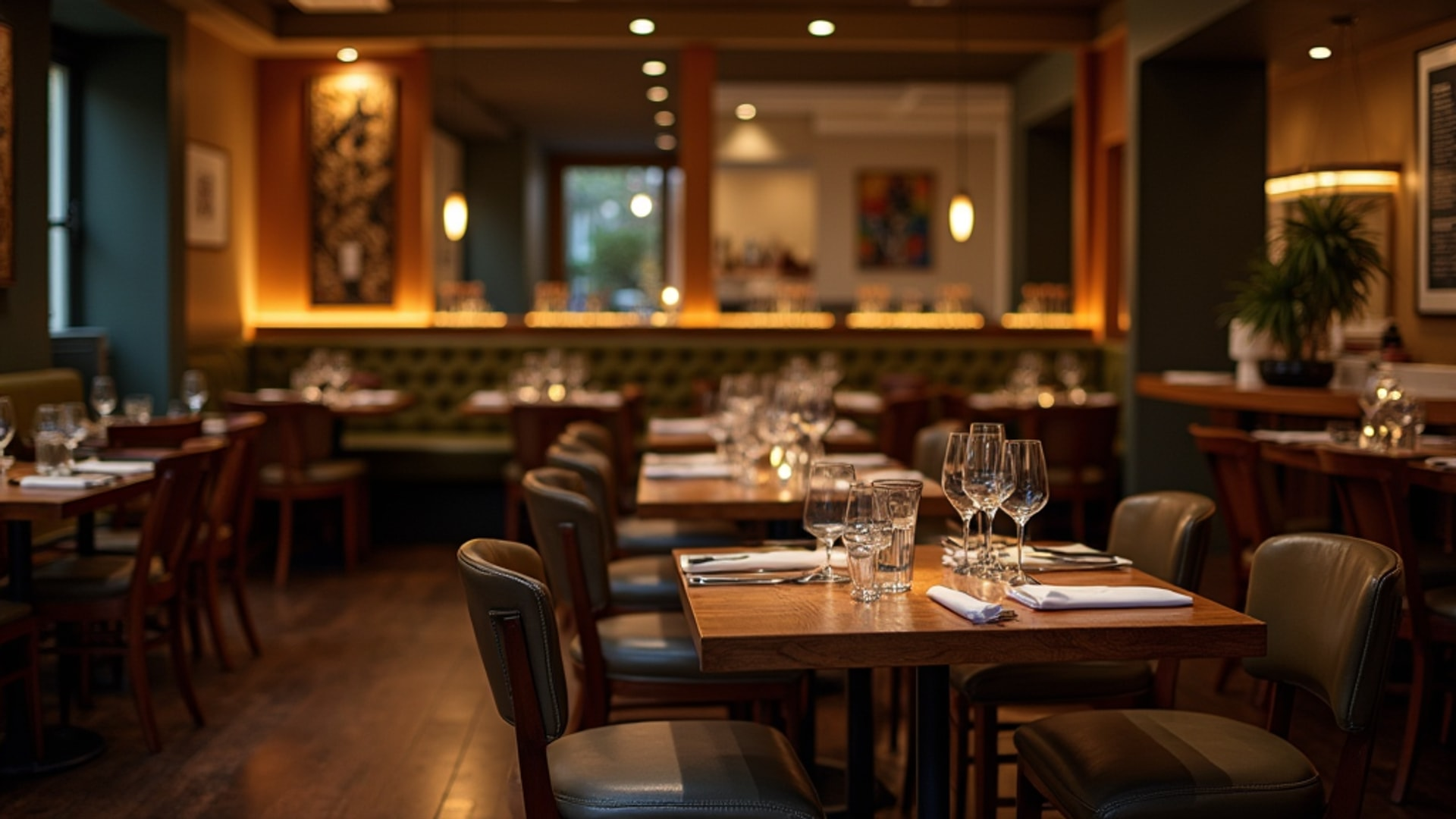
Small restaurants are not compromised restaurants. Some of the most profitable and beloved dining rooms in the world seat under 40 covers. The constraints of a small space force the kind of design discipline that larger restaurants can avoid — and that discipline often produces better guest experiences. But you have to solve the right problems. According to Connor Construction, the fundamental challenge is fitting adequate kitchen facilities, sufficient seating, circulation paths, and service areas into a limited footprint without creating a cramped or uncomfortable environment.
This article gives you concrete tools to do exactly that.
The Space Allocation Starting Point
According to Toast, most full-service restaurants use approximately 30 percent kitchen, 60 percent dining, and 10 percent support areas. For a small restaurant, this ratio has limited flexibility — there’s a minimum viable kitchen size determined by your menu complexity, regardless of what the math says.
According to Connor Construction, the recommended allocation is one-third of space to kitchen and two-thirds to dining. For a 1,200 square foot restaurant, that’s roughly:
- Kitchen: 400 sq ft
- Dining: 800 sq ft
- At 18–20 sq ft per person, that’s 40–44 seats maximum
That’s a workable small restaurant. But the design determines whether those 40 seats generate maximum revenue or whether the space feels cramped and chaotic.
Space-Efficient Seating: What Actually Works
Banquettes Along Walls
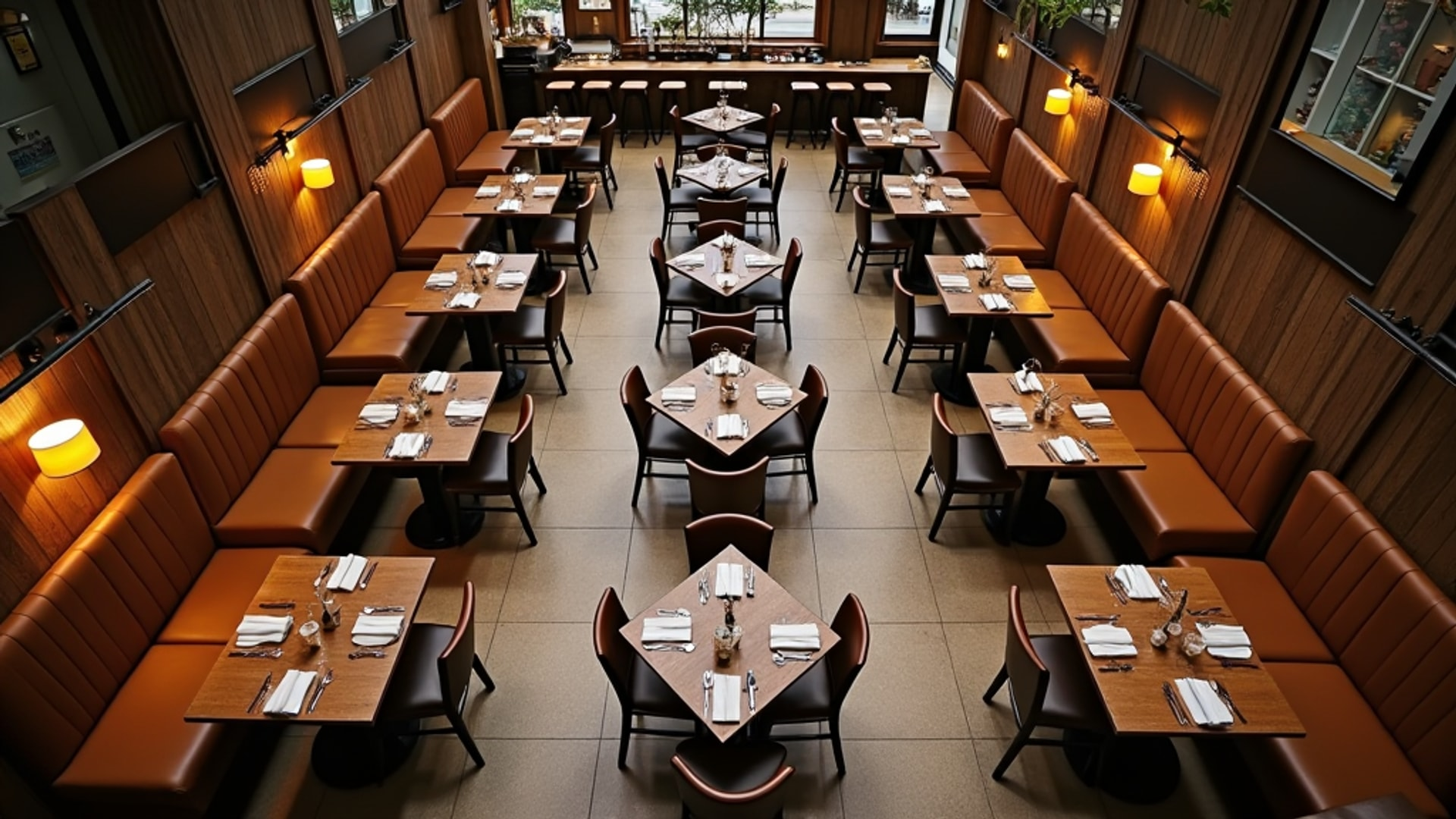
According to Interior Layout and Seating Design (YouTube extract), banquette seating along walls maximizes usable floor space by 15–20 percent compared to all-freestanding-table layouts. This is one of the highest-impact changes you can make in a small restaurant.
Why banquettes win in small spaces:
- No chair leg footprint on the circulation side — the banquette back serves the rear guest, eliminating one chair per table side
- Fixed installation eliminates the chair-pushing-out problem that creates aisle obstructions
- Can be configured in L-shapes and along corners where freestanding furniture is awkward
- Creates zone separation between seating areas without physical partitions
According to Connor Construction, wall-mounted banquettes and back-to-back booths seat more customers in smaller areas. A back-to-back booth configuration creates two seating zones from a single shared structure — effective for maximizing linear wall space.
Flexible Furniture Systems
According to Connor Construction, stackable, foldable, and nestable furniture provides flexibility for off-peak reconfiguration. Operationally, this means:
- Converting a dining room into a private event space by removing tables
- Creating a standing reception configuration for private parties
- Downsizing the seating setup during quiet weekday lunches to reduce the “empty room” effect
According to Interior Layout and Seating Design, flexible furniture — tables designed to be easily pushed together — can convert two two-tops into a four-top or three two-tops into a six-top without requiring dedicated large tables that sit partially empty during slower periods.
Mezzanine Levels
According to Connor Construction, mezzanine levels can effectively double seating capacity without expanding the footprint when ceiling height allows. If your space has ceilings of 16 feet or higher, a mezzanine is worth serious consideration. The investment is significant (structural engineering, egress requirements, ADA considerations for stair-based access) but the capacity gain is substantial.
Requirements for a mezzanine level:
- Minimum ceiling height of approximately 14 feet post-mezzanine to maintain comfortable head clearance on both levels
- Structural engineering to assess floor load capacity
- Code compliance for railings, egress paths, and occupancy
- ADA accommodation — platform lifts or elevators if the mezzanine is a defined dining area
The Table Mix Strategy
According to the Interior Layout and Seating Design YouTube extract, mix seating types — two-tops, four-tops, banquettes, bar seating, communal tables — to accommodate diverse party sizes and maximize occupancy.
For a small restaurant, the recommended mix:
| Table Type | Percentage of Total | Rationale |
|---|---|---|
| 2-tops | 40% | Couples and solos are the most common party size |
| 4-tops | 35% | The universal default; can be joined for larger groups |
| Bar seats | 15% | Serves walk-ins, solos; quick turnover |
| 6-top or communal | 10% | Handles groups; pulls off when not needed |
Two-tops generate more covers per square foot than four-tops because they have a smaller footprint but can be joined easily for larger parties when needed.
Circulation: The Non-Negotiable Numbers
According to Interior Layout and Seating Design, the minimum aisle widths are 36 inches for customer paths and 42 inches for server paths. In a small restaurant, these numbers feel tight. Don’t be tempted to reduce them — inadequate aisle widths cause constant physical contact between servers and seated guests, which reads as poor design and slows service.
According to Connor Construction, maintain 24 to 30 inch gaps between tables as a minimum for comfortable movement. This is the absolute floor, not the target.
The circulation hierarchy in a small restaurant:
- Main path (entrance to dining area): minimum 48 inches
- Server path behind banquettes: minimum 36 inches
- Guest path between tables: minimum 36 inches
- Emergency egress path: minimum 44 inches (code requirement; never compromise this)
Visual Tricks That Actually Make Spaces Feel Larger
Small space design isn’t just about fitting more in — it’s about making what you have feel right. Guests who feel cramped leave dissatisfied, even if the service and food were excellent. The following techniques are backed by design research:
Mirrors
According to Connor Construction, mirrors instantly double the perception of space by bouncing light and extending sightlines. A floor-to-ceiling mirror on one wall effectively doubles the visual depth of the room. Position mirrors to reflect the most attractive elements of the space (other guests, the bar, a feature wall) rather than pointing at service areas or storage.
Color
According to Connor Construction, cool colors like blue and green — as explored in our color psychology guide — create illusions of distance making rooms appear larger. Conversely, warm dark colors (deep reds, charcoals, forest greens) make walls appear to advance, reducing the perceived size of the room. In a small space, use warm darks only as accent colors — not on the primary wall surfaces.
Light-colored ceilings are essential in small spaces. A white or very light cream ceiling reads as higher than it actually is; a dark ceiling compresses the visual height dramatically.
Vertical Space
According to Connor Construction, vertical storage using shelves reaching to the ceiling maximizes storage without consuming floor area, while hanging planters and elevated decor draw the eye upward creating a sense of greater height.
Use vertical space deliberately:
- Tall shelving units (reaching ceiling level) make rooms feel taller
- Pendant lighting at varying heights creates visual depth
- Vertical striping in wall treatments (tile, paneling, wallpaper) elongates perceived height
- Plants hanging at varying heights add visual complexity that the eye reads as spaciousness
Lighting Strategy
According to Coffee Business Basics, the most common small space design mistake is flooding narrow spaces with bright overhead lights instead of using focused, layered lighting to create atmosphere. Bright overhead lighting flattens space and makes it feel smaller by reducing shadow and depth. Layered lighting — pendants over tables, sconces on walls, low ambient from below — creates the impression of multiple zones within a single small room.
Doors and Transitions
According to Connor Construction, sliding or pocket doors save floor space compared to traditional swinging doors. A standard 32-inch hinged door requires a 32-inch swing clearance — floor space that does nothing in a small restaurant. Pocket doors eliminate that swing entirely; barn-style sliding doors reduce it.
Apply this to:
- Kitchen pass-through access
- Storage room access
- Restroom corridors in space-constrained situations
Outdoor Seating: The High-Leverage Expansion
According to Connor Construction, outdoor seating expansion adds capacity with minimal additional cost when location permits. In many municipalities, a sidewalk cafe permit costs less than $500 per year. That permit can add 6–12 seats with minimal capital investment — seats that would cost $5,000–$10,000 each to add through interior renovation.
If your site permits outdoor seating, prioritize it. Even seasonal outdoor capacity dramatically improves your revenue potential from the existing kitchen and staff infrastructure.
The Design Audit for Existing Small Spaces
If you’re redesigning rather than building new, walk through your existing space and identify:
- Are banquettes used on all walls where they could be?
- Is the 2-top to 4-top ratio optimized for your typical party size distribution?
- Are any areas consuming floor space without generating revenue? (Large host stand, oversized server stations, oversized bar)
- Do mirrors appear on any walls? Could one be added?
- Is the ceiling dark? Could lightening it create perceived height?
- Is lighting layered or flat overhead?
- Are there hinged doors that could be replaced with sliding systems?
- Is outdoor seating licensed and utilized?
Small restaurants don’t need big budgets to make big improvements. According to Perfect Venue, a focused investment in the right changes — flexible furniture, mirror installation, lighting redesign, outdoor licensing — can increase effective capacity by 20–30 percent without expanding the physical footprint.
→ Read more: Restaurant Seating Layout and Floor Plan
→ Read more: Restaurant Ceiling Design