· Kitchen · 6 min read
Kitchen Exhaust Hood Cleaning: NFPA 96 Requirements and Practical Maintenance
How to meet NFPA 96 exhaust cleaning requirements, what professional service costs, and how to build a maintenance program that prevents grease fires.
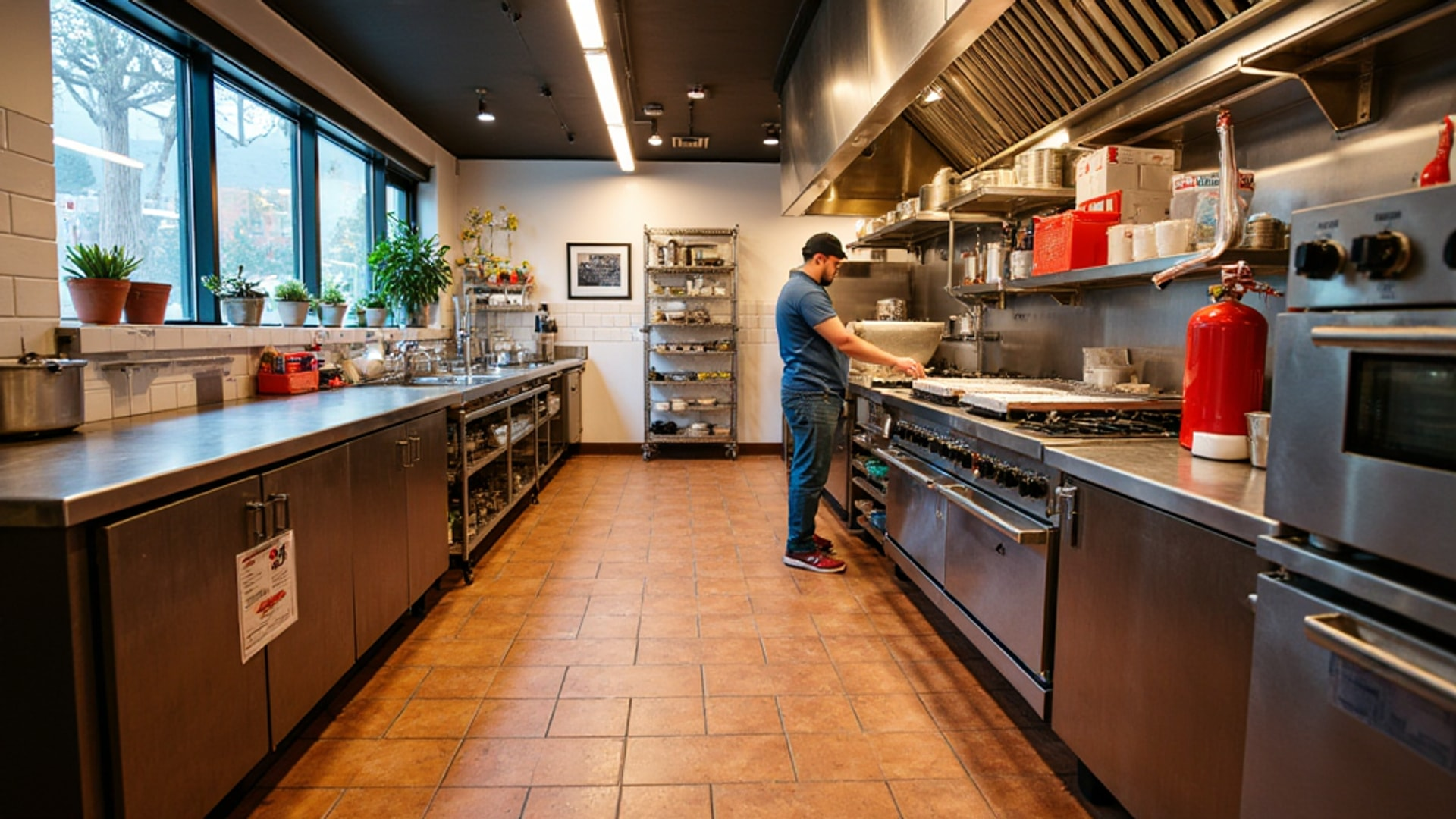
Grease is the fuel for the most catastrophic fires in commercial kitchens. Every hour of cooking deposits grease aerosols onto hood filters, duct surfaces, and fan components. Left unaddressed, that accumulation becomes a fire accelerant extending from the hood all the way through the duct to the roof exhaust fan — a potential pathway for fire to travel through the entire building.
Cleaning your exhaust system is not a janitorial task. It is fire prevention. The rules governing it are specific, and the consequences of ignoring them are severe.
NFPA 96: The Standard That Governs Everything
According to FoodDocs, the National Fire Protection Association’s NFPA 96 standard establishes the cleaning frequencies and methods that apply to commercial kitchen exhaust systems across the United States. Most jurisdictions have adopted NFPA 96 either directly or by reference in local fire codes.
NFPA 96 sets cleaning schedules based on cooking volume and cooking type:
| Operation Type | Required Cleaning Frequency |
|---|---|
| Solid-fuel cooking (wood, charcoal) | Monthly |
| High-volume, extended hours (24-hour operations, heavy char-broiling) | Quarterly |
| Moderate-volume restaurants | Semiannually |
| Low-volume or seasonal operations | Annually |
The guiding principle, according to FoodDocs, is to clean as soon as grease has noticeably accumulated — even if that means cleaning more frequently than the minimum schedule. If you run a busy wood-fire grill and quarterly cleaning is already showing heavy buildup, the answer is more frequent service, not waiting for the next scheduled date.
What the Cleaning Process Actually Covers
A proper hood cleaning is not just wiping down the visible stainless surfaces. The 10-step professional cleaning process covers:
- Shut down all cooking equipment and allow to cool
- Cover nearby surfaces to protect from cleaning chemicals and grease drips
- Remove filters and grease catch components; soak in warm water with commercial kitchen degreaser for 2 to 3 hours
- Scrub hood interior with non-abrasive pads to remove grease from stainless surfaces
- Wipe accessible ductwork sections above the hood with degreaser
- Rinse all surfaces with clean cloths and warm water to remove chemical residue
- Degrease the exterior canopy surfaces
- Wipe accessible fan components with degreaser-soaked cloth (power must be off)
- Scrub, rinse, and inspect filters for light transmission (hold filter up to a light source — if light does not pass through evenly, the filter is clogged)
- Reassemble all components and test airflow
Note what is not on this list: full duct interior cleaning and exhaust fan deep cleaning. These must be performed by trained professionals using steam or pressure washing equipment. These are not tasks for kitchen staff.
Professional Service: Who Does It and What It Costs
According to FoodDocs, fire codes require hood cleanings and inspections to be performed by trained and certified technicians. The cost range:
- Small restaurants: $200–$500 per cleaning
- Larger operations: $800–$3,000 or more per cleaning
The variation in cost reflects kitchen size, number of hoods, duct length, access difficulty, and the volume of grease accumulation. A high-volume burger operation with three hoods and heavy fryer use will pay more to clean than a low-volume café with a single hood over a gas range.
After each professional cleaning, the technician should affix a certification sticker to the hood identifying the date, the company, and the next recommended cleaning date. Fire inspectors look for these stickers. A missing sticker is an immediate compliance issue.
What Fire Inspectors Check
Fire inspectors examining your exhaust system will focus on:
- Grease buildup levels inside the hood and accessible ductwork (visible accumulation is a violation)
- Filter condition — clogged, damaged, or missing filters are violations
- Certification stickers from the most recent professional cleaning
- Access panels — panels must be present and properly installed; inspectors may open them to check duct interior conditions
- Fire suppression system tags — the integrated suppression system must have current inspection documentation
What Your Staff Can Do Between Professional Cleanings
Professional cleaning handles ductwork and deep components. Between service calls, kitchen staff should perform regular maintenance:
Daily tasks:
- Remove and manually clean grease filters at shift end (or according to your cleaning schedule, which for high-volume operations may mean daily filter cleaning)
- Wipe down the hood canopy exterior and lip with degreaser
- Empty grease collection cups or trays before they overflow
Weekly tasks:
- Deep clean the hood interior surfaces
- Check that filters seat properly and create a complete seal
- Inspect grease traps and gutters for buildup
Monthly tasks (in-house, not substituting for professional service):
- Check the condition of the fire suppression nozzles inside the hood for grease clogging (do not adjust them — flag any concerns to your suppression system contractor)
- Inspect duct access panels for proper closure
Critical Safety Rules
Several common mistakes can create serious hazards during hood cleaning:
- Never pour grease down a drain. Grease solidifies in pipes and creates blockages. It should be collected in a sealed container and disposed of through a grease hauling service.
- Never use metal scrapers on stainless steel surfaces. Scratches create crevices where bacteria and grease accumulate.
- Never mix degreasers with bleach or bleach-based sanitizers. This combination creates toxic chlorine gas.
- Never attempt full duct or fan cleaning without professional equipment and training. Accessing ductwork without proper equipment can damage the system and is ineffective at removing grease from surfaces the team cannot reach.
Building Your Compliance Documentation
Fire inspectors and insurance adjusters expect to see organized records. Build a simple maintenance log that captures:
- Date of each professional cleaning
- Name of the certified cleaning company
- Areas cleaned (hood interior, accessible duct, filters, fan)
- Technician name and certification number
- Next recommended cleaning date
- Any noted issues or recommendations
Keep at least three years of cleaning records on-site. During a fire inspection or after an insurance claim, this documentation is the evidence that you maintained the system responsibly.
The Real Cost of Deferred Cleaning
The $200–$500 cost of a semiannual hood cleaning looks different when compared against a grease fire claim. Delays in cleaning create serious fire hazards that cost far more than the cleaning service. WebstaurantStore’s kitchen hood guide provides additional detail on the code requirements that govern these systems.
A grease fire that spreads through an unclean duct system can destroy a kitchen completely. The combination of property damage, business interruption, and liability exposure makes deferred hood cleaning one of the highest-risk cost-cutting decisions in restaurant operations. Schedule it. Pay for it. Document it.
→ Read more: Commercial Kitchen Ventilation: Hood Systems, Codes, and Maintenance
→ Read more: Kitchen Fire Suppression Systems: Requirements, Costs, and Compliance
→ Read more: Kitchen Cleaning and Sanitation: Schedules, SSOPs, and Health Code Compliance